
How to make croquettes? This is the ultimate guide to cooking any kind
For me, one of the most delicious recipes in the world; for others, a complicated preparation. Croquettes are arguably a fried food that everyone wants to try. Their crispy exterior and creamy interior can be confusing for many. But it's undeniable that they are highly appreciated for their incredible versatility.
A Brief History of Croquettes
Of French origin (croquettes), croquettes are a fried treat often enjoyed for their complex textures and rich, milky flavor. Indeed, traditional croquettes are made with a milk-based sauce, which gives them that creamy texture.
This sauce is known as béchamel, named after its inventor Louis de Béchamel, a French aristocrat who was in charge of the kitchen for King Louis XIV. But it was in collaboration with the iconic French chef Antoine Carême that croquettes were created, as he decided to coat the sauce in breadcrumbs and then fry them.
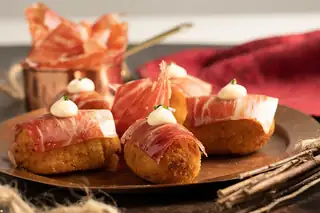
The result is a crispy and creamy fried treat that spread throughout Europe. It was in Spain where it was most readily embraced, as Spanish cuisine adopted this recipe after the country's French influence. Local products were then added. Today, it's impossible to imagine Spanish cuisine without Serrano ham croquettes or cod croquettes.
You probably remember that aunt who made her famous tuna croquettes or that diner that served soggy potato croquettes. Commonly, at least in Mexico, croquettes were considered children's food, which led to many people disliking them.
Especially since the traditional recipes used a dense dough that didn't have much flavor. So maybe it wasn't that they tasted bad, it's possible they weren't cooked properly.
The key to making a good croquette of any kind is very simple and lies in the béchamel sauce. This sauce is a classic of traditional French cuisine, made with butter, flour, and milk. A roux is prepared—a mixture of flour and butter used to thicken a liquid, commonly found in cream or soup recipes.
The rule for a perfect béchamel sauce is simple and proportional: always use 10% of the weight of butter and flour relative to the total weight of milk. To obtain one liter of béchamel sauce, follow this recipe.
Ingredients:
- 1 L Milk
- 100 grams Butter
- 100 grams Flour
- Nutmeg
- Black pepper
- Shall
Preparation:
- It's a simple recipe, but you need to follow the instructions line by line to succeed.
- Melt the butter in a medium saucepan over low heat.
- Once the butter is melted, carefully sift the flour over it little by little. This will help prevent large lumps from forming.
- While gradually adding the flour, mix with a balloon whisk.
- Allow the butter to absorb all the sifted flour before adding more.
- Continue adding flour until you have no more.
- The mixture will be golden and thick. We must be careful not to burn it.
- With the stove off, slowly add the milk to the mixture in a thin stream, while continuing to beat.
- Allow the roux to slowly absorb the milk until it is completely mixed.
- Add all the milk and heat the stove again to medium heat.
- Do not stop mixing with the whisk under any circumstances; it is important because the sauce can stick to the bottom.
- Beat until the sauce gradually thickens.
- Add salt, pepper, and nutmeg. Mix.
- It needs to be cooled gradually, so it is recommended to transfer the béchamel sauce to a different container.
- Leave at room temperature until it reaches a lower temperature.
- Refrigerate for at least 8 hours. You'll notice the sauce has thickened and become firmer.
How to fry any type of croquettes?
We've accomplished the hardest part; from now on, it's all downhill. From this point forward, you can add any ingredient you like to the béchamel sauce: Iberian ham, boiled potatoes, seared tuna, etc.
You can take a portion of the sauce in your hands and make a well to fill. You'll notice that the sauce with a firmer texture is much more malleable, so it will be easier.
Preparation:
- Once you've added your favorite ingredient, it's time to take a small portion of béchamel sauce and shape it with your hands. Make small balls or an oval croquette.
- Have ready a plate with beaten egg, another plate with breadcrumbs, and a final one with absorbent paper.
- Similarly, prepare a saucepan with plenty of oil for frying. Heat over medium heat.
- Dip each ball in the beaten egg and then in the breadcrumbs, until it is completely coated.
- Add the balls to the frying pan with oil when it has a temperature of at least 180°C.
- Fry until golden brown and the outer layer is hard.
- Remove from the oil and rest on a plate lined with absorbent paper.
- They'll be ready to enjoy, serve with your favorite sauce.
Most common mistakes
- Undercooked Béchamel: a sauce with a lumpy texture or containing raw flour. This is mainly due to insufficient whisking and not allowing the roux to absorb the liquid when added. You can fix this by lowering the heat.
- Incorrect Consistency: This will happen if you don't use the correct proportions when weighing and mixing. Remember that béchamel sauce requires absolute precision and care. To avoid a sauce that is too runny or too thick, follow the proportion rule.
- Not Using Enough Filling: Doing this will result in a croquette that's mostly béchamel sauce. Remember, the added filling is what makes the croquette so special. It needs to be evenly distributed, so don't skimp.
- Don't let the dough cool: Many people make the classic mistake of trying to make the croquettes while the sauce is still hot. This is impossible, as the dough won't be workable and will melt when it comes into contact with the hot oil. A possible solution is to let the dough cool for at least overnight.
- Poor Breading: Poor breading can cause the croquette to become misshapen or worse, to fall apart when fried.
- Incorrect Temperature: At a low temperature, the exterior will be greasy and raw. At a high temperature, it will be burnt and raw. The solution is always to fry at 180°C (350°F). Use a kitchen thermometer to ensure the perfect temperature.
Now you have all the expert tips for cooking any type of croquette. With this ultimate guide to cooking any type of croquette, you'll never go wrong. Create variations and let your imagination run wild; you can fill them with whatever you like.