Nobody Asked for Pasta in an Omakase, Until Ryokou Came Swinging
Welcome to another installment of Scene Report in Atlanta, a new column in which Eater captures the vibe of a notable Atlanta restaurant at a specific moment in time.
Nobody Asked for Pasta in an Omakase, Until Ryokou Came Swinging
Atlanta’s best new omakase has pasta, imported ice, and a secret sake you’ll want to gatekeep. But we won’t.
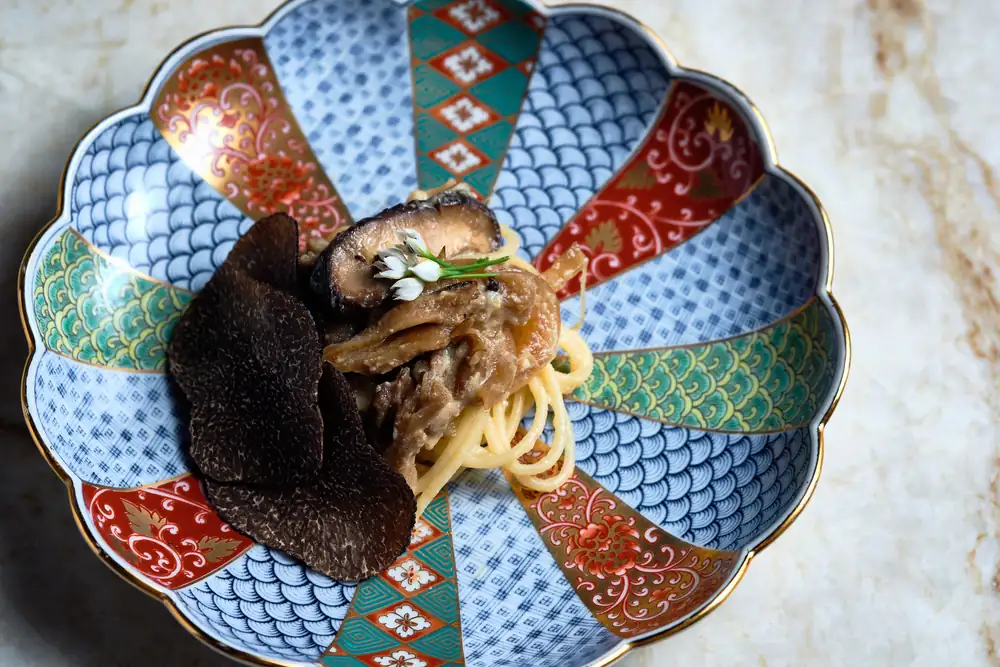
Midway through Ryokou’s omakase courses, chef Paul Gutting begins plating what looks like an exquisite plate of pasta. No way, pasta at an omakase joint, I thought. It’s a mushroom capellini with miso and shaved Australian winter black truffles, folded into just a couple mouthfuls of rich, thin noodles.
Gutting explains that chef Leonard Yu, of one-Michelin-starred Omakase Table and owner of Ryokou, worked at Italian restaurants early in his career, including Ritz-Carlton Hotels in Jakarta and Kuala Lumpur. He also explains that Japan has a love affair with Italian cuisine, called Itameshi, and some of the best Italian food is found in the island country. The course is a showstopping ode to this discovery. The woman seated beside me is brought to tears on the first bite.
Ryokou is Yu’s new and casual iteration of omakase, packed with pasta and rare sake pairings. Here’s why it’s a scene.
The atmosphere
Ryokou is a hidden gem in Adair Park. You head inside an industrial building where tall candles light a black hallway, and wood-paneled doors open up into the cozy yet stylish restaurant. The exposed brick wall behind the omakase counter is speckled with ceramic gold and white koi fish. The lights are dim, and the staff is immediately warm and welcoming. The place setting is a glittery gold placemat with chopsticks on the ready. Gutting has his head down, slicing and scorching eel for the first preparation.
Insider tip: Visit the bathroom. It’s one of the most luxurious experiences in town: heated toilet seat, beautiful marble sink, matching black toilet paper with the rest of the decor, candlelit, and rolled hand towels. These details are a wonderful respite.
The food
The two-hour, eight-course omakase ($205) is a trip through different regions of Japan. The newly launched summer menu features the pasta course, in addition to tuna nigiri, grilled fish, and A5 wagyu strip loin. The akami zuke tuna nigiri (the second in the lineup) is a soy sauce marinated cut that is equal parts velvet and salt — a standout. Gutting explains that soy sauce was used as a preservation liquid before refrigeration, and the marination stems from that ritual.
The somen (thin Japanese noodles) in broth with shrimp, clams, and ice plant is another refreshing treat. The tiny ice plant packed a powerful salty punch, and the broth is diluted with ice from Japan. No, really. The chefs flew in ice from Japan for its mineral content — a luxury, though one with a big carbon footprint in shipping. Yu promises it changes the flavor of the broth significantly, though I’d argue ice from Georgia may just be good enough for us Georgia folk.
The pacing of the food is punctual, you don’t feel rushed, and at the same time, don’t feel plastered to your chair for hours on end. The service on both sides of the omakase counter is flawless: anticipating needs when you have to scoot your chair, clearing glasses before the next course arrives, and offering ample, friendly insights into the cuisine and ingredients.
The drinks
Oh, the drinks. Get the sake pairing. Period. Beverage manager TC McNeill expertly pairs beautiful junmai daiginjos and koshu sakes with the courses. The Boken “Ringo” Junmai, the award-winning sake you may of on Atlanta menus, has vibrant notes of green apple and is paired with the icy somen. It’s light-bodied and perfect for those stepping into trying sake.
The Amabuki “Pink Lady” Gin No Kurenai Junmai sake is made with ancient black rice, giving the sake a gorgeous purple hue. It is paired with the nigiri, and its earthy florality plays with the different cuts of fish.
“Lean in closer, because this is a secret drink you must seek out.”
The piece de resistance is the sake paired with dessert. A light panna cotta with strawberries is paired with Kanbara “Ancient Treasure” Junmai Genshu Koshu — a 12-year-aged sweet sake with notes of dark honey, nuts, figs, and a finish of toasted sesame oil. Uff. It is a layered beauty, and one worth sitting with. The pairing is so right, you could practically pour the sake on the dessert. McNeil shares this caramel-colored sake with a big smile in small o-choko cups.
Insider tip: The non-alcoholic options are great, too. They include hot teas, and a stunning sparkling jasmine, white, and Darjeeling blend from Copenhagen Sparkling Tea Company.
Why go here
Ryokou is an express, high-level omakase experience, if you want eight courses in two hours. (If you want more, go to the newly relocated Omakase Table in Buckhead, with 20 courses for $295.) The menu is concise, and tells a story through Italian influences, seasonal ingredients, and Gutting’s ideas shine while tipping his hat to Yu. It is a great addition to Adair Park, and an experience worth scouting out.