Hotel landscape painted in sauce
The phone rings for the fourth time in the ten minutes we've been leaning against the bar. "Bikandi Etxea Restaurant, good morning," José Antonio Cruz answers in a jovial tone, as if it were the first call of the day and he'd been waiting for it for hours. "For Friday at 3 p.m.?
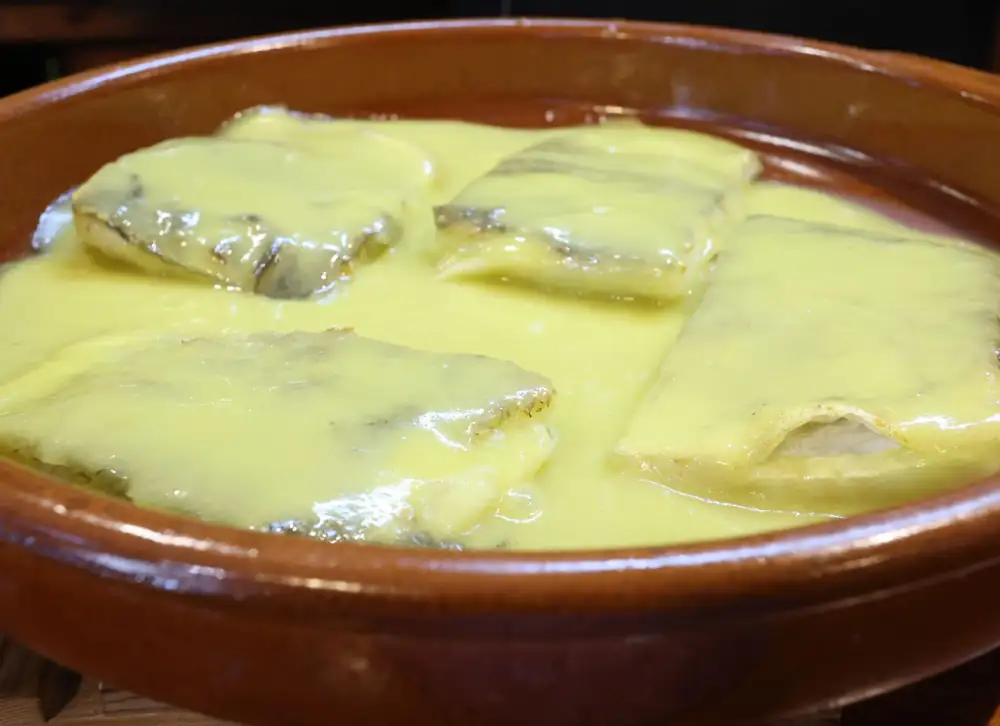
The prospect of indulging in one of Conchi Jurado's little casseroles—"the best casserole maker in Bilbao," her husband boasts without a hint of false modesty—is enough to brighten anyone's day. The moment you step inside, the bar offers a spectacular display of all those casserole dishes that used to be commonplace in Bilbao but are now hard to find. Cod in pil-pil sauce, squid in its own ink, snails Biscayan-style, kokotxas (hake cheeks) with clams—"the best in town," Alvarito 'Mina' remarks upon seeing the photo shared on social media—a selection of fresh fish, and a magnificent spider crab greeting the crowd. Leaning on the counter, José Antonio smiles contentedly.
They have a couple of years left to reach three decades at the helm of this little eatery, reminiscent of a txoko (a Basque social club) – just half a dozen tables draped with checkered tablecloths – and they're already longing to hang up their aprons and enjoy their grandson. "They should clone you," quips a regular, who doesn't even want to hear about the couple's retirement. It will come sooner rather than later; the 14-hour days they worked until recently have taken their toll, and his doctor has prescribed a timely retirement for him. She says she's not willing to continue alone.
“We make a good team,” they admit. They’ve been doing so since they met in Rekalde as teenagers and became a couple. He started working at the Monterrey under the legendary Dioni Lasa, and occasionally did extra work alongside Genaro Pildain if he had to cater for an important event. “Bring in the guy with glasses,” the restaurateur would call, sensing José Antonio’s natural talent for the trade. Back then, he wore a waiter’s uniform, but whenever he could, he’d sneak into the kitchen to learn. In the afternoons, he’d tell his girlfriend the secrets of the great restaurants of Bilbao at that time.
"Our dream"
After that, he spent some time managing a centrally located café called Gernika, which now has an English name, "but our dream was always to open something of our own." At the end of '97, this small tavern, next to the Town Hall at number 4 Campo Volantín, crossed his path. Its location might suggest a guaranteed clientele, but it was in such bad shape that no one had set foot in it for ages. "The first day I burst into tears when I saw how dirty it was," Josean recounts. It's amazing what a thorough cleaning can do, because today those distinctive blue and white tiles of Bikandi give a feeling of cleanliness that invites you to step inside.
The idea they had when they first opened their doors is hardly different from what you'll find in this little eatery today. "I've always loved those traditional recipes I learned at Monterrey or Guría, and I wanted our place to stay true to that style." Until then, Conchi had worked in other fields—"when I got married, I didn't even know how to fry an egg"—but with the family business up and running, she enrolled in the Artxanda Hospitality School.
“My first cakes turned out as hard as rocks,” she recalls with a laugh. Today, she's in charge of making all the desserts—one of the restaurant's specialties—and patiently preparing the saucy stews that have made them famous, while her husband tends the bar. All of them? No! Despite trying a thousand times, the pil-pil sauce just eludes her. “I can't seem to get it right, son.” Fortunately, José Antonio nails it.
When it's time to serve, they switch roles. She, cheerful and lively, handles herself well in the dining room. He's quick at the grill and takes care of finishing the dishes or plating the stews in the kitchen. As I said, a well-oiled team that manages to handle the two or three meal shifts offered each day at the twenty stools of Bikandi. Settled in one of them a few days ago, I enjoyed the feast I'm about to describe.
husband killers and snails
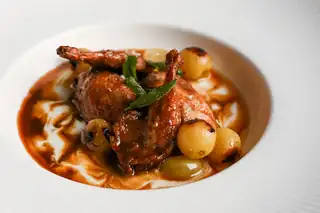
To start, a small plate of chanterelle mushrooms with egg yolk and grated Idiazabal cheese. Next, some confit leeks, seared on the griddle with hints of orange, tomato, and cheese—a "treat" worthy of more stately tables. This is followed by a small bowl of "matamaridos," an Andalusian recipe made with a rich fish stock in which potatoes are simmered. It impresses with its apparent simplicity and embodies the best of hearty stews.
After the hearty stew, Conchi serves a small pot of pinto beans that's absolutely loaded with traditional accompaniments—blood sausage, bacon, chorizo, and ribs. Following the beans is a dish of kokotxas (hake cheeks) with clams, and after the kokotxas comes a casserole of anchovies swimming in garlic and cayenne peppers, garnished with strips of lemon zest. This tasting menu, steeped in pure Biscayan tradition, is rounded off with a dish of snails in a sauce so delicious you'll want to empty your bread basket.
If you're still salivating, pick up the phone right now and call to make a reservation. But be prepared to be patient; as I've already mentioned, getting a table at this example of classic Bilbao hospitality—one of the few remaining—can be more difficult than getting one at some Michelin-starred restaurants.
The formula this restaurant offers its customers is somewhere between a set menu and à la carte dining. Each day begins with a selection of first and second courses, the minimum price of which is currently €16.50. From there, some dishes carry a surcharge depending on the cost of the chosen ingredient. So, if you fancy some kokotxas (hake cheeks) or wild sea bass, you can indulge by adding a few euros to the bill, but you can also enjoy simpler dishes without breaking the bank. This model appeals to customers who choose Bikandi both for everyday meals and for special occasions, knowing that the quality of what ends up on their plate justifies paying a little more.