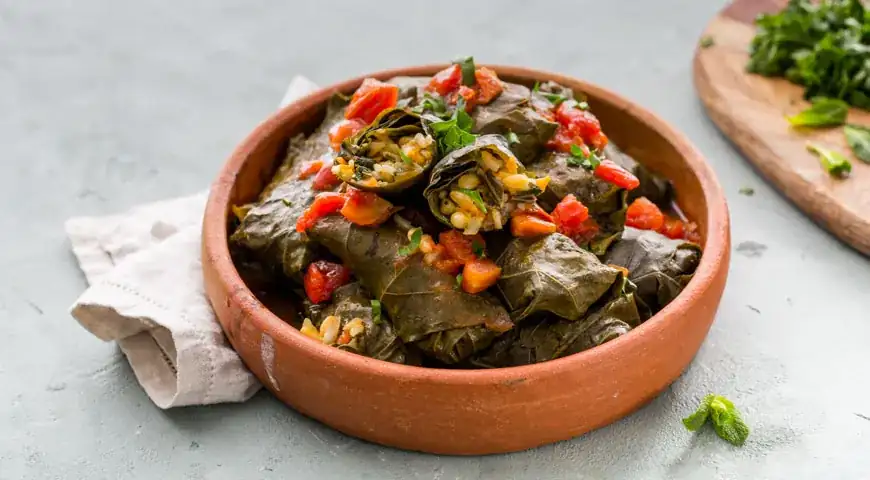
Dolma with vegetables and nuts
Rinse the rice thoroughly in several washes. The final rinse should be completely clear. Drain in a colander and let sit for 30 minutes. Bring 4-5 cups of lightly salted water to a boil in a saucepan. Add the rice, bring to a boil over high heat, then reduce heat and simmer for 15 minutes. Drain in a colander and let cool.
Step 2
Peel the onion and carrot and chop finely.
Step 3
Heat 2 tablespoons of vegetable oil in a frying pan and fry the onion and carrots for 7 minutes. Add the pine nuts and cook until darkened, 3 minutes.
Step 4
Place the vegetables and nuts in a large bowl, add the raisins and mint. Season with salt and black pepper. Add the rice and mix thoroughly.
Step 5
Rinse the grape leaves with cold water and pat dry. Place a few leaves in the bottom of a saucepan. Remove the stems from the remaining leaves. Place the leaves shiny side down and spread the prepared filling between them. Roll the leaves tightly into a packet.
Step 6
Place the dolma in a saucepan with the grape leaves. Mix 1.25 cups of water with lemon juice, red pepper, and tomato puree. Add the remaining vegetable oil and pour the mixture into the saucepan with the dolma. Cover and simmer over low heat for 30–35 minutes. When serving, garnish with lemon slices and mint leaves.
Unlike other versions of dolma, Greek dolma is often vegetarian and is prepared with an emphasis on rice and fresh herbs, rather than a rich meaty flavor. Greek dolma is typically served as a cold appetizer, or meze. A key feature of the dish is the lemon-based sauce, avgolemono, which imparts interesting piquant notes and a slightly refreshing acidity to the dolma's flavor. The Greek dolma recipe is below—get inspired and cook in the best traditions of Mediterranean cuisine!
Lamb in grape leaves, or simply put, dolma, is an incredibly appealing dish. But few people make it. Most people living in the central part of the world believe this Eastern dish is only available in restaurants or prepared food stores. The problem lies with the grape leaves. Getting them from a place where they don't grow is one thing, and preparing them for stuffing is quite another. Granted, fresh grape leaves aren't always easy to come by. Traditional dolma is especially delicious when the ground meat is wrapped in fresh leaves. But let's not be too idealistic. Pickled grape leaves are much easier to find. And the result will be just as delicious, since they're marinated year-round. So, use whatever's available. The chef will teach you what to wrap and how.
Brine-brine grape leaves are a great addition to any season. You can use them to make meat or vegetarian dolma. You can also wrap pieces of fish, poultry, or even halloumi cheese in them and bake them in the sauce or steam them. Torn grape leaves can be used to make various soups, such as green borscht. They also make a great addition to all kinds of vegetable salads. Unlike pickled grape leaves, salted ones lack the pronounced vinegary tartness that some people don't like. Furthermore, some people are completely intolerant of pickled foods, so our preparation is more versatile.