Da Cesari Restaurant in Bologna, review: tradition without surprises
Da Cesari is a historic restaurant in Bologna, firmly established in the city's skyline for nearly seventy years, a landmark of sorts with its unmistakable red window frames that stand out on Via Carbonesi, just a few hundred meters from Piazza Maggiore.
The room is separated from the outside by a double door that shields it from street noise and opens onto a warm atmosphere dominated by high wooden paneling with knobs serving as coat hangers and a row of bottles reaching the ceiling, punctuated here and there by a few beautiful paintings. The wrought-iron chandeliers and white-covered Romagna-style tablecloths lend a rustic touch that's not uncommon in the main dining room. When we enter, several international guests are already seated, perhaps drawn by the rave reviews on Tripadvisor and Google, but certainly also by the restaurant's informal and welcoming atmosphere.
The menu features classic Bolognese dishes as well as a few more elaborate options, particularly those enriched with truffles, such as egg spaghetti, tortelloni, and guinea fowl. Among the main courses, praise goes to the vegetarian platter and the cheese selection, a choice not always a given in Bolognese restaurants, where pork can often be found even in the fiordilatte, a challenge for non-meat eaters. The wine list isn't exceptional, dominated largely by family labels, but it does include a few bottles from outside the region and a couple of champagnes for those who absolutely can't live without them.
As an appetizer, we recommend the artichoke flan with creamy parmesan sauce, accompanied by a fresh artichoke salad: a perfect execution for this soft, full-flavored, light, and fragrant flan, a truly wonderful start. We could say that the low-temperature cooked pancetta is on the opposite end of the flavor spectrum, in the sense that it's not unpleasant at all—quite the opposite, in fact—but the melting sensation of the fat is overwhelming. This is a hard-to-find cured meat that complements the array of cooked meats for which Emilia is famous, such as coppa di testa, salama da sugo, bondiola, zamponi, and various cotechino. It's served thinly sliced and would be ideal with warm bread. This isn't included, but we'll settle for the excellent crescentine bolognese.
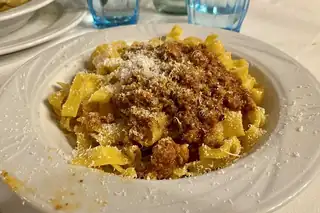
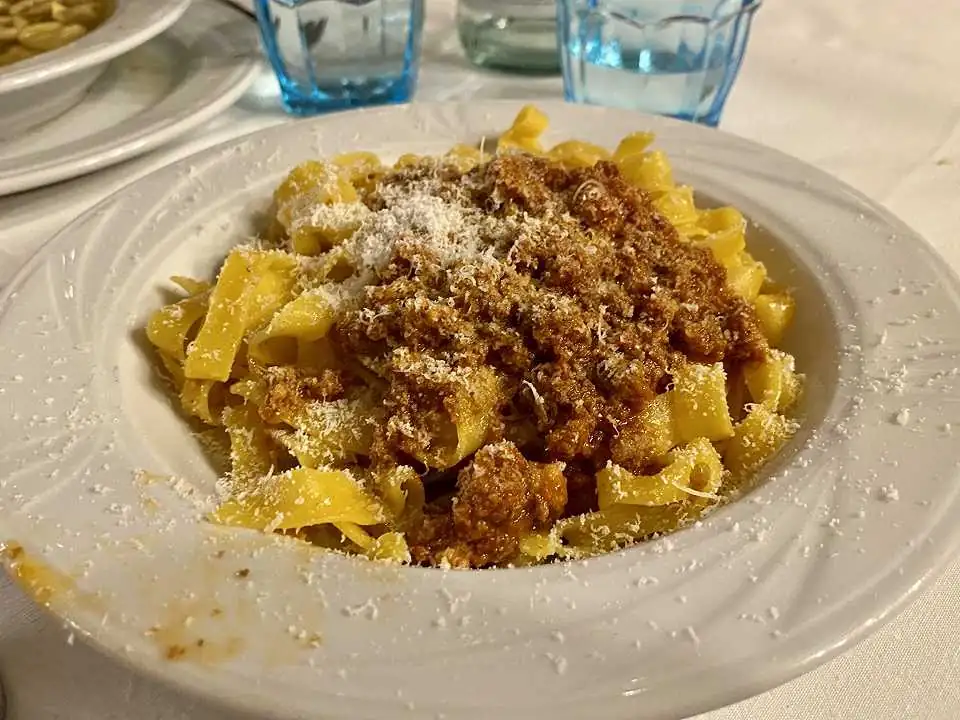
Among the first courses, iconic dishes from Petroni's cuisine are a must, such as tortellini served in beef broth, as specified on the menu. It's not so much the combination, which breaks the classic tortellini-capon broth pairing, that's surprising, but rather the clarification on the menu. The fact that many other restaurants in the city have never seen capon except in photos on butcher's calendars is worth mentioning, but that would be getting off topic. The broth is honest, with a bold flavor, perhaps due to a little boost from the tomato paste, while the tortellini are a bit below average due to their overly tender filling, lacking any particular flavors other than the hint of nutmeg. Even the tagliatelle with ragù isn't impressive, due to its slightly rough surface and excessively al dente cooking, which doesn't suit it, but above all, the sauce suffers from too much tomato and the meat's lackluster texture. Nothing unacceptable, let's be clear, but we're just above passing grade, even though we would have expected a few more sparks.
Among the main courses, the (non-)cotoletta alla Bolognese (literally "breaded") is an interesting transformation, transformed into a veal cutlet covered in prosciutto and cheese fondue. By avoiding the fried breading of the meat, the dish is cut to the chase: it lightens the dish while simultaneously dodging all the problems inherent in a complex and often unpopular dish, especially outside of Bologna. The result is not to be underestimated, thanks to the tender meat and the boldly flavorful glaze that we would have appreciated more if it had been made entirely from Parmesan. Generally speaking, if restaurateurs began (or began again, depending on your point of view) to offer Pellegrino Artusi's veal cutlet alla Bolognese, it would be a significant step forward, but the Forlì-born gourmet is more often cited inappropriately than replicated in the kitchen. The guinea fowl with truffles looks beautiful and is served with a generous amount of scorzone, but it's a shame the meat is extremely dry. For this type of bird, with a reduced amount of fat and connective tissue, this is a rather common mistake, which is a shame because the flavor was all there.
For dessert, the timeless zuppa inglese is a must, served in a compact version with a delicious cream, especially the chocolate one, with its rich flavor perfectly balanced by the freshness of the alchermes liqueur. The zabaglione semifreddo has an equally bold flavor thanks to its high Marsala content, making it the perfect way to end a meal without missing out on anything.
The bill is in line with Bolognese dining, and at least one reason to return is the infectious friendliness of the waiter (who, we discover, is the owner's son), with whom we're happy to chat. Da Cesari is a somewhat tarnished old favorite that still boasts a few good dishes, but it doesn't quite reach the pinnacle of the city's dining scene, despite remaining beloved by many Bolognese and international diners.
Opinion
A former glory of the city's restaurant scene, it seems a bit tarnished after nearly seventy years in business. Centrally located and welcoming, its cuisine and wine list aren't exactly thrilling, though it still has some good dishes.
AGAINST
- The cuisine appears tired, it does not express the best that the city has to offer.