Miskolc's new meeting place opened on a temporary basis
The story of Gajdó originally started as a temporary, bridging idea, when Ádám Pohner and Luca A. Kun were thinking of a temporary project in Miskolc alongside Iszkor, while the planned expansions in Mályinka were taking place. However, the idea eventually grew into an independent place.
You opened Gajdó in early February. Can you tell us a little about how you got started?
The whole story started with us wanting to build in Mályinka, which ultimately didn't work out. When we came up with this, our background idea was to do something temporary in Miskolc with the existing team during the construction period. In the end, none of this plan came to fruition, but the idea itself started to stir in us, what if we did something in Miskolc as well. We started looking at possible business premises, and eventually found the former Bortanya location on Avas. We went there partly with the idea of "not falling in love" because we knew we would be hitting the nail on the head again. In the end, this didn't work out either: we started planning right away, so we actually opened in February.
From the beginning, it was important to you not to create a second version of Iskor? What does modern barfood mean in your interpretation?
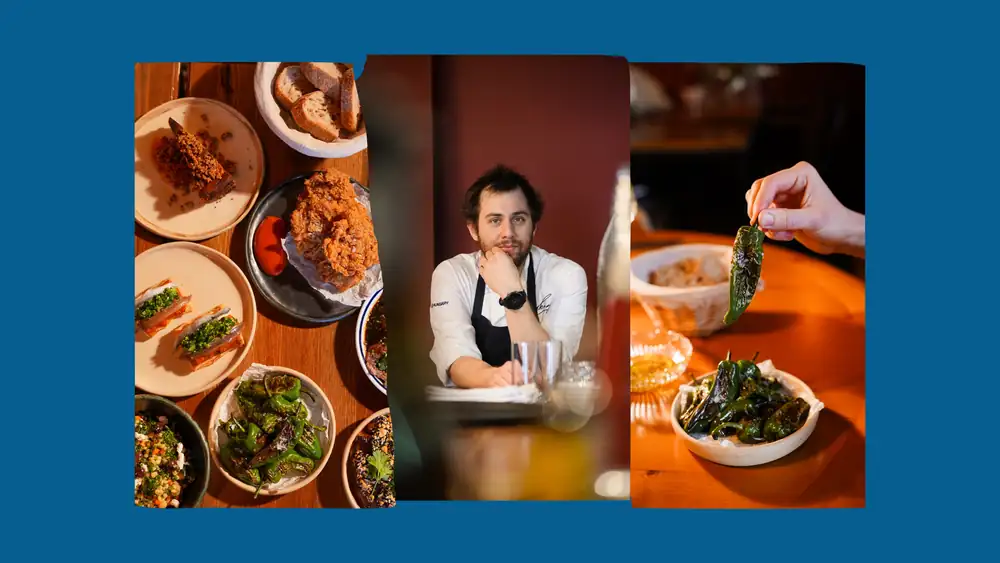
Yes, this was a key consideration. We certainly didn't want to open a concept that competed with our existing place in Miskolc, and we didn't want to do an Iszkor or two. The idea of a more tapas-oriented, small plate-oriented place had already been raised in the case of Iszkor, so this idea quickly came to the fore when planning Gajdó. We introduced Asian, Mediterranean and Hungarian elements, and now we've started to steer the whole thing towards a more Spanish cuisine. Tapas became the emphasis, but regardless, there are also larger portions, so those who imagine a slightly more classic meal here won't be disappointed.
How well did guests understand this concept at the time of opening?
It took time because everyone was looking for a restaurant, to be precise everyone was looking for Iszkor, only in a new location. It took a lot of energy to get the message across that Gajdó is not a restaurant, and it doesn't want to be one. Fortunately, many people are already clear about our concept, but in the meantime we are also trying to give our guests the opportunity to find a place if they want to sit with us for a longer time.
Did you manage to ensure that the two places don't take away each other's guests?
Gajdó is essentially a much simpler version of Iszkor, with tapas, drinks, a simpler wine list, cocktails. It wants to be a place with a much more urban atmosphere, so those who are actually interested in the restaurant experience and the local ingredients will still go to Iszkor. Meanwhile, we also have guests who visit the area and check out both places. We see that the two places play different roles in the minds of the guests.
How is your team at Gajdo made up?
It's basically a new team, but colleagues from Iszkor come over to help if needed. Many people from Miskolc work for us, and those coming from the Mályinka unit try to teach them how things work here, how the service is structured, the daily routine, and what the expectations are.
You have been communicating Gajdó as a community space since the beginning. How does this come about in practice?
For example, in May, Avas' biggest event, Borangolás, is held here, which is about as important an event in Miskolc as Christmas is nationwide - so everyone is preparing for it.
We have also had workshops, flower arranging, wine tasting, and we would like to do cooking workshops. We are also trying to cooperate with the Miskolc theater, we would like to incorporate as many cultural programs as possible into our operations. We are constantly looking for collaboration opportunities, because we want to fill this huge space with life. We have a lot of ideas for this, but the implementation always requires much more time and energy than we imagine in advance.
Are the guests open to the programs?
Basically yes, many people are looking for these kinds of opportunities. We are currently testing what times work well, when it is worth timing the events.
You recently went on a study trip to the Basque Country. What experiences did you return home with?
We already had many ideas in mind for the new menu, but we wanted to find reliable sources for this whole thing, so we went to Spain, the Basque Country, to try tapas and pintxos. We can also call it a professional trip, because although we ate a lot, we wanted to incorporate the experiences and knowledge into the new menu, which we did. The menu includes, among others, padron peppers, gambas al ajillo y guindilla, patatas bravas and Catalan cream.
How different is your use of raw materials from what was already common at Iskor?
In Mályinka, a stable circle of suppliers has developed very nicely in recent years, and we continue to work with those who can supply us with good raw materials even in the increased quantities. Meanwhile, in Iszkor, we lacked the opportunity to work with sea fish, shellfish, and shrimp, so it was good to expand the range of raw materials a little because of Gajdó and open up towards a more international direction.
What are you looking forward to in the summer season?
We have an incredibly beautiful terrace, full of trees, a very shady and cool place, so I think many people will be looking for the experience of getting away from the city center for a bit. Of course, we also have to take into account that the loss of the cave bath was a huge loss for Miskolc in terms of tourism, but there are still many attractions in the area. Lillafüred and the Bükk attract many hikers here. By the way, there will be an opportunity to meet us in the capital at the end of May, as we will participate in the Gourmet Festival with both units.
Of course, we must not forget that the first quarter of this year brought many challenges, the hospitality industry is not going through its easiest period, but our team is optimistic about the coming months. I always tend to be more pessimistic, but we hope that this will be a pleasant disappointment. In short, we are not living in times when we can sit back, this is not an option now.