Fatty pasta in the history of Hungarian cuisine
What is fatty pasta?
Fatty pastry is a type of dough that is often folded, leavened or puffed, and greased with lard (more precisely, the friable fat that fills the peritoneum) and then baked with various fillings, most often plum jam, apple, walnut or poppy seed fillings. The end result is a layered, crumbly, rich cake that is crispy on the outside and soft on the inside.
The history of fatty pasta
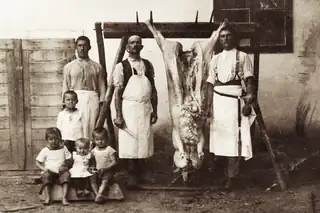
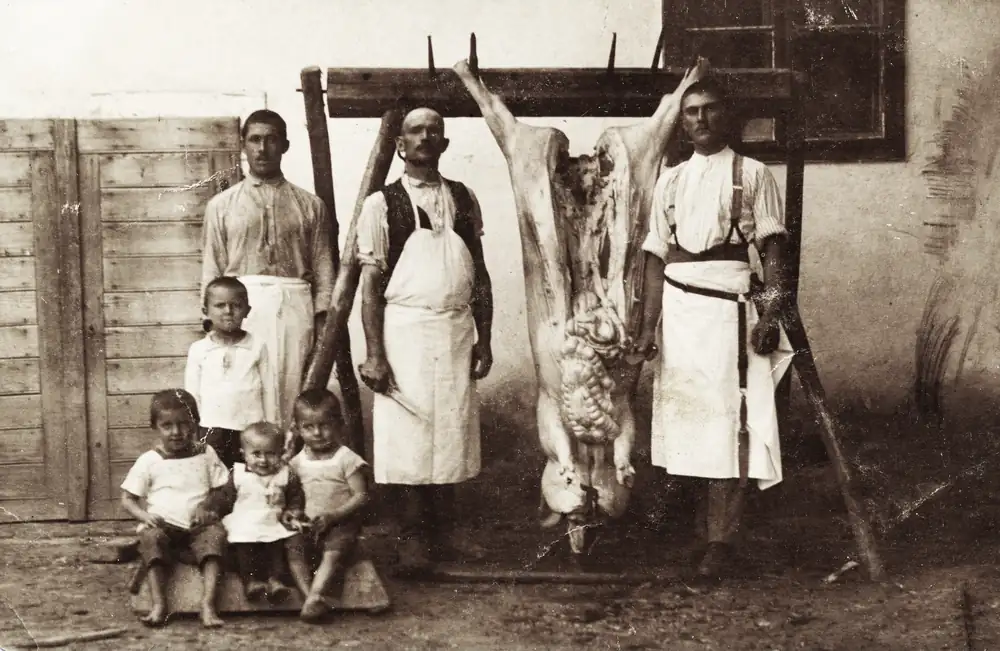
The origin of lard dough can be traced back to the late 18th and early 19th centuries, when it was a typical pastry for pig slaughter in peasant households. At that time, lard was not only used to fry fat, but the meatless parts were also ground, creamed and rolled into dough. Since fresh lard could only be produced in winter, lard dough was mainly baked during Christmas and Carnival.
Béla Fehér and Zsuzsanna Gálffy's book, Kakastaréj, writes about this almost completely forgotten classic of Hungarian cuisine:
“… on Saturday afternoon, the housewife knitted an apron, took sixty deka of minced pork fat from the refrigerator. She kneaded it with forty deka of flour, salt, and a little vinegar. It was no small task. In the end, a thick, hard dough was formed that was difficult to shape. She formed a block of it and put it in the cold. Then she kneaded a strudel dough from a kilo of flour. It didn’t even have to be kneaded, but was beaten in a deep bowl with a wooden spoon, beating it rhythmically until the soft dough puffed up and blistered. This also rested for a while, then the housewife covered it on a board, stretched it out, took out the fat mixed with the flour, and tearing small pieces from it, spread flastroms on it with her finger.” – Then comes folding, which ends up with a folded block about an arm’s height. The dough is filled with nuts and jam. The whole operation is tricky, requires a lot of work and time, and even more patience.
The results of the long folding can really be seen during baking, as the fatty dough opens up and we can see the hair-thin layers.
“It was a festive treat for Hungarians, but it is no longer considered a Hungaricum,” the authors continue, and their sadness over the disappearance of a classic is not only justified, but also thought-provoking.
As they write, it was possible to obtain the friable fat that fills the peritoneum through pig slaughtering, and with the change in habits, fewer and fewer people are slaughtering pigs and fewer and fewer people know how to make fatty pasta.
Early recipes
In Aunt Rézi's Szeged cookbook, I found a recipe for fat scones, which was often made after pig slaughter, and faithfully preserves the use of fat.
Fatty patty. Take half a kilogram of pork fat, which you have previously soaked well, pass through a sieve and put in the cold to harden. Now put half a kilogram of flour on the rolling board, stir in an egg-sized piece of fat, make a well in the middle of the flour with your hand, break 3 eggs into it, add salt and as much white wine as you like, knead and beat with your hand until the dough forms bubbles, then set aside to rest; after half an hour, put the dough on a board sprinkled with flour and roll out thinly. Spread the fat with a knife, fold up the four edges, roll out and let rest for another half an hour. Repeat this three times. A fourth time, roll out to a thickness of a finger, cut into patties, brush with beaten egg, place in a baking tray and bake until nicely browned.
Variants by region
In the Great Plain, the plum jam version dominates, in Transdanubia apple or cinnamon fillings are also typical, in the highlands poppy seed and walnut versions are also common, and in Transylvania the fat croissant made from fat dough is also popular.
Fatty pasta in the 20th century
Until the mid-20th century, it was known and prepared in almost every rural household. With the advent of industrial foods and the decline in trust in fat, fatty pasta fell into the background. The decline in pig slaughter also contributed to its oblivion.
Many people today try to replace fat with butter or coconut oil, but only lard can provide the original texture.
About fatty dough with the pastry chef of Zazie
Zazie's Hungarian cuisine also includes classic dishes made with lard.
“Procuring lard is very difficult, and many people view it as waste,” begins Zazie’s pastry chef, Gergő Nagy, who considers the ritual of slaughtering a pig an integral part of his childhood. “Lard is difficult to work with, it behaves similarly to butter, although it has bound muscle fibers that hold it together. However, once it melts, it cannot be refrozen like butter, so you have to work with it quickly.
We have used it several times at Zazie for dishes, snow rolls, retro cream rolls, puff pastries, it works perfectly. It is important to always add some kind of acid to the kneaded dough, I usually use white wine because it always brings out the flavor of the fat.
I think it's a very good ingredient, it reminds me of my childhood, of pig slaughtering. While the men were doing their own thing, the women made various fatty pastas, fatty patties, or folded pasta. Sometimes a small piece of meat was left in these, which made the dish especially spicy. I'm sorry that this ingredient and the traditions associated with it have started to die out a bit, even though these dishes beautifully preserve the imprint of a period and the customs associated with it.”