Karai by Mitsuharu, the Nikkei reference in Santiago
I see Karai, the restaurant of renowned Peruvian chef Mitsuharu Tsumura in Santiago, as the most solid reference point for Nikkei cuisine in Chile. His approach is impeccable and rooted in the constant interplay between the product, Japanese technique, and the combination of ingredients from Chile and Peru.
After six years in operation, Karai, located on the fourth floor of the W Hotel, has been gaining prominence thanks to its omakase concept, in which customers blindly trust the chef's recommendations. It typically features a selection of small bites that run through the menu, including the occasional improvisation by the chef, who adapts his approach based on the available ingredients.
Behind Karai is a young team, led by Gerson Céspedes and Gerson Espinosa, both trained at Maido. They have consolidated their position in the national gastronomic scene, gaining prominence for their professional discipline and also because they have modified their understanding of cuisine, adopting a style that blends Chilean soul with Nikkei fusion.
The tasting begins with a kazoku tiradito, featuring a smooth and delicate trout from Parral. It's a unique tiradito, with a fragrant, citrusy green sauce textured with a chickpea cream; a succulent and indulgent dish, seemingly simple, yet perfectly executed. A touch of smoked sausage from Chillán crowns the dish, enhancing the fish. It may well be one of the best dishes on the menu.
I followed with a crispy cone filled with ceviche-style abalone and avocado cream, which was a bit cloying, and a chicken yakitori, served with crispy skin and accompanied by ají de pollería, a traditional Peruvian sauce made with yellow chili pepper and huacatay. Both dishes were decent in flavor, though a little bland.
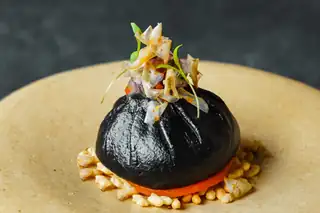
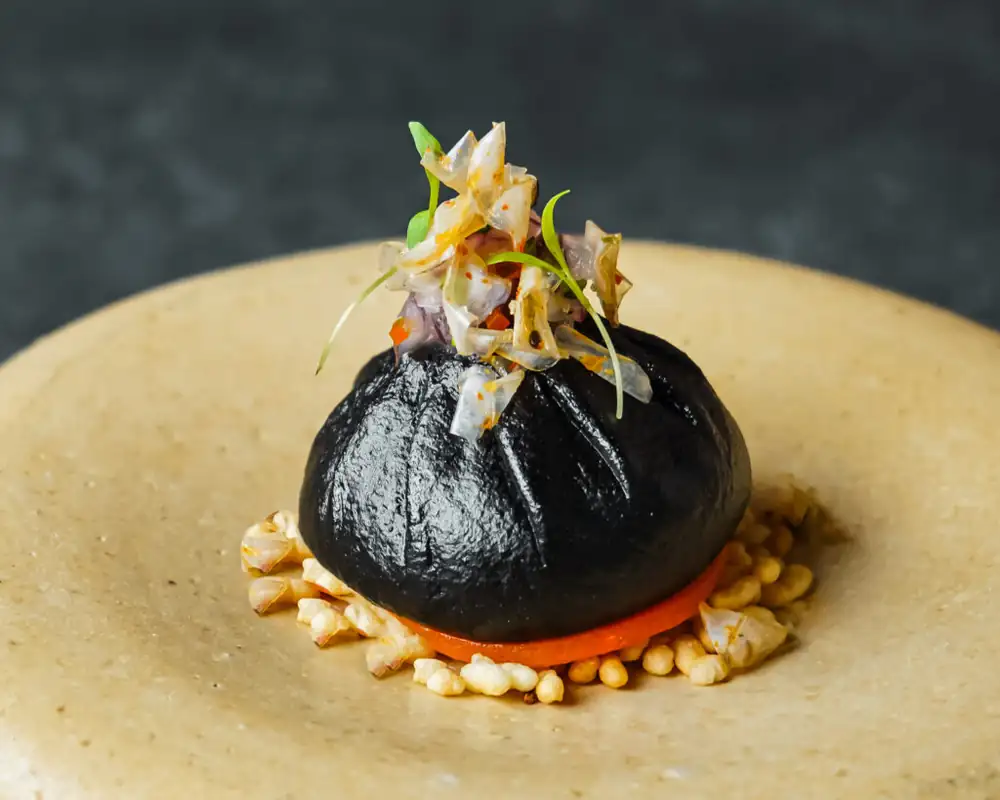
The other highlight of the meal comes in the form of a bao. The xiaolong bao is one of the dishes where Karai demonstrates his sophistication and technical skill. The bao dough, colored with squid ink, is incredibly thin yet sturdy enough to keep the filling inside during baking. It's fluffy and elegant. The defining characteristic of xiaolong bao is the filling, which always includes broth. Karai's version is filled with seafood and arrives at the table topped with a fresh chalaquita (a type of salsa). I found it to be an exquisite bite.
The transition between dishes is interesting, alternating Japanese preparations with dishes drawn from traditional recipes rooted in Peruvian cultural heritage. One example is the grilled octopus, brought from northern Chile, served with anticuchera sauce, native Chilote potatoes, pebre, and uchucopa sauce made with rocoto peppers and herbs. The octopus is cooked and seared to perfection, crispy yet tender. Hard to find. The creamy seafood rice, finished with katsuobushi (dried bonito flakes), is also magnificent. Pure concentration of flavor, and the rice is perfectly cooked, whole, and creamy.
The desserts, created by Sebastián Araya, a professional who takes risks, are another highlight of Karai. I tried the corn, miso, and sourdough financier, with a playful chuchoca crisp (chuchoca is the result of grinding tender corn that has been previously cooked and sun-dried). It's both traditional and a bit of a whimsy. In the middle of corn season, I think it's brilliant that they've given it such a prominent role. The accompanying pineapple and chamomile sorbet adds a refreshing herbal touch to the dessert.
Karai has personality, and although Mitsuharu Tsumura's influence is evident, it's beginning to find its own identity. Just two things: they need to eliminate the snobbish culinary habits imposed by the use of truffle oil. I see it advertised on some dishes and it makes my eyes twitch. The wine list, moreover, is somewhat weak, too limited. I missed having fresh reds that would better complement the intense flavor profile of the dishes. The cocktail selection is an improvement, although they should be more mindful of the sugar.