Guava: the fruit that is also used as a mosquito repellent
Origin and distribution of guava
The guava fruit originated in the tropical regions of the Americas, mainly in Mexico, Central America, and South America. The ancient Mayans and Aztecs cultivated and consumed the fruit, and numerous historical records indicate that guava was popular in various forms among these ancient civilizations. It was introduced to Asia and Africa by European explorers in the 16th century, and is now cultivated in a wide range of tropical and subtropical countries, including India, Thailand, the Philippines, and some parts of Africa.
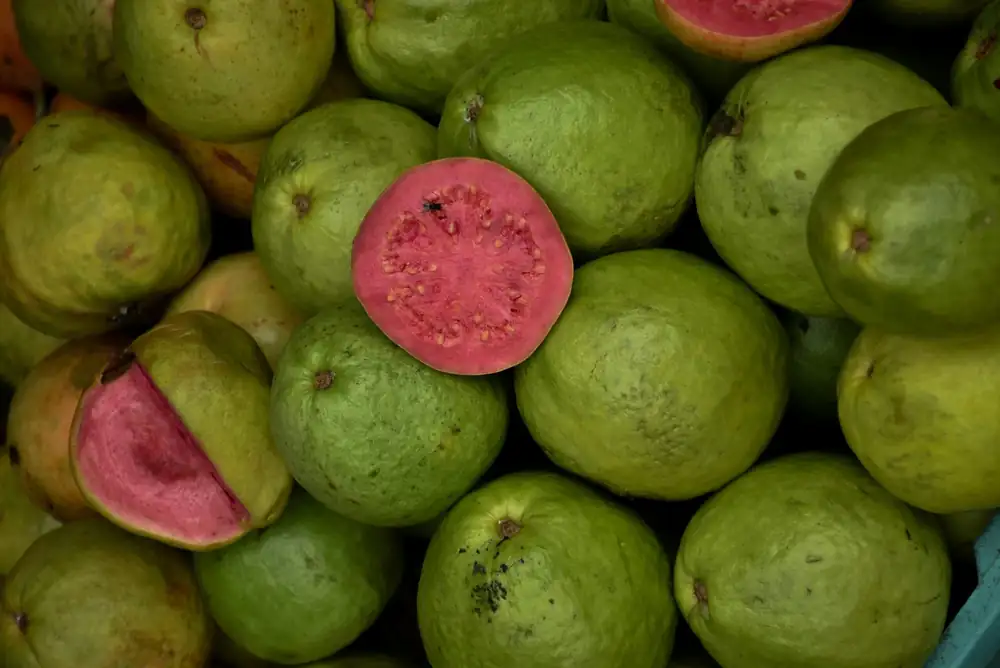
Guava is not only an adaptable fruit, but it is also particularly rich in vitamin C, vitamin A, fiber, and antioxidants. This is why it has become important from a health perspective in modern times. Different varieties, such as white-fleshed or pink-fleshed varieties, offer different flavors and textures, making them suitable for a variety of dishes, from light desserts to savory dishes.
Guava in modern gastronomy
Guava is gaining popularity in modern gastronomy due to its versatile uses and unique flavor. The ripe fruit is slightly tart and sweet, somewhat similar to strawberries and pears, but has a spicy aroma that lends a special character to various dishes. Due to its sweet taste, guava is often used in desserts such as ice cream, jams, jellies and pies. Tart guavas are added to savory dishes or spicy sauces, where they harmonize with the other flavors.
Guava-based drinks, such as guava lemonade or guava cocktails, are also very popular, especially in tropical or fusion cuisines. The flesh of the fruit is often pureed or made into a syrup, which is added to refreshing drinks such as juices or cocktails. Guava-mango or guava-chili sauces are also popular in modern cuisines, and are used as a side dish with grilled dishes or as a salad dressing.
Guava leaves also play a significant role: in Asia and Africa, they are used to make a tea that is traditionally used as an anti-inflammatory. The antioxidants in the leaves also contribute to the modern diet, especially among health-conscious eaters.
Health
Guava is particularly important in health-promoting diets due to its high nutritional value. Its vitamin C content can be up to four times that of an orange, thus strengthening the immune system and contributing to the body's antioxidant defenses. In addition, vitamin A promotes healthy vision, and its fiber content contributes to improving digestion. For all these reasons, guava has become a popular ingredient in various health-promoting recipes.
Guava is also a staple in vegetarian and vegan cuisines, where the fruit adds a sweet flavor and variety to meals. In addition to traditional guava uses such as jams and syrups, there is a growing demand for guava powder, which is used in fruit smoothies, porridges or cakes.
Interesting facts
There are over 100 varieties: Guava comes in a wide variety of sizes, colors, and flavors. The most well-known varieties include white, pink, and red fleshed varieties, all of which offer different flavor profiles, ranging from pleasantly sweet to slightly tart.
Edible seeds and peel: Every part of the guava fruit is edible—including the peel and seeds. The seeds are crunchy and the peel is full of fiber and antioxidants, although the peel can have a slightly tart taste.
It is also used as a medicinal plant: Not only the fruit, but also the leaves of the guava are valuable. In Asia and Africa, for example, it is made into a tea, which is traditionally used as an anti-inflammatory. According to research, guava leaves may also have antibacterial and analgesic effects.
Weight loss fruit: Guava is a low-calorie, yet extremely filling fruit due to its high fiber content. This makes it ideal for dieters as it helps keep you feeling fuller for longer.
Mosquito repellent: Interestingly, guava leaf extract is also used as a mosquito repellent in certain tropical areas, as the essential oils it contains repel insects.