'Heirloom' tomatoes preserve the flavors of the past
The history of heirloom tomatoes is closely tied to the agricultural practices of old, family farms and communities. The origins of these types of tomato varieties go back hundreds of years and include tomatoes that have been preserved as heirloom seeds for generations.
The term became popular in the mid-20th century, when modern agricultural practices, especially industrial farming and the spread of hybrid varieties, threatened traditional varieties. Heirloom tomatoes have resisted these trends and have survived on smaller, sustainable farms. Such tomato varieties are genetically diverse, meaning that the plants have naturally adapted to their particular environment and climate, making them often more resistant to disease.
Why are heirloom tomatoes important?
Heirloom tomatoes are important for a number of reasons. One of their most important benefits is their genetic diversity, which helps preserve the tomato's original characteristics. While commercial tomato varieties are often genetically modified to better meet the demands of shipping and storage (for example, to be firmer and less likely to bruise easily), heirloom tomatoes have retained their original flavor and color. This is especially important for food safety, as the uniformity of hybrid varieties in global agriculture can facilitate the spread of plant pests and diseases.
Additionally, preserving heirloom tomatoes helps preserve culinary heritage. Each variety has its own story, often tied to a specific community, region, or family. Growing and consuming tomatoes has been a central part of cultures for centuries, and these heirloom tomatoes allow us to continue to enjoy the flavors of the past.
Taste and properties
One of the most notable characteristics of heirloom tomatoes is their complex and intense flavor. Unlike hybrid tomatoes, which are often bred to stay fresh on the shelf as long as possible, heirloom tomatoes are all about flavor. Their flavor can be sweet, sour, juicy, or slightly tart, depending on the variety. Each variety has a unique flavor profile, and heirloom tomatoes tend to have a richer, more intense flavor than their store-bought hybrid counterparts.
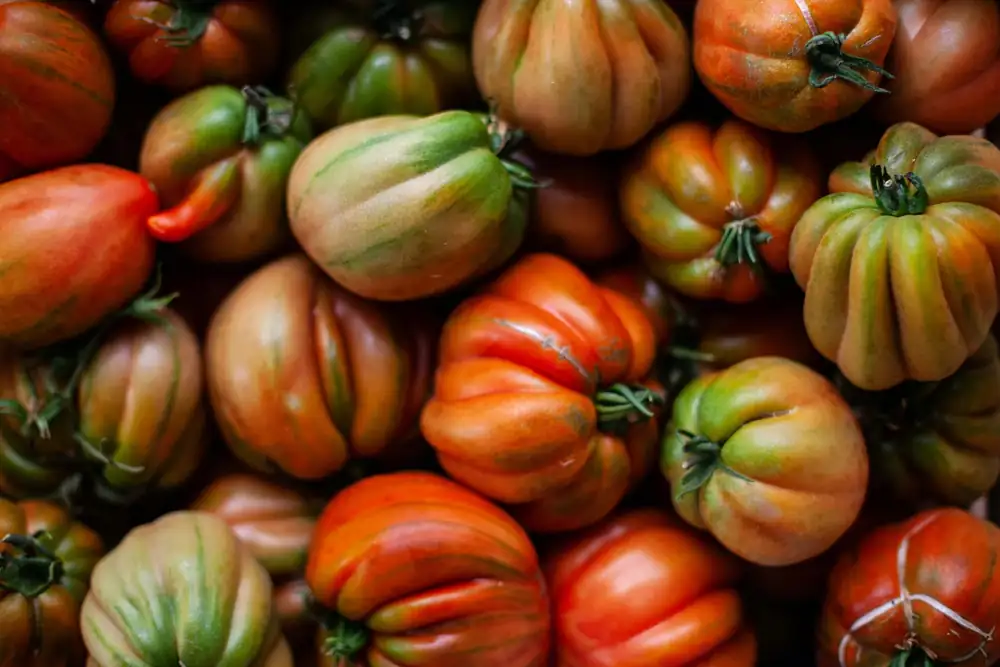
They also come in a wide variety of shapes and colors. Heirloom tomatoes can be red, yellow, green, purple, and even black and striped. They also come in a wide range of sizes, from small cherry tomatoes to large, fleshy varieties.
Gastronomic use
Heirloom tomatoes are used in many ways in gastronomy, as they are extremely versatile. When eaten raw, their fresh, juicy taste is best displayed in salads. The bright colors and shapes give a special look to dishes, so they are often used in Caprese salads or simple tomato salads with olive oil. Their flavor is so complex that a little salt, pepper, and a good quality olive oil is enough for them.
They are also ideal for sandwiches, pizzas and various pasta sauces. The fleshier varieties of heirloom tomatoes are used for thick, rich tomato sauces and gravies that enhance the flavors. They also excel in Mediterranean and other cuisines when grilled, baked or stuffed.
Popular heirloom tomato varieties:
Brandywine: This is one of the most well-known heirloom varieties that produces large, fleshy, and sweet-tasting tomatoes.
Cherokee Purple: A purple-colored, smoky-flavored tomato that comes from an ancient American Indian tribe.
Green Zebra: A special green striped variety that is famous for its sour, fresh flavor.
Yellow Pear: A small, pear-shaped yellow tomato that has a sweet flavor and is great for use in salads or as a garnish.