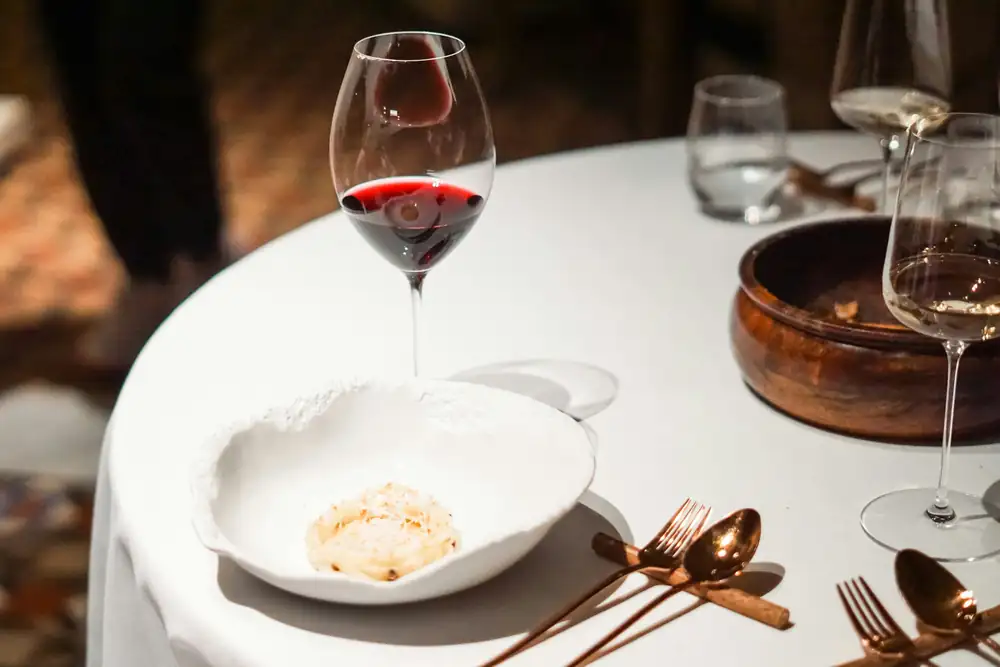
Tasting menu: our bodies can react in many ways, but we can also prepare for tasting adventures
How should we prepare for restaurant experiences where we encounter dishes that are very different from our usual diet? There is no question that in these situations our digestive system has to adapt, but with a little attention and good practice we can easily support this process.
Let's eat sparingly in the days before the tasting menu!
- Tasting a tasting menu is an intense experience, during which the activation of the taste buds and the brain's dopamine system, as well as the intestinal flora, can function and interact in a very complex way. Our body can react to such a gastronomic adventure in many different ways, so it is worth preparing in advance and somehow stabilizing the balance of our digestive system - begins Prof. Dr. Ferenc Izbéki, head of the department of internal medicine at the Fejér County Szent György University Teaching Hospital.
He says that to avoid bloating or low-intensity inflammation in our digestive tract, it is worth eating sparingly in the day or two before consuming the tasting menu.
- Avoid overly processed (also known as ultra-processed) foods, foods containing refined carbohydrates and artificial additives, and dishes rich in fat! Instead, eat whole grains – that is, grains that contain both bran, starchy kernels, and germ – oats, quinoa, basmati rice, steamed vegetables, high-protein foods, and fermented foods like kefir, yogurt, sauerkraut, kimchi, miso, and kombucha! – says the chief physician, adding: never go on gastronomic adventures on an empty stomach!
- If you are preparing for a tasting dinner, it is worth eating a small portion of steamed vegetables for lunch, and for a snack, feel free to eat yogurt, kefir, oats, a handful of walnuts or almonds! It is important to avoid spicy, fatty foods during the day.
Let's enjoy the flavors! Our bodies will thank us too
Prof. Dr. Ferenc Izbéki points out that it is important not only to maintain the balance of our digestive system, but also for the sake of taste perception, not to overload ourselves before a tasting experience – in this case, our taste receptors!
- If the taste buds are in good condition, we get a completely different – more complex – experience in restaurants, as if we had arrived with overloaded receptors. Many people believe that only our mouths have taste buds, but practically our entire digestive tract has the corresponding small units. Moreover, they are able to sense not only the given taste, but also the calories consumed in connection with the tastes – shares with us the gastroenterologist, who usually advises all his patients – including those following diets and weight loss programs – to enjoy the tastes. Why?
- Chew, chew, slowly, slowly, let the taste buds in your mouth be satisfied! I always recommend this to my patients, because the feeling of satiety and the pleasure of eating basically occur for two reasons. One is the quantity, and the other is that so many stimuli have arrived in our brain from our taste buds, which says: “now that’s enough, I don’t need to eat anymore”. In this case, the feeling of “enough” is achieved by the taste buds. Unfortunately, it is a common phenomenon in Hungary that the feeling of satiety is equated with a stomachache, even though it is worth finishing the meal before our stomachs become tense and we are unable to eat more.
It might be a good idea to learn and apply the 80% rule, rooted in Japanese culture, which states that we stop eating long before we feel the aforementioned stomach distension.
Taste, smell, sight, story – Together they enhance the feeling of satiety
Slow, mindful eating is therefore key from both a health and enjoyment perspective, but I was curious to what extent visual elements, colors, shapes... can enhance the feeling of satiety described above.
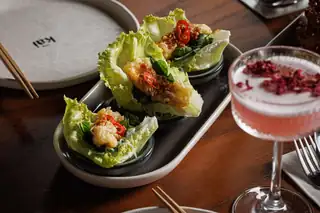
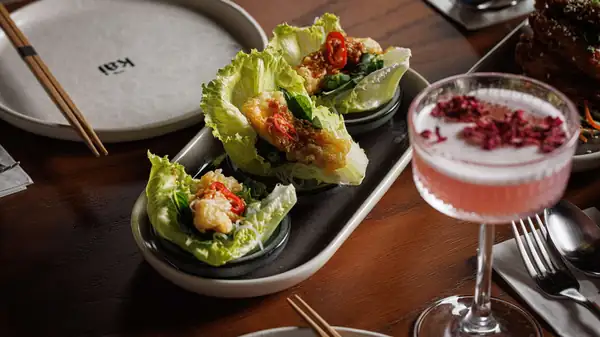
- Just like smells, the sight is also particularly important for the pleasure of eating, for the feeling of satiety. In the case of tasting menus, the composition of the dishes is at least as important as the ingredients themselves. Moreover, in addition to the aesthetic aspects, the stories behind the dishes also contribute to the pleasure of consuming them, points out Prof. Dr. Ferenc Izbéki, with whom we agreed that with this knowledge, perhaps those who previously approached the world of fine dining will open up to the premise that “I will definitely not be full of this.”