Arab Cuisine Will Never Stop Evolving
A new book by Reem Kassis considers the region’s centuries-long culinary journey through fusion, migration, and industrialization. When Reem Kassis published her first book, The Palestinian Table , in 2017, she realized, time after time, that people are often temped to look at a country’s or region’s cuisine through a …
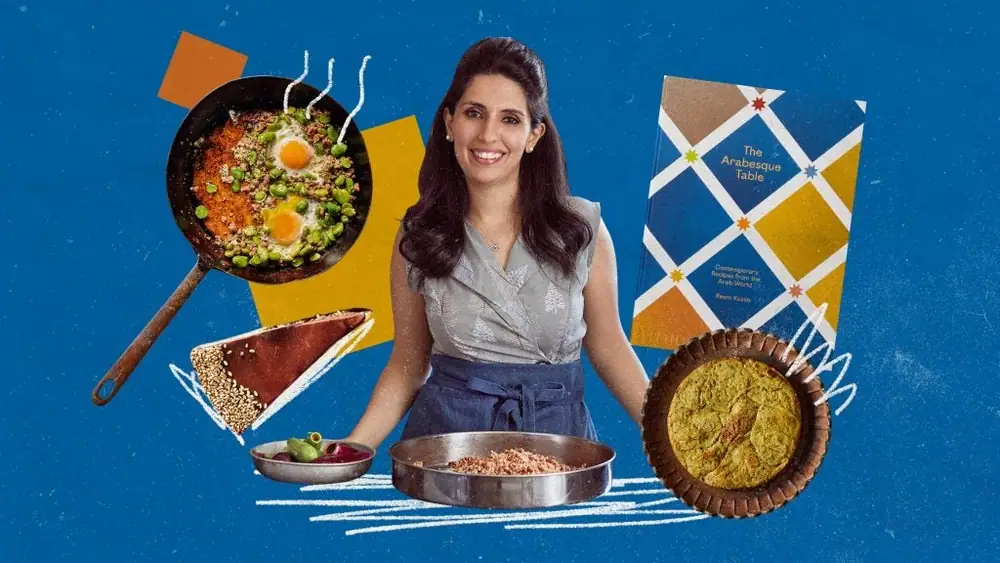
Kassis’s rebuttle to this notion is The Arabesque Table , which spans the geographic area that now comprises 22 countries stretching from the Atlantic Ocean to the Arabian Sea. The “Arabesque” in the book’s title refers to the ubiquitous ornamental design that appears in Arab and Islamic art (and on the book’s jacket).
Rather, it is just like an arabesque pattern, flowing and intertwined, its beauty not intrinsic but enriched by the kaleidoscope of interlaced. Potentially infinite designs that inspired this title.” I in recent weeks talked to Kassis about some of those intricacies she honored in The Arabesque Table . Your first book, The Palestinian Table , came out in 2017.
As I kicked off researching this more and more, I realized that our perception of cuisine is flawed, since our time frame is, at best, a couple hundred years—when, in fact, the history of cuisine stretches back to the start of civilization. I wanted to show this journey over time, and how food is inherently intertwined and cross-cultural, even as it remains crucial to defining a national identity—i.e., that those two things are not mutually exclusive.
The Arabesque Table arose out of that understanding and desire to explain this journey, but also out of frustration at seeing how many books were coming out claiming to be one national cuisine or another, when they were, at best, fusion. Fusion itself is wonderful and, in fact, not new to Arab cuisine—centuries of migration, occupation, and trade have left their mark on our food. To be able to showcase what a modern Arab table looks like today with any semblance of integrity, we have to place it in the context of the entire culinary history of the Arab world and the journey that brought us to this point—and that’s what The Arabesque Table tries to do.
Were there any particular misconceptions about Arabic food that you wanted to overcome with the book? Another leading misconception that I discovered and wanted the book to highlight was this idea that Arab cuisines borrowed a lot from Ottoman cuisine.
Digging into the culinary history of the Arabic world, were there any leading revelations you discovered? For example: The very idea of a milk pudding thickened with starch was brought to Europe by Arab traders—so think of panna cotta, blancmange, and any other pudding you find, and its origins can be traced back to Arab cuisine. The bagel in addition has Arab origins, since the first mention of a boiled then baked ring of dough was mentioned in a 13th-century Arabic cookbook long before the at present presumed 16th-century Poland.
You wrote the book from your home in Philadelphia, and there are a few moments in the text where you talk about modernizing or adapting traditional dishes to work with your own cookery habits (like the weeknight version of maqlubeh!). But they were what I could do given the circumstances, and, in my opinion (at least for the cabbage), they were better than the original.
What were the most difficult components or pieces of produce to find in Philly? Kousa, divested here as Mexican gray squash, is one of the components I struggle to find, and, if and when I do find it, it’s too large or not fresh enough. THREE EXCITING RECIPES FROM THE ARABESQUE TABLE : Tahini Cheesecake with Chocolate Glaze and Sesame Seeds This just might be the spin on the New York classic you’ve been waiting for.
- Who: Arab · New York