Good and Organic in Celebration: Rome's Botanical Garden becomes a 4,000-square-meter market
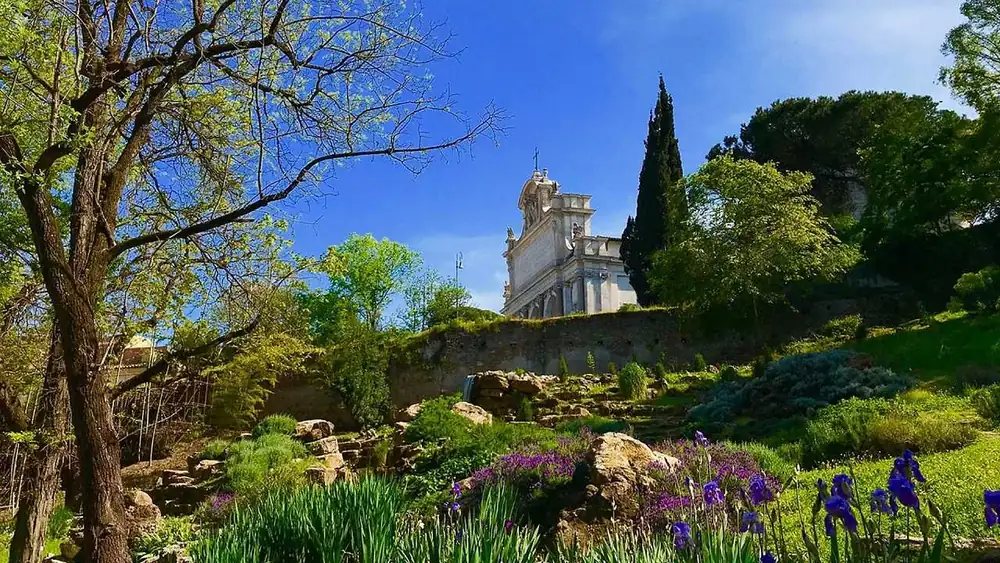
Among the lush avenues of the Botanical Garden of Rome, on June 6 and 7, 2026, there will be an air of profound change and reflection: the Buono e Bio in Festa event will transform this treasure trove of biodiversity in the heart of the capital into an open-air laboratory where food is not just nourishment, but the linchpin of a new alliance between the city and its territories.
The initiative was born in a metropolis that is now heavily dependent on external sources: only a quarter of the food consumed in Rome comes from the Roman and Lazio countryside, with more than half of agricultural food products coming from the rest of Italy and 15 percent from abroad.
This situation implies a profoundly negative import balance, with the capital exporting food worth €25 million and importing €465 million. These worrying figures are further compounded by the data on land consumption: over the last sixty years, 61,000 hectares of natural or agricultural land have been developed, and 41,000 hectares of agricultural land are now abandoned and uncultivated.
This will be the central theme, but certainly not the only one, of Buono e Bio in festa, which will feature a packed program of meetings, conferences, and opportunities for discussion, exploring virtuous models that can enhance local production, biodiversity, and local economies, even in cities.
What you need to know about Buono e Bio in Festa 2026
We're now in the eleventh edition of an event that this year will involve more than sixty organic and natural producers, whom visitors will be able to meet in a 4,000-square-meter exhibition area. Last year alone, the event attracted over 10,000 attendees. In this context of necessary reconnection, Rome's Councilor for Agriculture, Environment, and Waste Management, Sabrina Alfonsi, welcomed visitors by emphasizing the initiative's political and social significance: "The launch of 'Buono e Bio in Festa' is a great satisfaction. This edition will feature a series of events showcasing the significant work this Administration has done in terms of food policies, including the drafting of the Capital's food plan."
An event that will not only involve the capital, as Alfonsi herself emphasizes: "We have also chosen to involve several cities that are promoting food strategies and policies: near Genoa and Florence, there will also be smaller municipalities, such as Alba, Varese, and Melpignano, to question the capital's role in food policies, also in relation to thousands of smaller, yet important, communities that are custodians of food and wine excellence.
Numerous discussions will address topics such as health, economic justice along the supply chain, and the often invisible yet central role of women in agriculture. Barbara Nappini, president of Slow Food Italy, calls for a genuine revolution in thinking: "We need a cultural shift, as well as a cultural one: we need to overcome the competitive and reductionist perspective that has sacrificed certain areas to favor others at the altar of misunderstood efficiency! Today, it's clear that the inland areas (hilly and mountainous), once places of "doing," are fragile, and have instead been emptied of meaning and depleted of services. But large urban areas, which must address urgent environmental, public health, social emergencies, and even food security issues, are equally fragile.
According to Nappini, "Only by moving beyond the sectoral approach will we be able to have a positive impact by restoring equal dialogue between city and countryside, not in a service-oriented way but in a cooperative way: this is what food policies are all about. If there's one legacy that encompasses all the legacies of our founder Carlo Petrini, it's the belief that the world can be changed, starting with food!"
In addition to reflections and debates, the Botanical Garden will come alive with the Organic Village and the Earth Market, where residents can experience the value of biodiversity firsthand through direct encounters with producers. For younger visitors, the Baby Bio Park will be a place of discovery where they can learn to respect the earth's rhythms and the seasonality of produce, instilling in future citizens the awareness that every food choice is an act of care for the planet. The celebration will conclude by leaving participants with the image of a capital city that, through local markets, organic school cafeterias, and new local governance, seeks to build a more equitable food system for all.
The ticket for Buono e Bio in Festa has a symbolic cost of 2 euros, a contribution to support the GROW program of the FAO Mountain Partnership, dedicated to the defense of biodiversity and mountain farming systems. It can be purchased directly at the Botanical Garden of Rome on the day of the event, without any need for reservations.