Dutch Consortium Wins €4M to Turn Crop Side Streams Into Food Ingredients
A research consortium led by Wageningen University & Research (WUR) has been awarded just under €4 million by the Dutch Research Council (NWO) to develop consumer foods from plant-based agricultural side streams.
“We want to show how you can really get this transition underway. If this works for side streams from legumes, rapeseed and potatoes, it could serve as an example for side streams from other crops,”
Those residues currently go to animal feed, biogas production, or other low-value applications despite being rich in protein. Rapeseed cake, the material left after oil pressing, contains around 30% protein and is rarely used for human consumption. Heidy den Besten, personal professor in food microbiology at WUR and the project’s initiator, puts the share of legume processing streams discarded because of colour, shape, or poor logistical coordination in the supply chain at roughly 20%.
Dry fractionation and fermentation
The consortium will use two technologies, separately or in combination. The first is sustainable separation to pull proteins out of the raw material. “We will partly use dry fractionation, which is much more sustainable than conventional wet extraction,” said Den Besten. The second is fermentation with bacteria and fungi, which the researchers will use to strip out glucosinolates and phytic acid, adjust taste and aroma, and raise nutritional value through microbially produced vitamin B12 and K2, both normally associated with animal products.
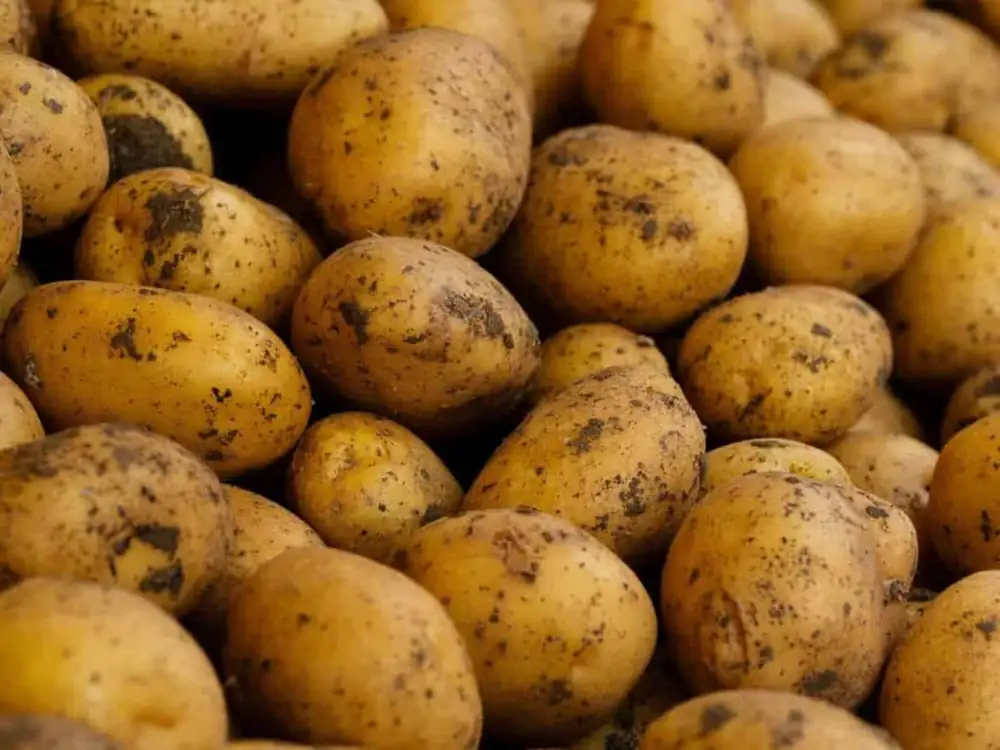
Target outputs include new ingredients for meat alternatives, spreads, snacks, and fermented products comparable to tempeh. For potato side streams, the team will test whether protein-rich fungi can be grown directly on the material, with the resulting fungal biomass then used as a food ingredient. Consumers will be brought into development from the outset to establish which product formats stand a realistic chance in supermarkets.
Where the supply chain stalls
Companies hold off investing until demand is proven, while retailers hold off listing until supply volumes are reliable, and the project will map that deadlock alongside the technical work. “You need more than just researchers,” said Den Besten. “We also need to bring producers, retailers and policymakers together. That increases the chances of achieving real change.”
The consortium spans four universities, two universities of applied sciences, three vocational education institutions, nine companies, a crop growers’ cooperative, four network organisations, a government institution, and a European lobbying organisation. Named industry partners include Unilever, Royal Avebe, and AB Enzymes. Seven PhD positions and one postdoctoral post will be created under the project.
Funding comes through the Dutch Research Agenda call “Opportunities and supply chains for side streams in the protein transition,” developed at the initiative of the Ministry of Agriculture, Fisheries, Food Security and Nature (LVVN).
Rapeseed cake draws wider European attention
VASCO lands in an area European research groups have been circling for some time. Last month, VTT Technical Research Centre of Finland published a doctoral dissertation on converting rice bran and rapeseed press cake into food-grade ingredients, and Fraunhofer CBP has run a pilot using ethanol fractionation to keep rapeseed proteins intact for use in vegan burgers. On the commercial side, German biomass fermentation company MicroHarvest is building a 15,000-tonne plant at Leuna that runs on regional agri-food side streams.
“We want to show how you can really get this transition underway. If this works for side streams from legumes, rapeseed and potatoes, it could serve as an example for side streams from other crops,” said Den Besten.