The Case for Real Food: Why We Need the Salad More Than Ever
Real food doesn't need to reinvent itself to stay relevant.
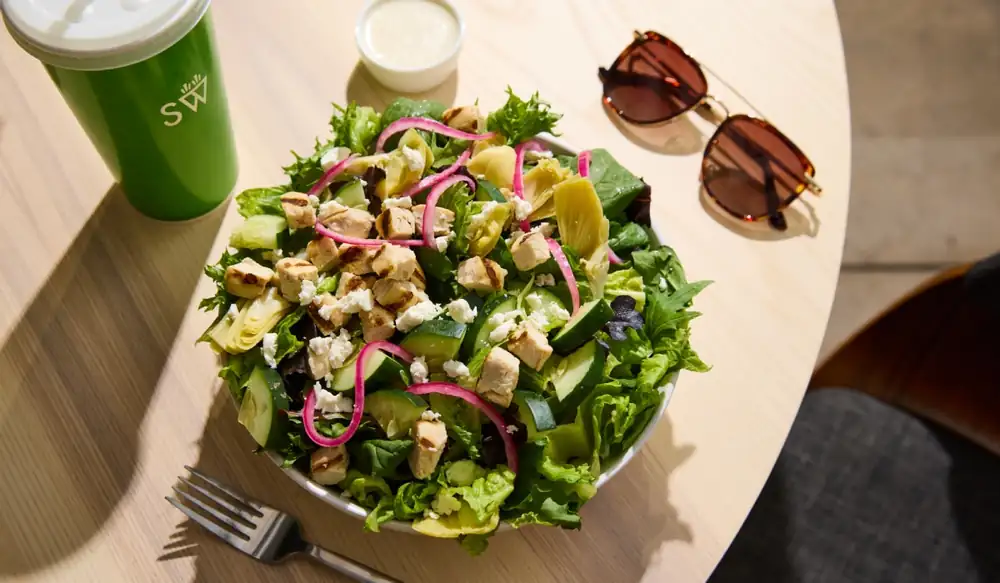
In recent weeks, the headlines have been heavy. Concerns regarding food safety have understandably caused many of us to pause, look at our plates and ask questions about where our food comes from and how it’s handled.
These questions as not just necessary, but vital. When the world feels uncertain, I find myself returning to the basics. The most important decision any of us makes each day isn’t about our schedule or our to-do list — it’s the choice of how we fuel our bodies.
Why Salads Still Matter
We live in an era of ultra-processed convenience.
While these options are fast, they often lack the foundational nutrients our bodies require to thrive. Consider that many grab-and-go meals are engineered for shelf life and speed, not for what they deliver nutritionally – a trade off most of us make without even realizing it.
A well-constructed salad is the antithesis of this since it’s a powerhouse of nutrient density, delivering an unparalleled concentration of health-promoting compounds in every bite: Essential Micronutrients: Leafy greens and colorful vegetables carry vitamins A, C, and K, along with iron, folate, and potassium.
These are the basics our immune systems and hearts actually depend on, and they’re the same nutrients most commonly missing from a fast-food value meal or a vending machine lunch. High-Impact Fiber : Fiber is the one nutrient most people underrate.
It keeps digestion steady, blood sugar level, and it’s the reason a good salad keeps you full for hours instead of one. Most adults fall short of recommended daily fiber intake, and a single well-built salad can close a meaningful part of that gap in one sitting.
Powerful Antioxidants: Antioxidants like lutein and beta-carotene fight the inflammation that builds up over time and support our eyes, our brains, our long-term health. These compounds don’t just protect against disease down the road, they are linked to sharper focus and steadier energy right now, which matters as much at 2 p.m. at your desk as it does decades from now. Bioavailability : Pair your greens with healthy fats like olive oil, avocado, or nuts, and you absorb more of those nutrients.
It’s not just a salad at that point — it’s a system working the way it’s supposed to. That’s also why the format matters as much as the ingredients: a salad thrown together without any fat or protein leaves most of its potential on the table, while a thoughtfully composed one turns simple produce into something the body can actually use.
Why the Salad is More Relevant Than Ever
I still eat a salad most days. This isn’t because I have to, but because it’s one of the few decisions in our days that is entirely in our control.
In a season full of headlines none of us can control, this matters more than it used to. This is why, despite the challenges facing our food system, the salad remains the gold standard.
It’s a tool for personal control, allowing people to tailor their intake of lean proteins, healthy fats, and complex carbohydrates to meet their own goals — without ever sacrificing well-being for the sake of speed.
Rebuilding Trust Through Transparency
The recent wave of food safety headlines has shaken consumer confidence and some of that skepticism has been fair.
Too often, “fresh” has been used as a marketing label instead of an operational standard. Rebuilding trust starts with transparency: knowing exactly where produce comes from, how it’s handled from farm to store and how many hands it passes through before it reaches a guest’s bowl.
For us, this means shorter, more accountable supply chains; consistent, verifiable food-safety protocols across every location and a willingness to talk openly with guests about sourcing and handling, rather than treating it like a trade secret. In this environment, silence reads as evasion.
Brands that want to earn back trust need to over-communicate, not under-communicate, about how their food is grown, prepared and served. Trust isn’t rebuilt with a single statement or campaign.
It’s rebuilt one visit at a time. Every salad served must reinforce the promise that it’s fresh, safe, and worth choosing again. That’s an operational commitment as much as a marketing one, touching everything from vendor selection to how often greens are rotated in-store.
The Future of Salads
Salads took a hit this summer, and honestly, some of that skepticism was fair.
But I still believe in what’s on the plate. Whether you’re grabbing lunch at your desk or sitting down for dinner tonight, consumers need to give salads a shot again.
In this industry, we are working hard to make sure it’s worth it — not just with words, but with the transparency and consistency that rebuild trust one meal at a time. Real food doesn’t need to reinvent itself to stay relevant.
The industry around it just needs to hold itself to a higher standard. That’s the work ahead, and it’s work we’re all committed to seeing through. Kelly Roddy is the CEO of WOWorks, home to Saladworks, Frutta Bowls, Garbanzo, The Simple Greek, Barberitos, and Zoup.
- Who: Real · Why Salads Still Matter