Taiwanese Beef Noodle Soup (红烧牛肉面)
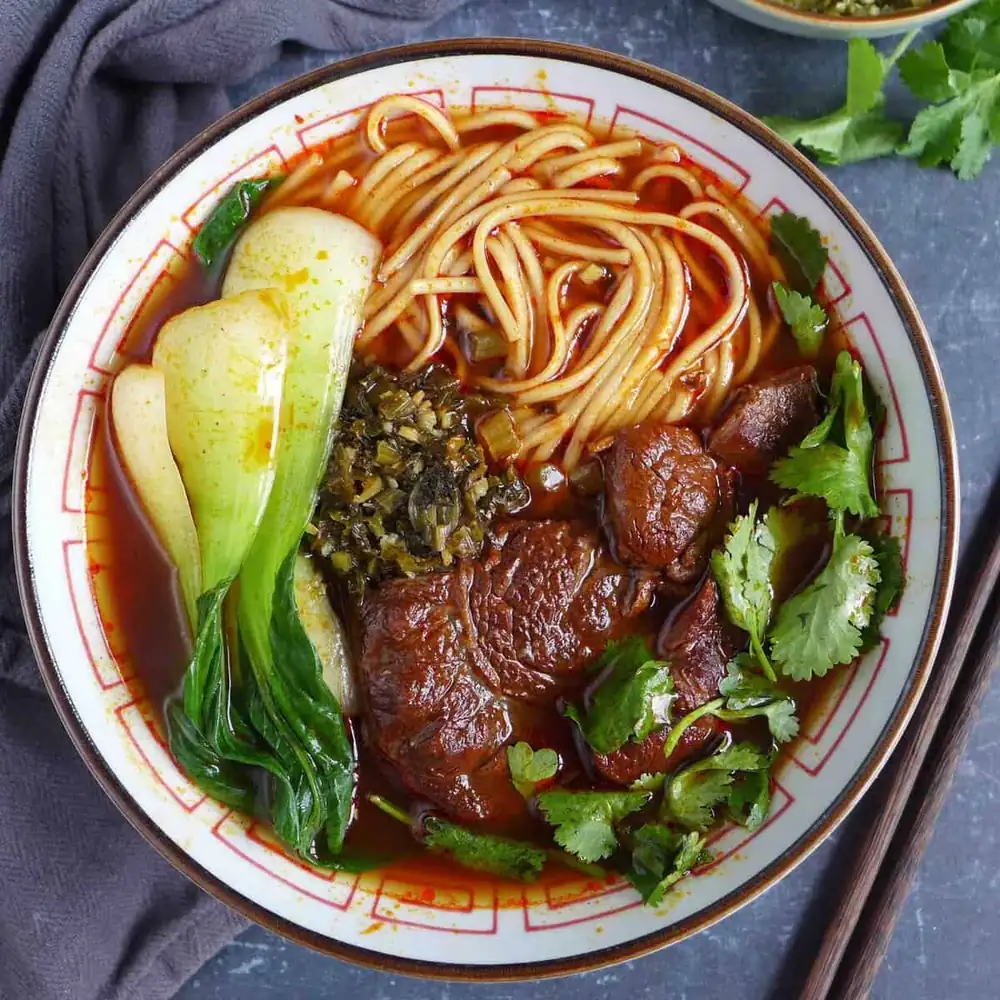
Learn to recreate the iconic Taiwanese beef noodle soup at home. Comforting, hearty, deeply flavorful, it’s a complete meal in one bowl.
- 2 lb beef shank (see note 1)
- 1 tablespoon neutral cooking oil
- 2 medium onions (sliced)
- 1 head garlic (cloves separated and peeled)
- 8 slice ginger
- 3 bay leaves
- 2 piece star-anise
- 1 piece Chinese cinnamon
- 1 teaspoon whole Sichuan peppercorn
- 3 tablespoon Sichuan chili bean paste (aka spicy doubanjiang)
- 2 tablespoon Shaoxing rice wine
- 1 tablespoon light soy sauce
- 1 tablespoon dark soy sauce
- 1 tablespoon sugar
- 1 can chopped tomatoes (or 3 medium ripe fresh tomatoes, chopped)
- 6 cups hot water
- 1 tablespoon neutral cooking oil
- 1 tablespoon garlic (minced)
- 1 teaspoon ginger (minced)
- 7 oz pickled mustard green (see note 2)
- 6 portion noodles (See note 3)
- Leafy greens (such as bok choy, choy sum, spinach, etc.)
- Cilantro (optional)
- Put the beef in a pot and add enough cold water to fully cover the meat. Bring it to a boil and skim off any scum that rises to the surface. Once impurities stop appearing, remove the beef and set it aside.
- Heat oil in a clean pot, preferably a heavy, thick-walled one such as a Dutch oven (casserole pot). Add sliced onion, garlic cloves, ginger slices, bay leaves, star anise, Chinese cinnamon, and Sichuan pepper. Fry until the onion softens and browns on the edge.
- Stir in Sichuan chili bean paste and fry for 20 seconds or so, then add Shaoxing rice wine, light soy sauce, dark soy sauce, sugar, chopped tomatoes, and 6 cups (1½ litre) of hot water. If using a thin-walled pot with a loosely fitted lid, increase the water by ½-1 cup
- Return the blanched beef pieces to the pot. Once the liquid starts to simmer, cover with a lid and reduce the heat to low. Leave to simmer for 1 hour 30 minutes, or until the beef becomes so tender that it breaks apart easily (see note 4 for Instant Pot method).
- Transfer the beef to a plate. Strain the broth through a large sieve, discarding the solids and keep the clear soup.
- While the beef is cooking, prepare the topping. Sizzle minced garlic and ginger in oil, then add chopped pickled mustard greens and fry until fragrant. Set aside.
- Bring a pot of water to a rolling boil. Add the noodles of your choice and cook until just done. Add the bok choy and blanch for 10 seconds.
- Divide the noodles in serving bowls, then add bok choy and beef chunks. Ladle in the hot broth. Top with the fried pickled vegetables and cilantro if using.
- Store any leftover beef and broth in airtight containers in the fridge for up to 3 days or in the freezer for up to 3 months. Keep the fried pickled vegetables in a separate container under the same conditions. Defrost and reheat each component gently before serving.
Recipe highlights
- An iconic dish that’s nutritious and full of amazing flavors
- Includes both stovetop and Instant Pot methods - A great make-ahead meal that cooks beautifully in large batches
About the dish
Growing up in Gansu province, China, noodle soups were a staple on our family table.
While I have an unwavering love for our local specialty, Lanzhou Beef Noodle Soup, I in addition adore other varieties. Today’s method, Taiwanese Beef Noodle Soup, stands out with its own distinctive charm.
Said to have originated from Sichuan cuisine, it gradually evolved over the decades into one of Taiwan’s most iconic dishes. Known as Hóng Shāo Niú Ròu Miàn/红烧牛肉面, it features tender beef slow-cooked in a dark, rich broth, served with wheat noodles, blanched leafy greens, and fried pickled vegetables.
This is one of those dishes I love to make in big batches. I freeze the beef and broth in single portions, so whenever I crave a warming, hearty meal, it’s ready to come to the rescue.
The element list for this recipe may seem lengthy, but don’t let that discourage you. Every element adds depth to the final taste, and I’ll show you which ones are essential, what you can substitute, and what you can skip. Since this is a slow-cooked dish, choose beef cuts with some fat, collagen, and connective tissue.
They turn beautifully tender and flavorful after lengthy simmering. My favorite is beef shank (aka beef shin). Other good options include brisket, chuck, and flavorful bone-in cuts like short ribs.
As you can see in the image above, the beef shank I use came pre-sliced. I cook these slices as they are. They turn so tender that they fall apart easily after preparation.
If you’re using a whole piece (like what I used in the recipe for Braised Beef Shank), cook it first, then slice it afterwards. Just allow a little extra preparation time.
Aromatics & vegetables
Onion, garlic, and ginger help build the aroma of the broth, while bok choy or other leafy greens, along with fresh cilantro, make a perfect accompaniment to the noodles.
Seasonings & spices
To build the flavor of the noodle soup, you’ll need:
- Sichuan chili bean paste: Also known as spicy doubanjiang (辣豆瓣酱), this is the key to the soup’s signature earthy fragrance and deep umami taste (read my Chili Bean Paste Guide to learn more). - Light soy sauce and dark soy sauce: These add savory depth and give the broth its rich, appetizing color.
- Shaoxing rice wine: It’s used to reduce any gamey taste. You can substitute it with dry sherry, white wine, or skip it entirely for an alcohol-free version.
- Chopped tomatoes: They add a subtle sweet taste and a vibrant red hue. Its natural acidity as well helps tenderize the beef. - Spices: Bay leaves, star anise, Sichuan pepper, and Chinese cinnamon are commonly used in Chinese braised dishes.
If you don’t have all of them, it’s fine to skip one or two. You may in addition use pre-packed spice sachets, which are available in most Chinese supermarkets.
- Pickled vegetables: It’s a classic topping for Taiwanese-style beef noodle soup that adds aroma and complexity. Many consider it essential. I use pickled mustard greens, known as Suan Cai/酸菜 in Chinese.
Other Chinese pickles, such as Zha Cai/榨菜 or Ya Cai/芽菜, also work well. When testing the method, I used dried thin wheat noodles. When time allows, my top choice is hand-pulled noodles, followed by fresh alkaline noodles made with a pasta machine.
Egg noodles are also a good option. Though rice noodles aren’t the classic choice, they taste wonderful in this soup too.
Cooking procedure
In short, this dish comes together in four steps: cook the beef, fry the topping, boil the noodles, and assemble the bowl. Here’s how each step is done:
This step creates the heart of the dish: tender, flavorful beef and a complex broth that makes it truly special. It takes time to cook, but the result is well worth the effort.
First, blanch the beef to remove impurities and excess blood. This step, known as Chao Shui/焯水 in Chinese cuisine, is a common practice for slow-cooked meat dishes.
Place the beef in cold water, bring it to a boil, and skim off any foam that appears on the surface. Once done, remove the beef for later use.
Now, fry the onion, garlic, and ginger in a little oil to release their aroma. Then add the Sichuan chili bean paste, soy sauce, Shaoxing wine, sugar, chopped tomato, and hot water.
Return the beef and bring everything to a gentle boil. Cover with a lid and simmer over low heat for 1.5 to 2 hours, until the beef turns super tender. 🌟 NOTE: For even preparation and minimal evaporation, use a thick-walled pot with a tight-fitting lid, such as Dutch oven.
While waiting for the beef to cook, prepare the topping. In a little oil, fry finely chopped pickled vegetables with minced garlic and ginger. Once the mixture looks dry and fragrant, dish out and set aside.
🌟 NOTE: Chinese pickled vegetables vary in saltiness depending on the type and brand. If they’re too salty, soak them in cold water, then drain and chop.
Bring plenty of water to a full boil, then add the noodles and cook them until nearly done. Watch carefully in case foam forms and starts to boil over.
Just before the noodles are ready, put in the bok choy and blanch for 10 seconds or so. Step 4: Assemble the bowls
Before assembling the dish, strain the beef broth to remove any solid bits like spices and overcooked aromatics. This ensures a clear, deeply flavorful soup that’s a real pleasure to eat. Start by adding the noodles and blanched greens to each bowl.
Ladle in a generous amount of broth, then top with beef chunks, a good spoonful of fried pickles, and a little cilantro for extra aroma if you like. 🌟 NOTE: This recipe has a mild level of heat.
If you prefer it spicier, add a dash of Chinese Chili Oil to boost the taste (that’s what I always do).
Instant Pot method
If you have an Instant Pot or a stove-top pressure cooker, you can adapt this recipe to speed up the process.
- Blanch the beef as usual. Use the sauté function to fry the aromatics and spices. Then add all the other elements for the broth, the meat and hot water.
- Cook on high-pressure for 25 minutes (add 5 more minutes If using thick beef pieces). Let the pressure release naturally before first day the lid.
Make ahead & storage
Since this dish takes time to cook, I like to make a large batch and save any leftovers for later.
This works well for both the beef broth and the fried pickled vegetables. Divide them into portions, then store in the fridge for up to 3 days or in the freezer for 3 months. Be sure to reheat until piping hot before serving.
Other warming dishes
Looking for more comforting recipes that warm your body and heart? Please leave a 🌟🌟🌟🌟🌟 rating and a comment.
For the broth
- 2 lb beef shank, see note 1
- 1 tablespoon neutral preparation oil - 2 medium onions, sliced
- 1 head garlic, cloves separated and peeled - 1 piece Chinese cinnamon - 1 teaspoon whole Sichuan peppercorn
- 3 tablespoon Sichuan chili bean paste, aka spicy doubanjiang - 2 tablespoon Shaoxing rice wine
- 1 tablespoon light soy sauce - 1 tablespoon dark soy sauce - 1 can chopped tomatoes, or 3 medium ripe fresh tomatoes, chopped
For the topping
- 1 tablespoon neutral preparation oil
- 1 tablespoon garlic, minced - 1 teaspoon ginger, minced
- 7 oz pickled mustard green, see note 2
You also need
- 6 portion noodles, See note 3 - Leafy greens, such as bok choy, choy sum, spinach, etc.
Blanch the beef
- Put the beef in a pot and add enough cold water to fully cover the meat. Bring it to a boil and skim off any scum that rises to the surface.
Once impurities stop appearing, remove the beef and set it aside.
Fry the aromatics
- Heat oil in a clean pot, preferably a heavy, thick-walled one such as a Dutch oven (casserole pot). Add sliced onion, garlic cloves, ginger slices, bay leaves, star anise, Chinese cinnamon, and Sichuan pepper.
Fry until the onion softens and browns on the edge. - Stir in Sichuan chili bean paste and fry for 20 seconds or so, then add Shaoxing rice wine, light soy sauce, dark soy sauce, sugar, chopped tomatoes, and 6 cups (1½ litre) of hot water.
If using a thin-walled pot with a loosely fitted lid, uptick the water by ½-1 cup
Cook the beef
- Return the blanched beef pieces to the pot. Once the liquid starts to simmer, cover with a lid and reduce the heat to low.
Leave to simmer for 1 hour 30 minutes, or until the beef becomes so tender that it breaks apart easily (see note 4 for Instant Pot method). - Transfer the beef to a plate.
Strain the broth through a large sieve, discarding the solids and keep the clear soup.
Fry the topping
- While the beef is cooking, prepare the topping. Sizzle minced garlic and ginger in oil, then add chopped pickled mustard greens and fry until fragrant.
Boil the noodles
- Bring a pot of water to a rolling boil. Add the noodles of your choice and cook until just done.
Add the bok choy and blanch for 10 seconds.
Assemble the bowls
- Divide the noodles in serving bowls, then add bok choy and beef chunks.
Top with the fried pickled vegetables and cilantro if using.
Store leftovers
- Store any leftover beef and broth in airtight containers in the fridge for up to 3 days or in the freezer for up to 3 months.
Keep the fried pickled vegetables in a separate container under the same conditions. Defrost and reheat each component gently before serving.