Young Farmer Makes the Business Case for Humane Hog Farming
Ethan Roberts enjoyed pushing back on the status quo as a student at the University of Nebraska-Lincoln. When his agriculture professors taught about conventional hog production, he would ask questions like, “What about letting these animals get outside a little bit?” “Animal science is what’s taught in college now…It …
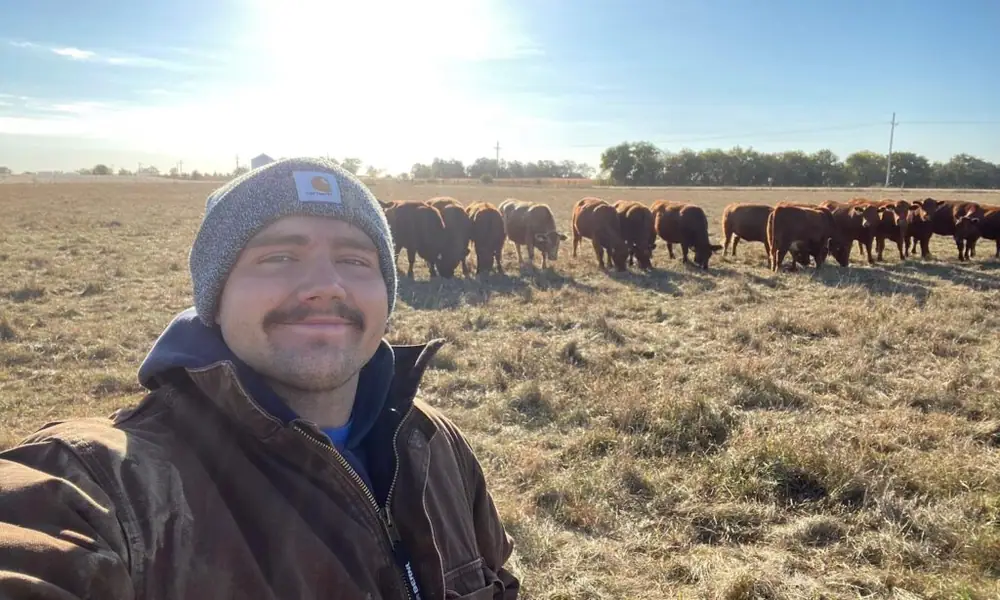
“Crop prices have been up and down in the past…you have good years and bad years. But the stability that Niman Ranch has provided us in the past 22 years has enabled us to hang on to the farm with really minimal worries,”
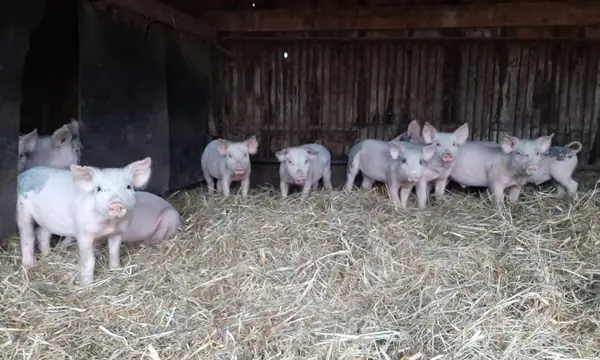
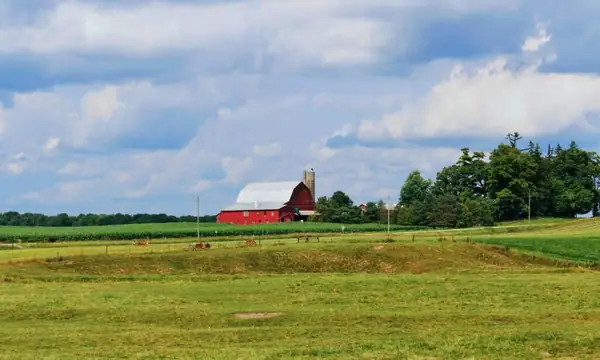
Today, 22-year-old Roberts is enlisted with the Nebraska Army National Guard while working as a fifth-generation farmer with his parents at Roberts Family Farm in Southwest Iowa. The family’s farm serves as a model for how smaller-scale, humane hog farming can be both environmentally and economically sustainable.
But like Roberts’ professors, some neighbors are skeptical about this way of farming. “Other farmers look at us a little bit funny,” says Roberts. “We’re so much smaller than anyone else.
There’s a question of, ‘how can these guys possibly be operating profitably when they haven’t taken advantage of economies of scale?’” According to the U.S.
Department of Agriculture, Iowa lost nearly 90 percent of its hog farms from 1982 to 2017 due to consolidation and low prices. Roberts’ family was “looking for a way out of the rat race of commodity farming” around the turn of the century, and his father learned about an alternative market for their hogs: Niman Ranch.
Niman Ranch is a network of more than 600 small to mid-sized, independent United States family farmers and ranchers that uphold high standards of sustainable and humane farming practices in exchange for a guaranteed market for their products. Roberts says that joining Niman Ranch allowed the family to continue farming.
“Crop prices have been up and down in the past…you have good years and bad years. But the stability that Niman Ranch has provided us in the past 22 years has enabled us to hang on to the farm with really minimal worries,” says Roberts. “It’s so much less risk than your average producer deals with.”
This economic stability meant that Roberts could return to the family farm after graduating from college. He and his brother have also received Niman Ranch Next Generation Foundation scholarships, which support young farmers who are committed to sustainability and helping rural communities thrive.
And in 2023, Roberts interned with the company to learn about other parts of the hog business, an experience that took him on the road connecting with eaters and chefs. While his family’s way of farming remains a minority in Iowa, Roberts has seen a shift among his peers toward more sustainable and humane farming practices.
“The next generation of farmers…they know that something is wrong in the wider industry and that something has got to change. If they want to pursue their dream of farming, they’ve got to find a different way to do things,” says Roberts. “People are waking up to it…It’s not just a niche thing like my professors are saying.
It’s growing, and it’s going to keep growing.” Recent legislation among states has demonstrated a rise in demand for sustainably and humanely raised hogs.
For example, Massachusetts passed “An Act to Prevent Cruelty to Farm Animals” in 2016, which requires the state’s farmers to give pigs enough room to turn around, stand up, lie down, and fully extend their limbs in their pens. California’s Proposition 12 similarly requires breeding pigs to be housed with freedom of movement and minimum floor space requirements.
Roberts says the quality of meat produced sustainably and humanely speaks for itself. One of the most rewarding aspects of his work has been watching people’s reactions when they eat his family’s pork for the first time. “I grew up eating Niman Ranch pork every day for lunch and dinner.
That’s the bacon that we had for breakfast. I was only eating this premium pork and beef my entire life,” says Roberts. “And then I get exposure to these world-class chefs, they know a thing or two about a pork chop…they take a bite, and they’re just so blown away.”
- Who: Niman Ranch · Ethan Roberts
- Percentages: 90 percent
- Figures: 90 percent