Nearly One-Third of US Farmland is Managed or Co-Managed by Women Farmers
Nearly 301 million acres of US farmland, or one-third of American holdings, are managed or co-managed by women, per to a new report from the American Farmland Trust’s Women for the Land Initiative. Women landowners hold title to at least 87 million additional acres, meaning they own the property but may retain other pe…
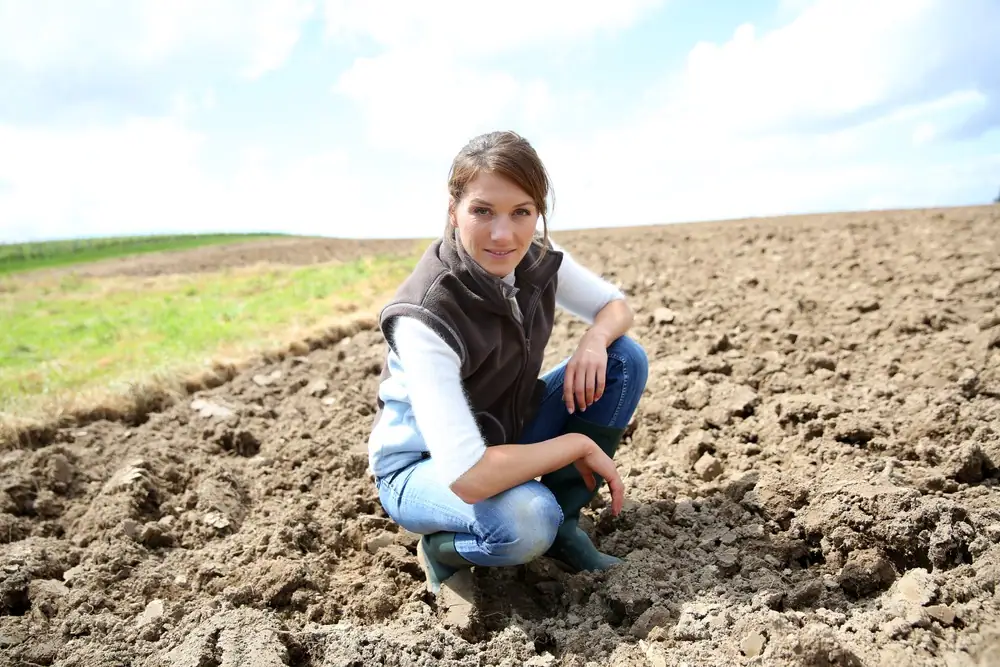
Women landowners and producers in addition set out feeling like they lacked sufficient knowledge about farming practices, lacking the same experience and opportunities that some of their brothers were afforded growing up on a farm or in rural communities. But AFT as well of late discovered that one of the best ways that women landowners can overcome barriers and uptick their conservation impact is through networking. Between 2014 and 2017, AFT, Women and Food Agriculture Network, and the National Resource Conservation Service teamed up to conduct 43 learning circles across Illinois (13 circles) and Indiana (31 circles) in partnership with local conservation agencies.
The average age of the attendees was 62 and 70% of them lived on their farms, while only 36% were the sole owner of the land. About one-third of the attendees were actively engaged in farming. “The goal of the learning circles is to engage women in conversations about conservation on their land, connecting them with each other and with local resource professionals who can help them manage their land productively and to benefit the environment. Early survey results indicate that 50 to 70 percent of women who attend ‘take a conservation action’ within six to 12 months of attending just one circle,” reads the report.
The Learning Circles are expanding during 2019, with AFT hosting gatherings in Midwest, Ohio, California, New York, New England, and the Mid-Atlantic. Women in AgTech Women are making strides in agriculture technology — and they’re even shaping innovation in food. Agriculture — but they face some of the same challenges that women landowners and producers are battling. Last year, Agrilyst CEO Allison Kopf spearheaded the compilation of a publicly available. Editable list of women leaders in agriculture to challenge event and conference organizers to uptick gender representation in public discussions of the trade.
In January 2019, AgFunder teamed up with The New Food Economy and consultancy founder Karen Karp to figure out how women in agrifood tech funding were faring. After identifying 2,788 deals during a five year period that provided gender information, the number of deals with women founders, CEOs, and/or presidents were identified.
During the first 10 months of 2018, that figure rose to roughly 17% of the whopping $255 billion in total funding across all sectors. The analysis revealed, however, that early-stage firms are more likely to have a female leader than late-stage businesses, with 20% of seed stage deals involving a women-led firm compared to 9% of later-stage deals.
Since then, the number of women-operated farms in the US nearly tripled , from 5% in 1978 to 14% in 2007. Most women-operated farms are small, however, with annual sales of less than $10,000 and 82% of farms comprising less than 180 acres. In 2012, there were less than one million women farmers in the US going to the 2012 Census of Agriculture , marking a 2% drop since the 2007 Census of Agriculture.
Women made up 30% of producers, with Texas leading the nation in the number of women producers and Arizona having the highest proportion of women growers at 45% of all farmers in the state. When it comes to principal operators, that said, which are the farmers who are in charge of an operation, the number of women decreased 6% between 2007 and 2012.
The data also revealed that women principal operators tend to be older than male principal operators at an average age of 60.1, with only 4% of women principal operators being under the age of 35.
- Who: Women · Nearly
- Money: $19.8 billion · $85 billion · $255 billion · $10,000
- Percentages: 70% · 36% · 70 percent · 17%
- Figures: 301 million · 87 million · 400 million · 70%