The Fruit of Japanese Fairy Tales
When you get them in season, persimmons are a perfect element for both folklore and layer cakes.
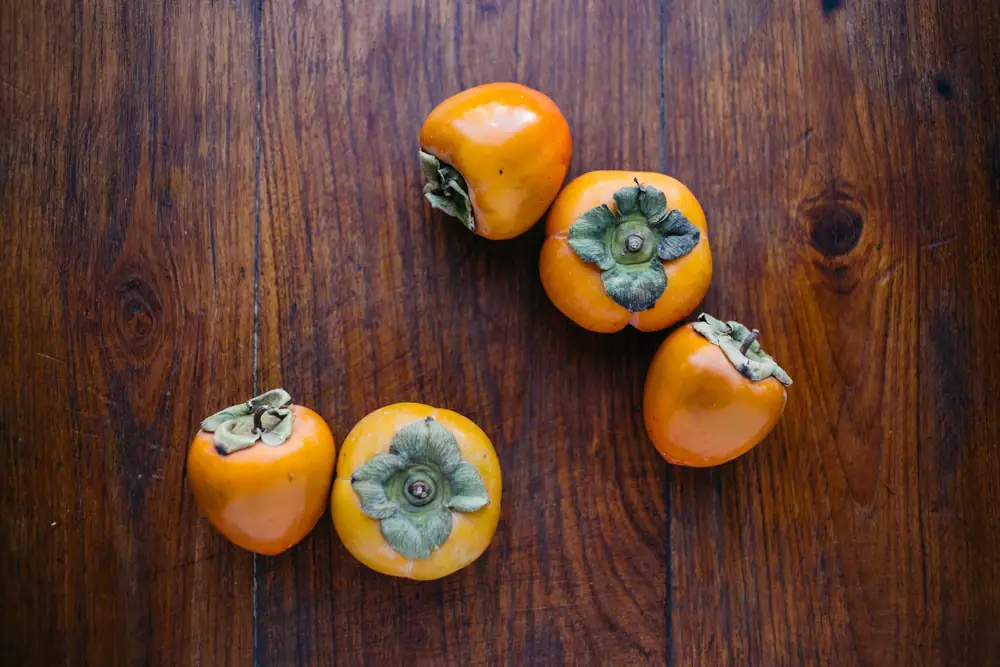
The bright orange globe of the persimmon is bitter, astringent, and thoroughly unpleasant if you approach it before it’s ready, but when you catch it at the right time, it’s fragrant, lovely, and delicious. When you grow up in Northern California, you see persimmon trees everywhere, especially when you get a couple hours outside of San Francisco and the wineries and roadside estates are littered with them. There is something so strikingly beautiful about the orange orbs that hang on the dark branches long after all the leaves have succumbed to autumn.
When I was a kid, my mom brought home huge bags of Fuyu persimmons from the growers’ market in the fall, and I would eagerly grab them out of her basket, peel them, and crunch them like apples. I associate persimmons deeply with my childhood, both since I ate them and as they have a bit of folklore surrounding them. In Japan there is a fairy tale about a monkey, a crab, and a persimmon tree.
When the crab’s seed turns into a big, beautiful tree that bears lovely ripe persimmons, the monkey returns to steal them all from the poor crab. The crab’s children team up with an egg, a piece of kelp, a bee, and an usu (the mortar and pestle used to make mochi) to teach the crab a lesson.
I’m not entirely sure what the moral of this story is, except that persimmons are highly coveted and that you should never mess with the offspring of a crab. In the Ozarks they say that cutting open persimmon seeds will reveal the severity of winter.
If the kernel on the inside of the seed is shaped like a spoon, you will have a lot of snow to shovel up. If it’s shaped like a knife, the winter will bring cold winds that cut like a blade.
There are two types of persimmons: Fuyus, which are squat, thin-skinned, and eaten when they are still crunchy. Hachiyaa, which are larger, pointed at the bottom, and thicker-skinned and absolutely must be eaten when the flesh inside has become soft and jelly-like. Unripe Hachiya persimmons do have one use, which is to make hoshigaki, the very old-school Japanese-style dried persimmon that you have probably seen on a lot of chefs’ Instagrams during the fall months.
The unripe persimmons are peeled and tied to bamboo poles, which are hung outside in the cool, fragrant, clean air. Or, if you’re like me and at one point had no choice but to make them in a kitchen in the Mission district of San Francisco, you hang them up inside and as far away from outside as possible. If you leave them like this you’ll just get a dried persimmon, which is a common mistake.
The persimmons need a daily massage while they are hanging, which brings the natural sugars to the surface so the fruit becomes covered in a light dusting of white bloom. You must be very careful to apply the correct amount of pressure and care to each fruit. If you do this, you’ll be rewarded with a beautiful orange confection dusted white with the texture of a gummy bear.
The warm spices of the sassafras and sarsaparilla brought out the natural spiciness of the persimmon, and the malt and chocolate added bitter earthiness to ground such a floral and heady fruit.
- Who: San Francisco · Northern California