Repurpose An Old Flour Sifter Into An Easy And Rustic DIY Garden Planter
Just because something is "old" doesn't mean it needs to be thrown away. There's a way to give a second life to almost anything, from using old spice jars for watercoloring to turning empty egg cartons into seed starters.
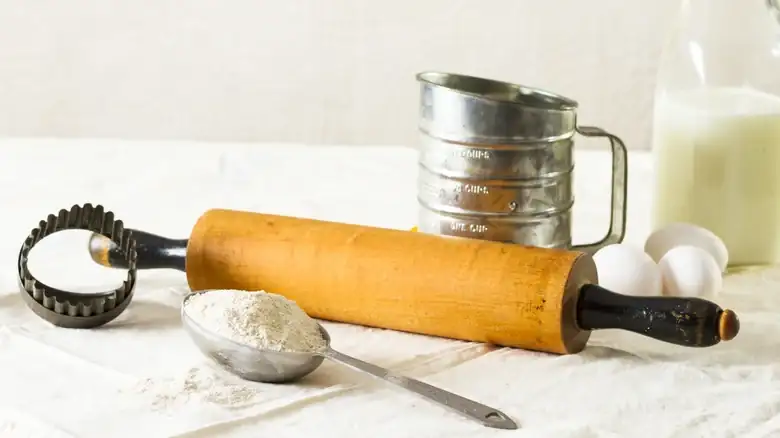
Using the old-school kitchen item that's largely vanished as a planter doesn't require much work at all. Simply clean it of any crumbs or debris and double-check that the sieve at the bottom is still intact or mostly intact. From there, place a coffee filter or a piece of burlap over the sieve to prevent soil from spilling out. Fill the sifter almost to the top with your soil of choice, then stuff your new planter with as many pretty or useful plants as your heart desires. It's as easy as one, two, three. You're more likely to have an old metal flour sifter on hand, but if you've got an intact 19th-century wooden one, this hack can still work.
Why flour sifters make great planters
When flour sifters were used in their prime, their main purpose was to aerate the flour and break up any large chunks into finer pieces — hence the sieve and metal arm that cranked small blades. The sieve at the bottom of the flour sifter provides great drainage for your plants, so there's no need to drill additional holes for water to escape (unlike when you reuse a coffee can in your garden). These sifters vary in size, from as small as one cup to as large as five cups, which means that they can accommodate a variety of plant sizes.
Beyond their functionality as planters, vintage flour sifters can also add a decorative touch to your garden. While some flour sifters were simply made from silver metal and tin, as the Art Deco period emerged, many sifters were crafted with colorful patterns and designs. You may be lucky enough to find Bromwell brand sifters with tiny apples and branches painted along the metal, but if not, you can always apply a coat of all-weather paint to the exterior and get as creative with the design as you'd like. Removing the old blade-churning handle is also an option, though not a necessity if you prefer the rustic vibe. To really play up the rustic aesthetic, try tying a small bow around the outside of the sifter or grabbing popsicle sticks and paint to make some DIY mini garden signs in no time.