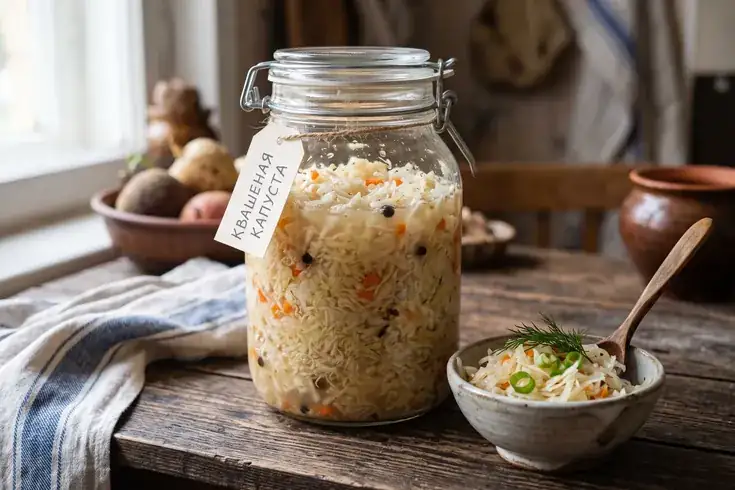
Sauerkraut with new recipes: cranberries, apples, beets, and horseradish
Late October is the ideal time for pickling cabbage. Late-ripening heads, touched by the first frosts, have the maximum density, sugar content, and just the right flavor needed for perfect fermentation.
In this article, we've compiled five tried-and-true sauerkraut recipes with unusual additions: tart cranberries, aromatic apples, vibrant beets, and tangy horseradish. Each recipe reveals a new side of cabbage, transforming a familiar snack into a culinary delight in its own right. We'll also share the secrets to a delicious crunch, passed down through generations.
Why is sauerkraut a must-have in October?
Pickling is one of the most ancient and useful methods of preserving vegetables:
- Record-breaking vitamin C content: Sauerkraut retains more vitamin C than fresh cabbage thanks to the fermentation process. 200 grams of cabbage covers the body's daily requirement.
- Probiotics for the gut: The fermentation process produces beneficial lactobacilli, which support the microbiome and strengthen the immune system.
- Digestibility: Fermentation breaks down the coarse fiber, so sauerkraut is easier to digest than fresh cabbage and does not cause bloating.
- Low calorie content: 100 g of sauerkraut contains only 19 kcal - it is an ideal product for those watching their figure.
- Long storage: Properly fermented cabbage can be stored in a cellar or refrigerator for up to 8 months without losing its flavor or benefits.
What kind of cabbage should I choose for pickling?
80% of success depends on the variety and quality of cabbage.
- Late varieties: Only late and mid-late varieties are suitable for pickling—Slava, Podarok, Moskovskaya Pozdnyaya, Belosnezhka, and Amager. They accumulate enough sugars for proper fermentation.
- Firm heads: Choose heavy, firm heads with white (not green) leaves when cut. Greenish leaves indicate early varieties, which will produce soft, non-crunchy cabbage.
- Frost-bitten: Cabbage harvested after the first light frost (-1 to -3 degrees Celsius) is considered ideal. Frost destroys some of the fiber, allowing the cabbage to pickle better.
- No signs of rot: The outer leaves may be damaged; remove them. However, the head of cabbage should be free of soft spots, black spots, or mold.
Important rule: for pickling, use only coarse rock salt without additives. Iodized, sea, or extra fine salt will make the cabbage soft and may cause fermentation, which can produce an unpleasant odor.
5 Sauerkraut Recipes with Unusual Additions
All recipes are designed for a 3-liter jar or enamel saucepan of the same capacity. The salt proportions are standard: 2 level tablespoons per 1 kg of cabbage.
1. Classic Sauerkraut with Cranberries and Caraway
That same flavor familiar from childhood, but with a bright, tart cranberry note and the spicy aroma of caraway. Perfect with meat and potatoes.
Ingredients:
- Fresh cranberries - 150 g
- Caraway seeds - 1 tbsp.
- Coarse rock salt - 2 tbsp (no heap)
- Sugar - 1 tsp.
Step-by-step preparation:
- Preparation: Peel the cabbage, cut into quarters, and shred into thin strips (2-3 mm thick). Grate the carrots on a coarse grater.
- Pureeing: In a large bowl, combine the cabbage, carrots, salt, and sugar. Rub thoroughly with your hands for 5-7 minutes, until the cabbage releases its juices and reduces in volume.
- Additions: Add caraway seeds and cranberries, stir gently to prevent the berries from bursting.
- Packing: Pack the mixture tightly into a clean three-liter jar or enamel saucepan. The juice should rise to the top and completely cover the cabbage. Leave 5-7 cm of space around the rim for fermentation.
- Fermentation: Cover with cheesecloth or a clean cloth. Leave at room temperature (18-22 degrees Celsius) for 3-5 days. Twice a day, pierce the cabbage with a wooden skewer to the bottom to release gases. Store the finished cabbage in the refrigerator or cellar.
2. Sauerkraut with apples and caraway seeds, Old Russian style
Fragrant cabbage with sweet and sour apple slices. The apples are soaked in brine and become pickled – a great appetizer in their own right.
Ingredients:
- Cabbage - 2 kg
- Caraway seeds - 1 tsp.
- Coarse salt - 2 tbsp.
- Sugar - 1 tsp.
- Rye bread (black) - 1 small piece (for sourdough)
Step-by-step preparation:
- Preparation: Shred the cabbage into thin strips, grate the carrots on a coarse grater. Wash the apples, cut them into quarters, and remove the cores.
- Puree: Puree the cabbage and carrots with salt and sugar until the juices are released. Add the caraway seeds.
- Layering: Place the cabbage in a jar or saucepan in layers: a layer of cabbage (5-7 cm), then a layer of apples, then more cabbage. Pack each layer very tightly.
- Starter: Place a piece of rye bread covered with cheesecloth on top – this will speed up fermentation and impart a characteristic bread aroma. Remove the bread after 24 hours.
- Fermentation: Leave at room temperature for 4-5 days, piercing twice daily. The apples will be ready along with the cabbage. Store refrigerated.
3. Gurian-style cabbage with beets (quick)
Bright and crisp, with the subtle sweetness of beets and the spiciness of garlic. It's quicker to prepare than the classic version—you can enjoy it in just three days.
Ingredients:
- Cabbage - 2 kg
- Beets - 2 medium (400 g)
- Garlic - 1 head
- Bay leaf - 3-4 pcs.
- Black peppercorns - 10 pcs.
- Allspice - 5 pcs.
- Coarse salt - 2 tbsp.
- Sugar - 2 tbsp. l.
- Water - 1 liter
Step-by-step preparation:
- Preparation: Cut the cabbage into large squares (5x5 cm), do not shred thinly. Peel the beets and slice them thinly. Chop the garlic into large cloves.
- To pack: Layer the cabbage, beetroot, garlic, bay leaf, and peppercorns in the jar. Repeat the layers, packing them tightly.
- Brine: Bring water to a boil with salt and sugar until dissolved. Cool to room temperature. Pour the brine over the cabbage until it's completely covered.
- Fermentation: Leave at room temperature for 3-4 days. The cabbage should turn a bright ruby color and acquire a sweet and sour flavor. Refrigerate.
4. Spicy cabbage with horseradish and garlic
A potent, punchy appetizer for those who love spicy food. Horseradish adds that extra kick, while garlic adds depth of flavor. It pairs perfectly with fatty meats and aspic.
Ingredients:
- Cabbage - 2 kg
- Garlic - 1-2 heads
- Coarse salt - 2 tbsp.
- Sugar - 1 tbsp. l.
Step-by-step preparation:
- Preparation: Shred the cabbage and coarsely grate the carrots. Handle the horseradish with gloves and in a well-ventilated area—it's very pungent.
- Horseradish root: Peel the horseradish root and grate it finely or put it through a meat grinder. Press the garlic through a garlic press.
- Mixing: In a large bowl, combine the cabbage, carrots, salt, and sugar. Puree until smooth. Add the horseradish and garlic and mix thoroughly.
- Packing: Pack tightly into a jar or enamel container. The juice should completely cover the mass. If there is little juice, apply a weight (a clean jar filled with water).
- Fermentation: Leave at room temperature for 3-4 days, piercing twice daily. Refrigerate. The cabbage will become more pungent with each passing day.
5. Mixed cabbage with apples, cranberries and carrots
A vitamin bomb that combines all the gifts of autumn. The sweetness of apples, the tartness of cranberries, and the crunch of carrots create the perfect balance.
Ingredients:
- Cabbage - 1.5 kg
- Fresh cranberries - 100 g
- Dill seeds - 1 tsp.
- Coarse salt - 1.5 tbsp.
- Sugar - 1 tsp.
Step-by-step preparation:
- Preparation: Shred the cabbage into thin strips. Grate the carrots on a coarse grater. Cut the apples into thin slices, removing the cores (the peel can be left on).
- Puree: Puree the cabbage and carrots with salt and sugar until the juices are released. Add the dill seeds.
- Assembly: Layer the cabbage mixture, apple slices, and cranberries in the jar. Repeat the layers, compacting them lightly.
- Fermentation: Make sure the juice covers the vegetables. Leave at room temperature for 4-5 days, piercing twice a day. Refrigerate.
5 Key Secrets to Crispy Sauerkraut
- The right salt. Use only coarse rock salt without additives. Fine salt, iodized or sea salt, softens the cabbage. The ratio is 2 level tablespoons per 1 kg of cabbage.
- Release gases. During fermentation, gases are produced, making the cabbage soft and giving it an unpleasant odor. Be sure to pierce the cabbage with a wooden skewer to the bottom twice a day—morning and evening.
- Temperature. The ideal temperature for pickling is 18-22 degrees Celsius. At higher temperatures, the cabbage will over-ferment and become soft; at lower temperatures, fermentation will not begin.
- Cover the cabbage completely with brine. The cabbage should be completely submerged in its own juices. If there's not enough juice, apply pressure. The exposed parts will darken and become soft.
- Adding oak bark or horseradish. For guaranteed crunch, add a horseradish leaf, a currant sprig, or a piece of oak bark to the cabbage. The tannins strengthen the fiber.
Safety precautions and storage nuances
- Use the right utensils. Use glass jars, unchipped enamel pots, or food-grade plastic buckets. Aluminum and stainless steel utensils are not suitable, as the acid will react with the metal.
- Signs of proper fermentation: In the first 2-3 days, foam, gas bubbles, and a characteristic sour smell should appear. This is normal. If an unpleasant odor, mold, or slime appears, discard the batch.
- Stopping fermentation. When the cabbage stops bubbling and acquires a pleasant sour taste, it should be refrigerated (cellar or refrigerator at 0 to +5 degrees Celsius). This will stop fermentation and preserve the crunch.
- Storage. Properly fermented cabbage can be stored in the refrigerator or cellar for up to 8 months. The key is to ensure it's completely covered with brine. Check it weekly and push the top layer down.
- Freezing. Sauerkraut can be frozen—it will retain its flavor and most of its vitamins. Divide into individual portioned bags and freeze. Defrost in the refrigerator.
What to serve with sauerkraut?
Sauerkraut is a versatile snack and ingredient.
- With meat: ideal with fatty pork, duck, goose, jellied meat, frankfurters, and sausages. The acidity balances the fat perfectly.
- With fish: cabbage with cranberries or apples goes well with baked fish, especially fatty fish - salmon, mackerel, herring.
- As a salad base: add onion, flavored vegetable oil, and sugar for a classic salad. Or mix with sun-dried tomatoes and olive oil.
- For hot dishes: simmer with sausages, meat, and mushrooms—this is the basis for bigus, shchi, and solyanka. Stewing softens the cabbage while retaining its flavor.
- As a standalone appetizer: serve with black bread, lard, onions and a glass of cold vodka - a classic Russian combination.
- For pies: sauerkraut with mushrooms or onions is an excellent filling for pies, kulebyakas and rasstegais.
Conclusion
Sauerkraut isn't just a winter preserve, but a true culinary staple that can be transformed beyond recognition with the additions. These five recipes prove that ordinary cabbage can be a vibrant appetizer with cranberries, aromatic with apples and caraway seeds, striking with beets, hearty with horseradish, or vitamin-packed as a mixed dish. The key is to choose the right cabbage variety, maintain the right salt ratio, and take your time with fermentation. By spending one weekend at the end of October on fermentation, you'll provide your family with a delicious, healthy, and varied snack for months to come. Bon appétit and happy pickling!