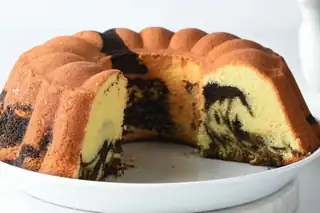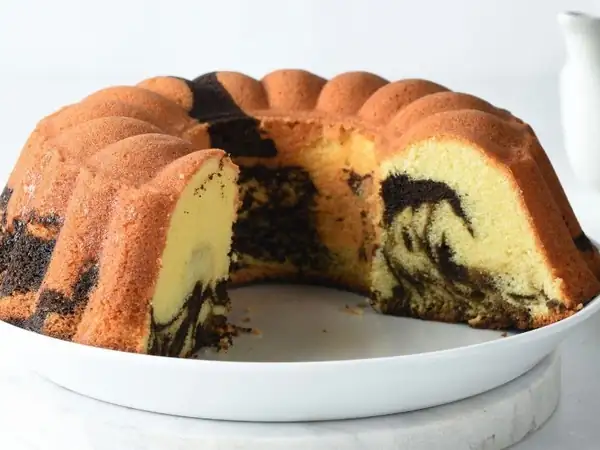
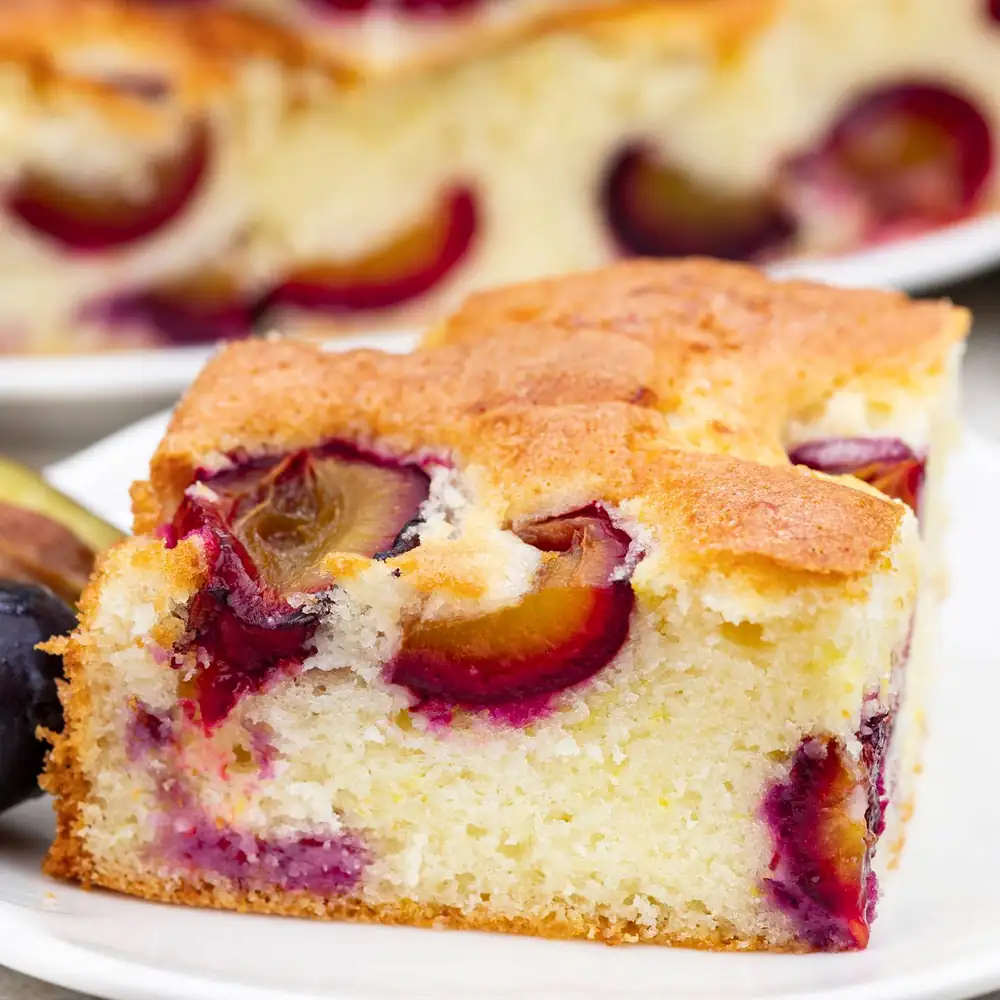
Plum cake
Fluffy and very moist, this plum cake is incredibly delicious and aromatic. Check out this truly simple recipe for this yogurt sponge cake.
- cake for beginners - stays fresh for a very long time - detailed description of the preparation and photos of the steps
- Preparation time: 25 minutes
- Baking time: 40 minutes
- Number of servings: 24 x 24 cm tin - 1300 g of dough
- Energy value 322 kcal
- Carbohydrates 34 g
- Including sugars 17 g
- Protein 6 g Fats 18 g
- Diet: vegetarian.
- 250 g cake flour - a little over 1.5 cups
- 4 large or 5 small eggs - up to 280 g after breaking
- 100 g thick yogurt - I used Greek yogurt (3 full tablespoons)
- 200 ml vegetable oil (180 g)
- 150 g powdered sugar or fine sugar
- grated zest of one lemon
- 2 teaspoons of baking powder
- 500 g small and fleshy plums
Plum cake
My glass has a capacity of 250 ml.
Baking pan: I used a 24 x 24 cm pan with removable sides. 20 x 30 cm pans or 24-25 cm springform pans will also work. Baking the cake: Top/bottom baking option; middle rack in the oven; temperature - 175 degrees Celsius; baking time - about 40 minutes.
Remove eggs and yogurt from the refrigerator in advance. These products must reach room temperature.
The calories were calculated based on the ingredients I used. Therefore, this is an approximate calorie count based on the products I used in this recipe. Before making this plum cake, I encourage you to read the entire post first to prepare for the next steps.
Plum cake recipe
Pour 150 grams of powdered sugar or the same amount of caster sugar into a larger glass or metal bowl. Add 5 small or 4 large eggs (mine had a total of about 280 grams after beating). Beat the sugar and eggs with a mixer at high speed until the sugar is completely dissolved in the eggs. By the end of the beating process, the mixture should be light and fluffy. Beating can take up to 10 minutes (up to 5 minutes with a good mixer). While constantly mixing at high speed, slowly pour the oil into the egg mixture. This will total 200 ml of mild-flavored vegetable oil (about 180 grams). Then, mix briefly (up to 5 seconds) and turn off the mixer.
In a separate bowl, thoroughly mix (or preferably sift) 250 grams of cake flour and two (not heaped) teaspoons of baking powder. Pour or sift this mixture into the bowl with the sweet egg wash. Along with the flour, add 100 grams of thick natural yogurt (I used Greek yogurt). Add the zest of one lemon to the bowl. Mix the batter with a spatula. Do not overmix, however, to keep it fluffy. The batter doesn't need to be perfectly smooth.
Tip: You can replace the finely grated lemon zest with tangerine zest or half an orange zest. As a last resort, you can also add a few drops of citrus flavoring/oil. You can also add a few seeds from a vanilla bean or half a teaspoon of vanilla essence or vanilla paste.
You can now start preheating your oven. Set it to approximately 175 degrees Celsius with a top/bottom heat setting. If you only have a fan-forced baking system, preheat the oven to 160-165 degrees Celsius. Line the bottom of a baking pan (approximately 24 x 24 cm) with baking paper. You can line the sides with strips of parchment paper or grease them lightly and dust them with breadcrumbs. Pour the entire batter into the pan.
Wash and dry about 500 grams of plums. I recommend small Hungarian plums. Choose varieties with firm flesh that isn't too juicy. Halve the plums, remove the pits, and arrange the halved plums side by side on the dough. Try to distribute them evenly. There's no need to press them into the dough.
Tip: Instead of plums, you can also use about 400 grams of blueberries or cranberries, or the same amount of apricots or peaches cut into smaller pieces. Small strawberries, blackberries, and raspberries are also acceptable. If using frozen fruit, thaw it first and then drain off any excess water. The fruit must reach room temperature before adding it to the batter. It also shouldn't be too wet or falling apart.
Place the pan with the plum cake in a well-heated oven. Bake in the top/bottom position; use the middle rack; preheat oven to 175 degrees Celsius; bake for approximately 40 minutes. After approximately 35 minutes, check to see if the cake is done. Carefully open the oven door and insert a wooden skewer into the center of the cake. If the skewer comes out clean, the plum cake is done. Once baked, open the oven door slightly. After 5 minutes, you can remove the plum yogurt cake from the oven. It's a good idea to remove the cake from the pan and place it on a wire rack to cool completely.
I find the baked plum cake tastes best plain. Once it's cooled, you can dust it with powdered sugar or drizzle it with homemade icing.
Tip: Place the cake pan on a preheated, thin baking tray or rack. The tray or rack should be positioned so that the cake pan is roughly centered in the oven (not too close to the upper and lower heating elements).
Plum cake is a cake that stays fresh for a very long time. Once cooled, I recommend wrapping it loosely in parchment paper and then placing it in a clear grocery bag or a ziplock bag. Store the cake in the cupboard for up to two days. If you plan to keep it longer, return it to the refrigerator after two days.
The most common causes of scab formation:
A cursory glance at a recipe without first reading it thoroughly and preparing the necessary ingredients.
Different temperatures of ingredients. Some cold, others warm. Ingredients should be at the same temperature – room temperature.
Expired baking powder, soda or other ingredient.
Beating the eggs and sugar with the mixer too long is the best way to achieve a truly fluffy consistency, not a runny liquid.
Adding frozen or thawed, but cold and/or watery fruit to the dough.
Too many additives, wet fruit or using, for example, small eggs instead of large ones and vice versa.
Inadequate mixing of dry ingredients (it is worth mixing the leavening agents with the flour first, or even sifting them together).
Inaccurately measuring the given ingredients and replacing them with others (e.g. if I don't have wheat flour, I'll use rice flour), or even unknowingly omitting an ingredient.
Using a different type of wheat flour than the one specified. Cake wheat flour has a completely different fluid absorption capacity than, for example, type 750 bread flour.
Mixing the batter too long before pouring it into the pan can cause the batter to become less aerated (this mainly applies to cakes in which whole eggs or just egg whites are beaten until fluffy).
Opening the oven too often during baking or leaving the entire door ajar.
Taking the dough out immediately after baking, i.e. a sudden change in temperature (does not apply to all baked goods).
Placing the cake in an oven that has not yet preheated or placing the baked item on a shelf too close to the lower or upper heating elements.
Placing the baking tray with the dough on a cold baking tray/rack (it was not heated in the oven).
Frequent change of baking temperature when the recipe specifies one temperature.
Turning off the cake without checking if it is already baked.
Enjoy your meal.