There's something curious about the way we've been...
Having been area manager for a well-known wine distributor for six years now, a former tennis instructor and a staunch Sangiovese enthusiast, Ivan De Chiara comes into daily contact with different generations of drinkers and questions the way we talk about wine. [am].
A drink that for millennia has accompanied lunches, celebrations, religions, trade, friendships, courtships, peasant tables, and grand dinners has been progressively stripped of all this context to be placed into a much simpler category in public debate: alcohol.
Alcohol equals risk. Risk equals problem. Problem equals wine. End of story.
Only that's not the story.
Because wine isn't simply a liquid containing ethanol. Just as a book isn't simply cellulose and ink, and a song isn't simply a sequence of sound frequencies. Wine is a beverage, of course. But it's also agriculture, landscape, work, history, gastronomy, craftsmanship. It's memory. It's material culture.
And most importantly, it's one of the few things we know that can do something extraordinarily simple: bring people together.
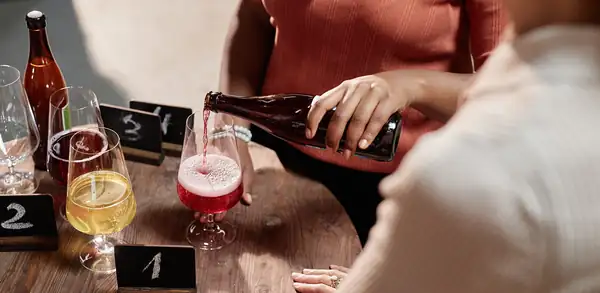
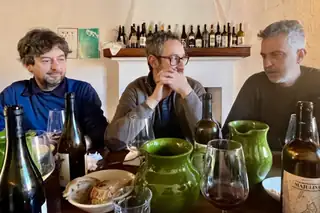
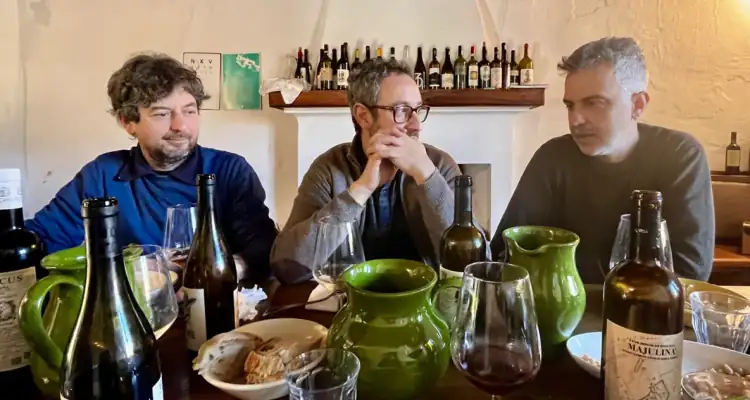
An opened bottle at the table isn't just an opened bottle. It's a social gesture. You pour for someone before you pour for yourself. You toast. You taste. You comment. You discuss. You exchange completely different opinions over the same glass. You talk about a trip, a producer, a harvest. Sometimes you meet someone.
It's not a small thing.
Yet today it almost seems as if the world of wine must continually apologize for existing.
Every time the word "alcohol" appears, the industry launches a defense: explaining, distinguishing, clarifying, reminding people that wine is not a spirit, that moderate consumption exists, that it is part of the Mediterranean diet, and that behind every bottle there are thousands of companies and entire regions.
It's an understandable position. But perhaps it's also the wrong one.
Because continuing to defend oneself means implicitly accepting the playing field imposed by others. And that field is one in which a bottle is judged solely by the amount of ethanol it contains. It's like judging a restaurant solely by the number of calories in its food. The point, of course, isn't to deny that alcohol can be harmful. That would be ridiculous.
Alcohol abuse exists. Addiction exists. Consumption-related health problems exist. And no serious producer, distributor, or enthusiast should have any interest in hiding it. But precisely for this reason, we must stop confusing the issue. Irresponsible alcohol consumption is a problem. Wine must not become the scapegoat for the problem.
And here the industry should have the courage to completely change its perspective. Instead of spending time saying "wine isn't that bad for you," it should start saying much more clearly: if you drink, don't drive. This is a real battle. Because if there's one place where the concept of responsibility must become absolute, it's the road.
There's no need for moralistic campaigns against pleasure. There's no point in turning a glass of wine at the table into an almost clandestine act. We need to educate people about awareness, moderation, and, above all, a clear distinction between alcohol consumption and driving.
Wine can be enjoyed at the table. The car, after drinking, can stay parked. This should be a stimulus for the entire industry because I enjoy drinking and I don't want wine to become a danger. Responsibility is not the enemy of pleasure: it's what allows it to continue to exist.
Wine doesn't have to choose between pleasure and responsibility. It must demonstrate that they can both be shared in the same glass. And perhaps this is precisely where wine should begin again. Not to give up pleasure, but to rethink it. To rethink experiences, enjoyment, events, evenings, places, and even the way we invite people to drink.
Because if there's one drink that has always had the pretension—and the fortune—of being much more than a drink, it's wine. So it should also be the one that takes the greatest pains to find new ways to bring people together, to make them drink better, with more awareness, more curiosity, and, why not, more responsibility. It's not about taking anything away from wine. It's about asking it to reinvent itself once again.
So perhaps the wine world should stop playing defensive. It shouldn't convince everyone that wine is healthy. It shouldn't turn every bottle into a natural medicine. It shouldn't invent miraculous properties to justify its right to exist. We don't need wine to be healthy for it to have value. A glass of wine shouldn't be a medical prescription. It should simply be a conscious choice. And the value of that choice isn't measured solely in milliliters of ethanol.
It's also measured by the stories it contains, the people it brings together, the territories it chronicles, the work it represents, and the culture it embodies. Perhaps the time has come to stop asking wine to prove its innocence. And instead, start asking people to be responsible.
Because wine doesn't need to be absolved. It needs to be understood.