The wild fruit rosehip
Rosehips, rose hips, rose hips
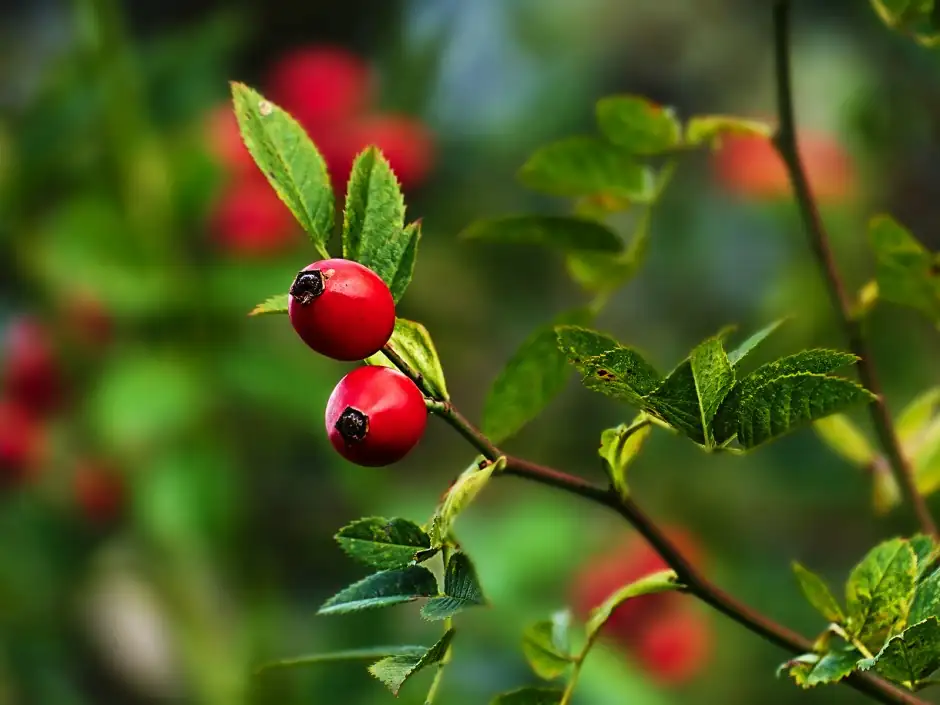
... these and other names are given to the fruits of wild roses, which stand out in autumn due to their wonderful, bright red color at the edges of forests.
Rosehips are merely the outer covering of the true fruits. They are false fruits that enclose many small, hairy achenes. While cultivated roses also produce such fruits, the term "rosehip" is usually reserved for wild-growing roses.
Rosehips are not poisonous; they are edible and very healthy! If you want to eat rosehips straight from the bush, you should harvest them after the first frost. They will be slightly softer then. Before eating, remove the small seeds inside the rosehip. The rosehip pulp remains and can be eaten immediately.
Rosehips are healthy and rich in vitamins. They contain
- especially high in vitamin C
- Vitamin A
- vitamins B1 and B2
- Vitamin K
- Pectin
Rosehips are among the fruits richest in vitamin C, as 100 grams of rosehips contain around 1200 milligrams of vitamin C.
Using rosehips in the kitchen
Rosehip tea is probably the best-known product. It's usually found as part of a fruit tea blend, which typically contains only a few rosehips. A healthy and good-quality rosehip tea can be found in pharmacies, health food stores, or organic shops.
Anyone who has the opportunity to pick rosehips at the edge of the forest or perhaps even in their own garden should ensure that the fruits are at their optimal ripeness. Ripe rosehips can be recognized by the fact that their skin yields to gentle finger pressure.
For tea, you can use both freshly picked and dried rosehips. However, since the fruits don't keep for long, it's recommended to dry them.
Drying rosehips:
- For this, the ripe rosehips are cut open and pre-dried for a few days at room temperature.
- Then they go into the oven at a very low temperature (approx. 50 degrees) for about 5-6 hours.
- The oven door should be left slightly open to allow moisture to escape.
How to make your own rosehip tea:
- Crush the fresh or dried rosehips in a mortar – the seeds should not be removed.
- Then put the rosehips (approx. 1-2 tsp per 250 ml cup) into a tea strainer and pour boiling water over them.
- Let the water steep for 10-15 minutes.
- Season to taste with sugar and lemon juice, and it's ready.
Rosehip jam is also well-known and popular. To make it, you can painstakingly halve the fruits, remove the seeds with their itchy hairs, and cook the pulp into jam.
But there's a much simpler way:
- For this, the washed rosehips, freed from their blossom ends, are cooked until soft with approximately the same amount of water over medium heat and then pressed through the finest perforated insert of the Flotte Lotte, a sieve, or pureed with a hand blender.
- Then the mixture is passed through a fine sieve to ensure that all the hairs are removed.
- This rosehip pulp can be frozen directly or used to make jam.
- The pulp must be diluted with liquid (water, apple juice, or orange juice). The ratio is approximately 80 percent pulp to 20 percent juice.
- Finally, put the rosehip mixture, the gelling sugar (2:1) and a little citric acid into a pot and simmer for about 6 minutes.
- Pour the hot contents into thoroughly cleaned screw-top jars and seal immediately.
This fantastic jam goes perfectly with cheese or autumnal game dishes.
Other uses for rosehips
- Hagebuttenwein
- Rosehip vinegar
- Rosehip powder
- wow.
These wild fruits can be eaten raw if you take the time to remove all the seeds. However, due to their intense acidity, this is not recommended. It's better to cook them in water beforehand.
Even then, rosehips are a vitamin C powerhouse with a tart, fruity flavor. Rosehips, in any form, are incredibly healthy and can help you stay healthy throughout the winter.
The healthy red fruits of the rosehip are native to the Dunkelstein region. The area boasts perfect climatic conditions for this member of the rose family. Learn more about the Dunkelstein rosehip here.