Croissant: bakers always check this detail before buying one, and it's not the color
Faced with a display case full of croissants, it's easy to choose the biggest and most golden one. However, another detail deserves your attention before placing your order. You need to look at the croissant from an angle you don't always consider. Here are the clues to look for.
Standing before a bakery window, it's hard to resist. You're spoiled for choice in this temple of pastries, with chocolate croissants, raisin bread, apple turnovers, and cream puffs. But often, nothing beats the simplicity of a good croissant.
And choosing one is easy; your reflex is almost automatic: spot the golden, plump croissant and announce your choice before anyone else grabs it. However, to truly appreciate its visible layers, you need to look beyond the top. A quick glance at the sides can reveal much more about its appearance.
The detail to look at is on the sides
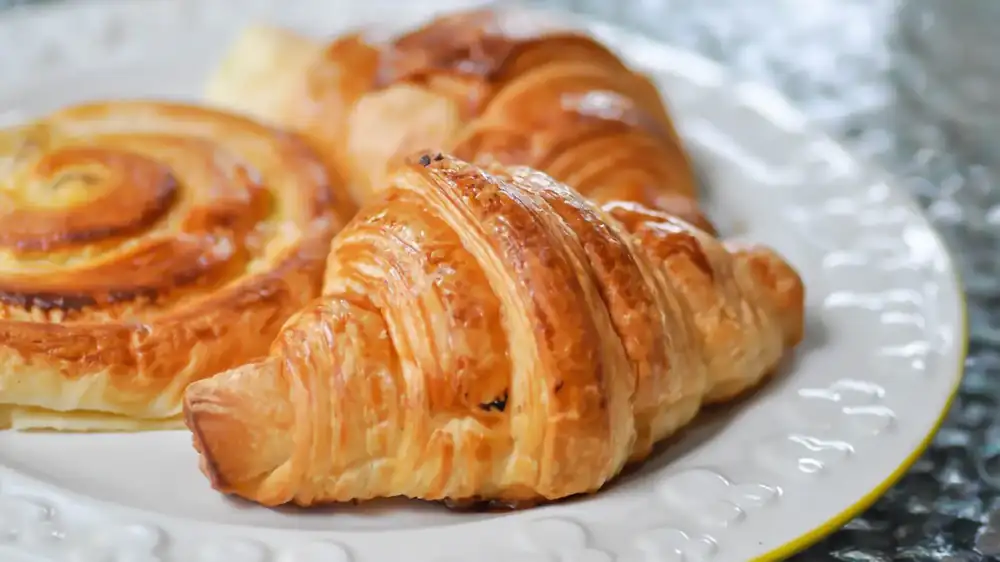
Turn your head slightly in front of the shop window, or observe the croissant the baker is about to serve you. Along its sides, you should be able to make out several layers of dough. These are what allow you to visually appreciate the flaky texture even before the first bite. If these layers are clearly defined, the croissant already makes you want to discover what lies inside.
Also check if the layers appear fairly even from one end to the other. The goal isn't to find a perfectly symmetrical pastry, but clearly visible and evenly distributed layers are a useful indicator for comparing croissants on offer.
If you have a choice between several croissants, also discard any that have sunken or soggy areas. That's why looking only at the top might make you miss the most telling detail.
The surface also gives some clues
Once you've inspected the sides, return to the surface. A croissant with a crispy appearance is particularly tempting, as you can already imagine the little crumbs on the table when you cut into it. Of course, this is only a visual clue. Until you've tasted it, you can't really know.
The idea, then, is to compare observations: clearly visible layers on the sides, even lamination, a surface that appears crispy, and no obviously compressed or soggy areas. In any case, the next time you hesitate in front of the display case, take a moment to examine the sides of the croissant. As for the final verdict, it will come with the first bite.