Biodiversity: 90% of Relais & Châteaux members remove eel from their menus
Protecting biodiversity is becoming a daily part of fine dining. This signal comes from Relais & Châteaux, which, as part of its "SOS for Biodiversity" initiative, has reached 90% of its 580 members to commit to not serving eel.
Eel is removed from the menus of 9 out of 10 establishments.
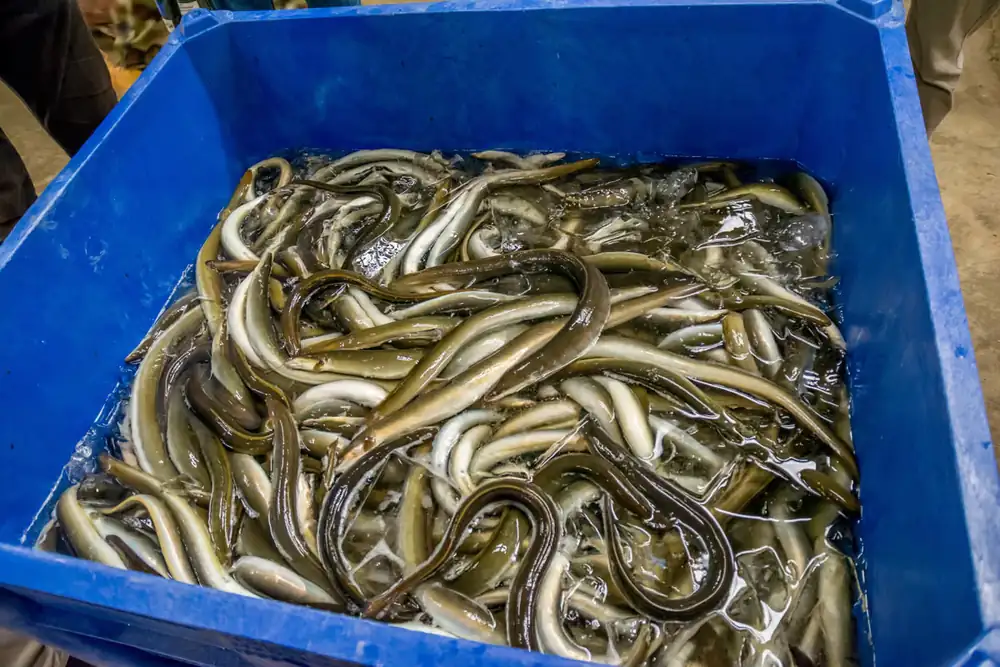
The goal achieved is based on a specific choice: to no longer serve the European eel, a species whose decline has been significant in recent decades. According to data cited by Relais & Châteaux, the European eel population has declined by 90% in the last forty years. The IUCN now classifies it as critically endangered. The pressure on the species is not due to a single factor. The causes cited include overfishing and illegal fishing, the presence of dams that interrupt the eel's life cycle, and pollution, which can also compromise the fertility of females. For an international network of accommodation facilities and restaurants, the decision to remove eel from their gastronomic offerings therefore has a dual dimension: it directly affects the supply chain for their kitchens, but it also impacts the relationship between the restaurant and the supply chain.
"As chefs, we wield considerable influence: every day we make choices that impact all life on our planet," said Mauro Colagreco, vice president of Relais & Châteaux and chef-patron of Mirazur. "Choosing to no longer serve an endangered species is a concrete act of conservation, but it also sends a strong message to the entire food supply chain," he added. The issue of biodiversity is thus addressed by starting with one of the most immediate aspects of a chef's work: the choice of raw materials to purchase and bring to the table. It's therefore not just about reducing the establishment's environmental impact, but also about influencing the species used in the kitchen.
The World Culinary Council brings together 20 Chefs
The Lisbon meeting brought together the 20 chefs who make up the World Culinary Council, a body representing the different regions of the Relais & Châteaux network. The Association comprises 580 properties in 65 countries across five continents. Led by President Laurent Gardinier and Vice President Mauro Colagreco, the Council's mission is to connect gastronomic experiences and issues from diverse contexts. "Hospitality must evolve through our ability to act collectively, while respecting the identity of each chef," said Laurent Gardinier, President of Relais & Châteaux. "The World Culinary Council embodies this Manifesto, combining global expertise with solutions rooted in local realities." For Gardinier, the result achieved on eel demonstrates the possibility of coordinating a common choice between establishments belonging to different countries and gastronomic cultures.
Relais & Châteaux once again calls for EU measures
The commitment to eel is not limited to members' kitchens. This fall, Relais & Châteaux plans to approach European Union ministers again, for the third time and in collaboration with Ethic Ocean. The Association will ask for measures to promote the species' recovery, support the ban on eel fishing until its full recovery, and address other factors contributing to the population's decline. Relais & Châteaux's position is thus part of an approach to sustainability that combines initiatives at individual establishments with action on the supply chain and species protection policies. In this case, the first step has already been taken in the restaurants: for nine out of ten members, eel is no longer on the menu.