Butterscotch Pie
This butterscotch pie is here to prove that butterscotch isn’t just for Grandma and Grandpa.
- Dough for single-crust pie
- 6 tablespoons butter
- 6 tablespoons all-purpose flour
- 1-1/2 cup packed brown sugar
- 2 cups whole milk
- 1/4 teaspoon salt
- 3 large egg yolks, room temperature, beaten
- 1 teaspoon vanilla extract
- MERINGUE:
- 3 large egg whites, room temperature
- 1/4 teaspoon cream of tartar
- 1/2 cup sugar
- On a lightly floured surface, roll the dough to a 1/8-inch-thick circle. Transfer the crust to a 9-inch pie plate. Trim the edges to a 1/2 inch beyond the rim of the plate, and flute the edges. Refrigerate the crust for 30 minutes. Preheat your oven to 425°F.
- Line the unpricked crust with a double thickness of aluminum foil. Fill the foil with pie weights, dried beans or uncooked rice. Bake on a lower oven rack until the edges are light golden brown, 15 to 20 minutes. Remove the foil and the weights. Continue baking until the bottom of the crust is golden brown, three to six minutes longer. Cool the crust at room temperature on a wire rack. Reduce the oven setting to 350°.
- In a saucepan, melt the butter. Remove the saucepan from heat. Add the flour, and whisk until smooth. Whisk in the brown sugar. Return the saucepan to the heat, and whisk in the milk and salt until blended. Cook and whisk over medium-high heat until the mixture is thickened and bubbly. Reduce the heat, and cook and whisk for two minutes longer.
- Remove the saucepan from heat. Slowly stream about 1 cup of the hot butter mixture into the egg yolks while whisking constantly. Return the egg mixture to the saucepan, whisking constantly. Bring to a gentle boil. Cook, whisking, for two minutes longer. Remove the saucepan from heat. Gently whisk in the vanilla. Pour the filling into the crust. Editor’s Tip: Don’t end up with scrambled eggs in your filling! Learn how to temper eggs like a pro so your butterscotch custard filling turns out luscious and silky.
- Using a hand mixer or stand mixer, beat the egg whites and cream of tartar on medium speed in a small bowl until soft peaks form. Gradually beat in the sugar, about 1 tablespoon at a time, on high speed until stiff, glossy peaks form and the sugar is dissolved. Spread the meringue evenly over the hot filling, sealing the meringue to the edge of the crust. Editor’s Tip: Before starting this step, make sure all your equipment is cleaned and dried thoroughly. Any fat or food left behind on the equipment will inhibit your meringue from whipping up.
- Bake the pie until the meringue is golden brown, 12 to 15 minutes. Cool the pie at room temperature on a wire rack for one hour. Refrigerate the pie for at least three hours before serving. Refrigerate the leftovers. Editor’s Tip: When cutting the pie into servings, first dip your knife into hot water, then cut into your pie to prevent the meringue from sticking to the knife.
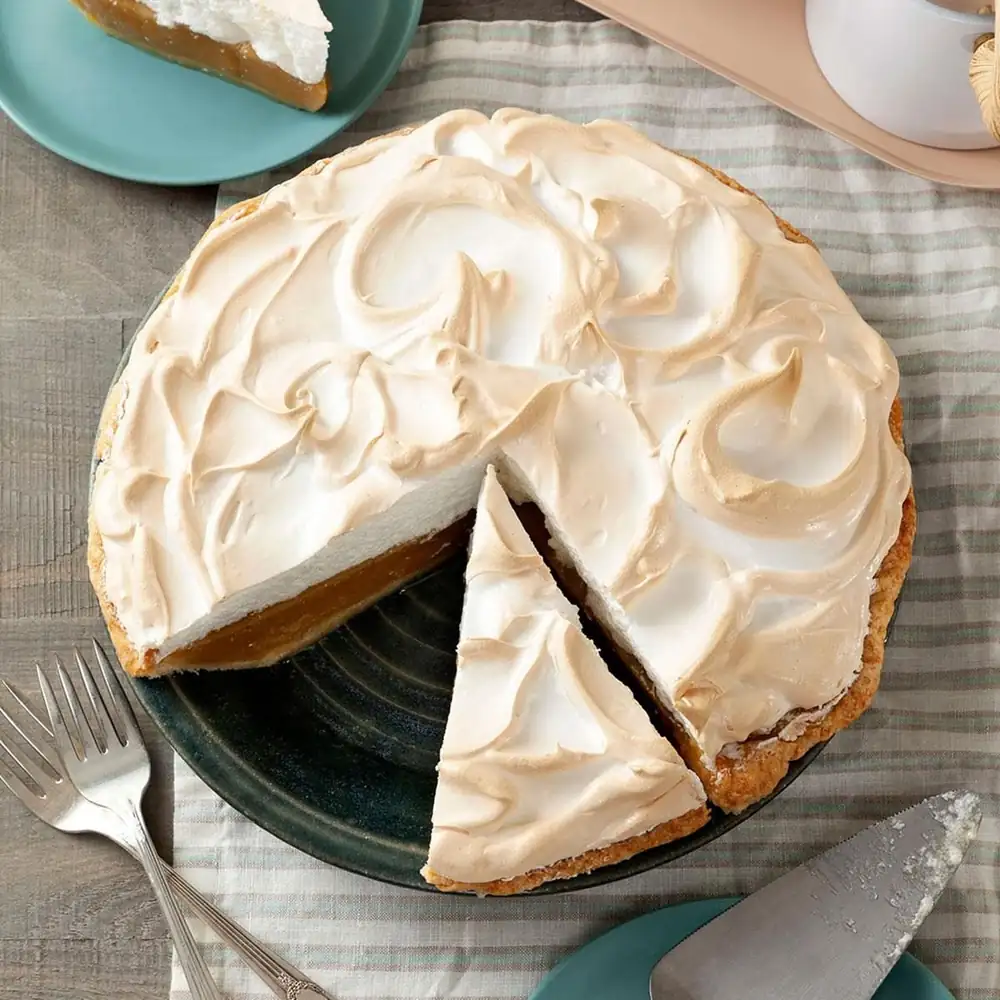
This butterscotch pie is the perfect make-ahead dessert that’s guaranteed to finish your party on the right note. The pie features a buttery crust that’s filled with a liquid-gold butterscotch custard and topped with a toasted and fluffy meringue. Grandma and Grandpa probably told you how delicious those old-school butterscotch recipes are for their rich, complex flavor, and we’re here to tell you that they were absolutely right (as they usually are).
Don’t confuse butterscotch with caramel or toffee. The difference between caramel, butterscotch and toffee lies in the ingredients and cooking techniques. Toffee is cooked until it’s hard and brittle, unlike caramel and butterscotch’s more liquid-y state. Caramel and butterscotch are very similar, but caramel is made with white sugar while butterscotch is made with brown sugar. Brown sugar has a deeper, richer flavor than white sugar, which results in a more complex treat.
- Dough for single-crust pie: You can use a store-bought or homemade crust in our butterscotch pie recipe.
- All-purpose flour: All-purpose flour thickens the butterscotch filling so the pie is not a soupy mess when you cut into it.
- Brown sugar: Brown sugar is a primary ingredient in butterscotch, giving the caramel-y taste and beautiful golden hue in the pie’s butterscotch filling.
- Whole milk: Whole milk adds flavor and fat to the butterscotch filling. We do not recommend a milk with less fat, as it would make the filling more watery than creamy.
- Egg yolks: Egg yolks create a custard filling’s rich texture and flavor.
- Egg whites: Room-temperature egg whites fluff up nicely for a meringue. There should not be a speck of yolks in the egg whites, or else the egg whites won’t fluff up.
- Cream of tartar: Cream of tartar adds stability to the meringue and helps it whip up more successfully.