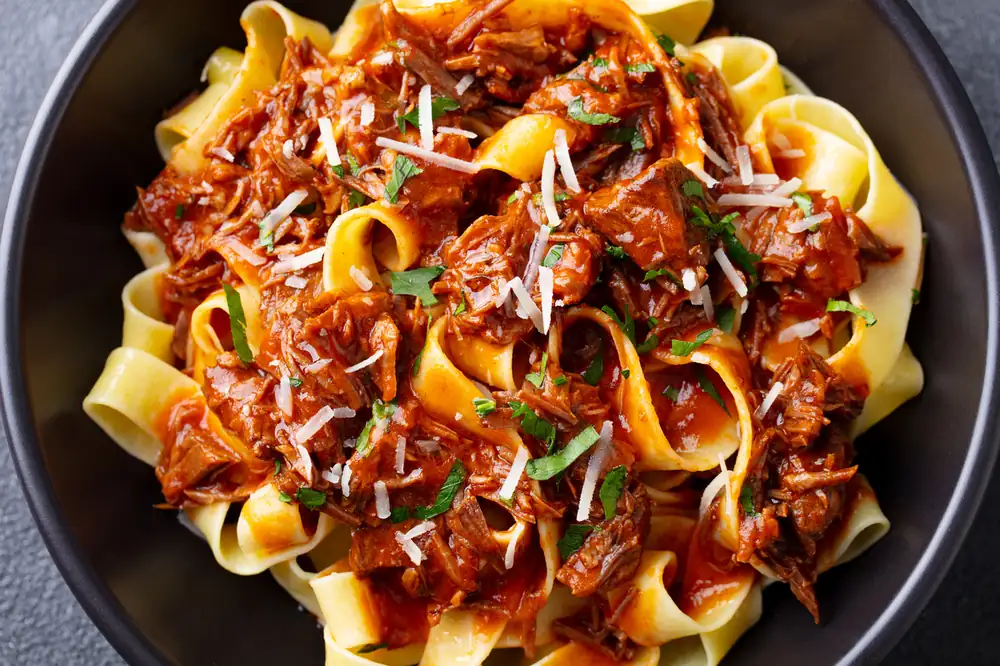
The recipe for pappardelle with ragù, a traditional dish that can be made unique with these tips
- 400g Fresh pappardelle egg pasta
- 500 g minced meat (beef, pork or wild boar)
- 1 Onion
- 1 carrot
- 1 stalk of celery
- 500 g Tomato sauce
- 1 glass of red wine
- 500 ml vegetable broth
- Extra virgin olive oil to taste
- Sale q.b.
- Pepe q.b.
- 1 bay leaf
- Prepare the soffritto. Finely chop the onion, carrot, and celery. In a large saucepan, heat a generous drizzle of extra virgin olive oil over medium heat. Add the chopped vegetables and sauté, stirring occasionally, for about 8-10 minutes, until the vegetables are completely soft, golden, and almost caramelized. A well-made soffritto is the aromatic foundation for the entire ragù.
- Brown the meat and deglaze with the wine. Add the ground beef to the soffritto, raise the heat, and brown, stirring constantly to break up all the pieces. The meat should be completely golden brown and no longer pink: this step over high heat is essential for developing the flavor. Deglaze with the red wine and let the alcohol evaporate for a few minutes over high heat, scraping the bottom of the pan to incorporate all the caramelized juices.
- Cook the ragù slowly. Add the tomato sauce, bay leaf, and a ladle of hot vegetable broth. Stir, season with salt and pepper, and reduce the heat to low. Cover with a slightly ajar lid and cook over very low heat for 2-3 hours, stirring occasionally and adding more hot broth if the ragù becomes too dry. The ragù is ready when it is thick, dark, and fragrant.
- Cook the pappardelle and serve. Bring a large pot of salted water to a boil and cook the fresh pappardelle for the indicated cooking time—a few minutes for fresh pasta. Drain them al dente, reserving a ladleful of the cooking water. Pour them directly into the saucepan with the ragù, stirring well with the heat off or very low, adding a few tablespoons of the cooking water if necessary. Serve immediately, with a sprinkling of Parmesan cheese if desired.
- For a more delicate version with a more rustic, country feel, perfect for those who prefer a ragù without tomato, try pappardelle with white rabbit ragù, olives, and rosemary. Replace the ground meat with 500g of rabbit meat, chopped into small pieces. Rabbit is a lean meat with a delicate, slightly gamey flavor, which lends itself magnificently to white ragùs in which the wine and herbs are the protagonists of the cooking juices. Eliminate the tomato puree and replace the vegetable broth with light chicken broth, which pairs better with rabbit. Add 2 sprigs of fresh rosemary and 50g of pitted Taggiasca olives to the soffritto along with the meat. The rosemary will flavor the ragù with an intense balsamic note, while the olives add a savory and bitter note that balances the sweetness of the rabbit wonderfully. Deglaze with dry white wine instead of red—which is more suited to white meats—and cook over low heat for about 1.5 hours: rabbit cooks quicker than beef. Remove the rosemary before seasoning the pappardelle and stir in a drizzle of extra virgin olive oil for a glossy, flavorful result.
Pappardelle with ragù
Just a few high-quality ingredients make for a traditional first course like no other: pappardelle with ragù is sure to please every palate.
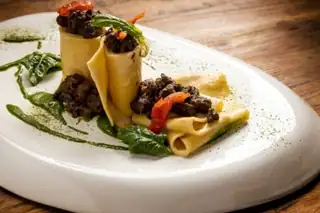
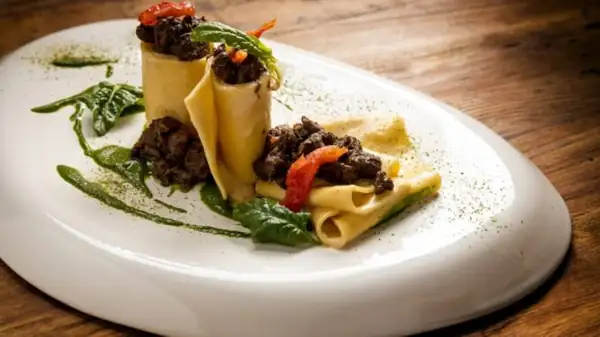
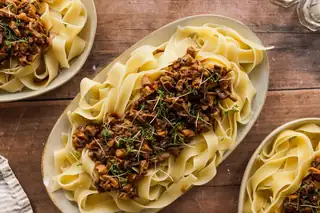
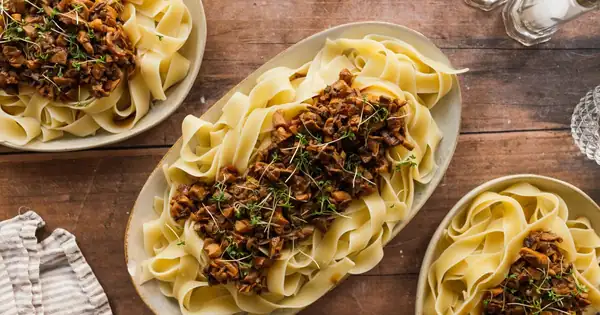
Pappardelle with ragù is one of those dishes that needs no introduction: a timeless Italian classic, where wide, porous egg pasta meets a thick, deep, and fragrant meat sauce, slowly cooked for hours until it achieves the enveloping consistency and rich flavor that only time can provide. Pappardelle—with their generous width and rough surface—are the ideal shape for this type of sauce: they hold the ragù in every fold, ensuring a complete and satisfying bite with every forkful.
The key to a perfect ragù is patience. The soffritto of onion, carrot, and celery must slowly soften until golden and almost caramelized; the meat must be browned over high heat until completely golden before being deglazed with red wine; the tomato puree and broth must then simmer over very low heat for 2-3 hours, during which the ragù transforms from a simple sauce into something extraordinarily complex and flavorful. Every hour of cooking adds depth: the meat proteins melt, the flavors meld, the liquid reduces and concentrates. You can't rush this process—or rather, you shouldn't.
Perfect for Sunday lunches or cold-weather dinners, pappardelle with ragù pairs beautifully with a Chianti or Sangiovese and can be prepared the day before—ragù, like all great meat sauces, is even better reheated. With wild boar, they become a rustic, gamey first course; with beef, they're a classic Tuscan dish; with pork, they're sweeter and softer.
Variation: Pappardelle with ragù
For a more delicate version with a more rustic, country feel, perfect for those who prefer a ragù without tomato, try pappardelle with white rabbit ragù, olives, and rosemary. Replace the ground meat with 500g of rabbit meat, chopped into small pieces: rabbit is a lean meat with a delicate, slightly gamey flavor that lends itself beautifully to white ragùs, where wine and herbs dominate the cooking juices. Omit the tomato puree and replace the vegetable broth with light chicken broth, which pairs better with rabbit.
Add 2 sprigs of fresh rosemary and 50g of pitted Taggiasca olives to the sautéed meat: the rosemary will flavor the ragù with an intense balsamic note, while the olives add a savory and bitter note that balances the sweetness of the rabbit beautifully. Pour in dry white wine instead of red—which is more suited to white meats—and cook over low heat for about 1.5 hours: rabbit cooks quicker than beef. Remove the rosemary before seasoning the pappardelle and stir in a drizzle of extra virgin olive oil for a glossy and flavorful result.