One leads to another: the foolproof recipe for amazing fruit jellies
- 500 g Oranges (strawberries, raspberries to taste)
- 350 g sugar
- 10 g Gelatin sheets
- Prepare the fruit juice or puree and soak the gelatin. Wash and clean the fruit of your choice. Blend it in a blender until smooth, then pass it through a fine-mesh sieve to remove seeds, peel, and fibers, obtaining a smooth, uniform juice. Place the gelatin sheets in a bowl with plenty of cold water and let them soak for 5-10 minutes, until completely soft and pliable.
- Cook the juice with the sugar and dissolve the gelatin. In a saucepan, combine the fruit juice and sugar. Bring to a boil over medium heat, stirring to completely dissolve the sugar. Let boil for 2-3 minutes. Remove from the heat, let the temperature drop slightly—the mixture should no longer be boiling—then squeeze the soaked gelatin sheets well and remove any excess water. Add them to the hot juice and stir vigorously until completely and evenly dissolved. If the mixture isn't perfectly smooth, blend it with an immersion blender.
- Pour into molds and let set. Spread the mixture into silicone molds (cube, heart, or other shapes of your choice), or on a baking sheet lined with parchment paper to create an even layer, then cut into cubes. Let cool at room temperature for a few minutes, then refrigerate for at least 4 hours, or until completely set.
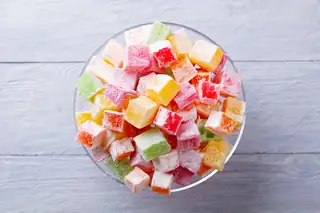
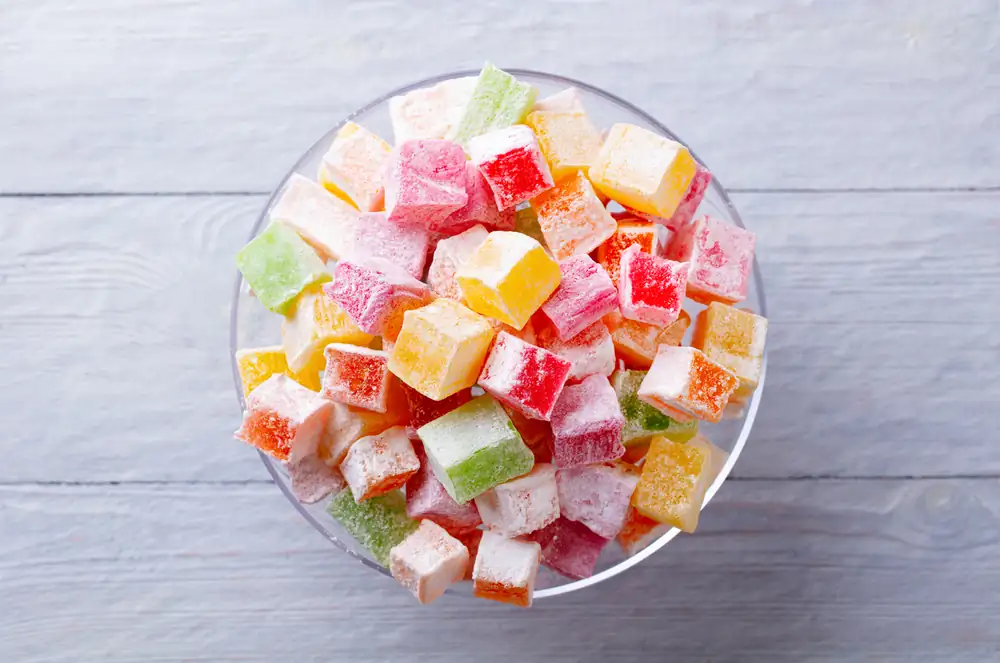
- Unmold and finish with sugar. Carefully unmold the jellies from the molds—silicone ones are easy to unmold; pan-molded ones can be cut into cubes with a slightly damp knife. Roll each jellie in granulated sugar, coating them on all sides for a shiny, crunchy finish that also prevents them from sticking together. Store in an airtight container in the refrigerator.
- For a visually spectacular version with a delightful contrast of flavors, perfect as a gift or as a dessert for a special dinner, try these two-tone orange and raspberry jellies. Prepare two separate juices: 250 g of strained orange juice and 250 g of sifted raspberry puree, each with 175 g of sugar and 5 g of gelatin sheets. Proceed with the two mixtures separately, following the same technique as the basic recipe. Pour the first layer—for example, the orange one—into molds or a baking dish and let it harden in the refrigerator for at least 2 hours, until firm to the touch. Only then, gently pour the second layer—the raspberry one—over the first solidified layer. It's important that the liquid in the second layer isn't too hot, otherwise it will melt the first. Let it cool to room temperature before pouring it in, then return it to the refrigerator for another 2-3 hours. The result will be a two-toned jelly with an orange layer and a red-purple one. When cut, it reveals a chromatically beautiful section, with the two distinct flavors merging in every bite. Cut into rectangles or cubes and roll in granulated sugar before serving.
Fruit jellies
Customizable to your liking and perfect for enjoying on your own or as a gift, fruit jellies are a sin of gluttony that is practically impossible to resist.
Fruit jellies are one of those little delights that never cease to amaze: a chewy, melt-in-your-mouth texture, an intense, natural fruity flavor, and a simplicity of preparation that contrasts with the final effect, as beautiful as it is delicious. Made with fresh fruit juice or puree, sugar, and gelatin sheets, they are versatile and universally loved—from children who nibble them as a snack to adults who enjoy them as a light dessert or as an accompaniment to afternoon tea. Once you've tried one, it's truly difficult to stop.
The great advantage of these jellies is that you can use any seasonal or leftover fruit: oranges in winter, strawberries and raspberries in spring, peaches and apricots in summer, pomegranates or apples in fall. The technique is always the same—blend, strain, bring to a boil with sugar, dissolve the soaked gelatin, and pour into molds—but the result completely changes color, aroma, and flavor with each season. Sheet gelatin is preferable to powdered gelatin for its softer, more elastic texture, which more closely resembles quality artisanal jellies.
Perfect as a homemade gift idea—packaged in clear boxes or special plastic bags, they become an original and refined gift, even for Christmas—fruit jellies can be stored in the refrigerator for several days. They can also be used as a decoration for desserts and cakes, or rolled in granulated sugar for a shiny, crunchy finish that makes them even more inviting.
Variant Fruit jellies
For a visually spectacular version with a delightful contrast of flavors, perfect as a gift or as a dessert for a special dinner, try these two-tone orange and raspberry jellies. Prepare two separate juices: 250 g of strained orange juice and 250 g of sifted raspberry puree, each with 175 g of sugar and 5 g of gelatin sheets. Proceed with the two mixtures separately, following the same technique as the basic recipe. Pour the first layer—for example, the orange one—into molds or a baking dish and let it harden in the refrigerator for at least 2 hours, until firm to the touch.
Only then, gently pour the second layer—the raspberry one—over the solidified first layer. It's important that the liquid in the second layer isn't too hot, otherwise it will melt the first. Let it cool to room temperature before pouring it in, then refrigerate for another 2-3 hours. The result will be a two-toned jelly with an orange layer and a red-purple one. When cut, it reveals a chromatically beautiful section, with the two distinct flavors merging in every bite. Cut into rectangles or cubes and roll in granulated sugar before serving.