How El Niño is Changing the Restaurant Industry
We are accustomed to considering haute cuisine as a privileged enclave detached from the real world, with its private gardens combed daily by the brigade, collaborations with hydroponic farming companies, and zero waste achieved through devilry such as centrifuges, extractors or fermentations: in the era of the climate revolution, however, no one is safe, and starting from the global warnings of t
El Niño warning from the OECD to Michelin stars
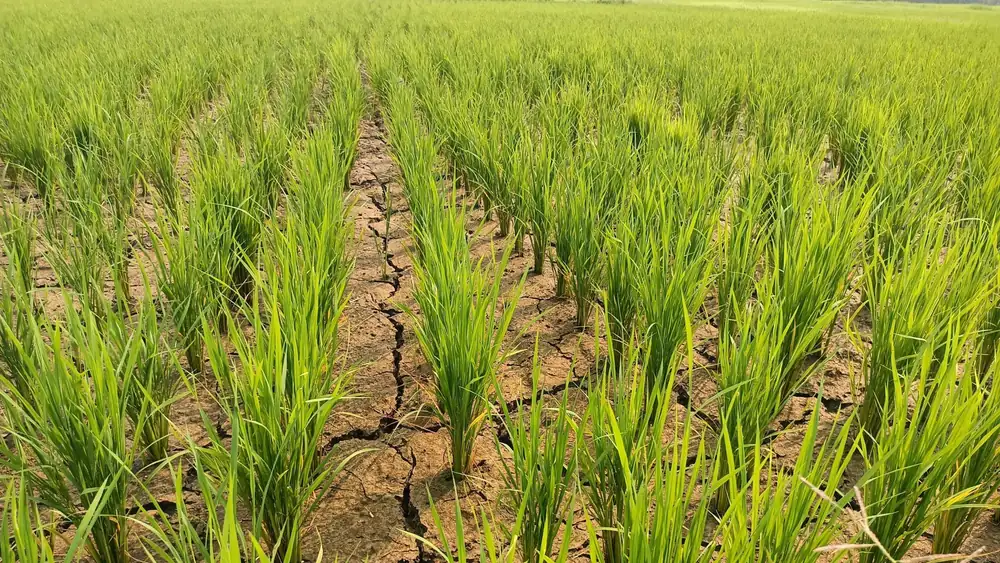
The Organization for Economic Co-operation and Development recently sounded a strong alarm, highlighting the serious repercussions of extreme weather events. During the press conference held to present the Interim Economic Outlook report, OECD leaders clarified that the intensification of the climate phenomenon known as El Niño risks significantly compromising harvests and global agriculture, causing upward pressure on food prices. The organization's Secretary General, Mathias Cormann, does not want to leave room for false hopes: "It will be 95% severe." This prospect raises deep concerns for global stability and food security, and, referring specifically to the social and geographical repercussions of crop damage, the Secretary General added that "it will hit the poorest families and low-income countries and their access to food."
Rising agricultural and commodity prices are already reshaping the futures curve, fueled both by summer heatwaves in the Northern Hemisphere and geopolitical conflicts in the Middle East. One example is the cocoa supply chain, one of the hardest hit globally, whose constant price increases are seriously challenging chefs and pastry chefs everywhere. Faced with this intense pressure, leading figures in global gastronomy gathered in Mexico at the Apapaxoa food festival—including Brazilian Alex Atala, who holds two Michelin stars at his DOM in São Paulo—to discuss an emergency that is forever changing the availability, quality, and prices of ingredients.
Alongside chocolate multinationals, which are carrying out research projects to find plausible substitutes for cocoa, gourmet kitchens have also begun to develop extremely innovative solutions: in Copenhagen, for example, chef Rasmus Munk has decided to respond to pressure from the cocoa market by introducing a local alternative made from fermented spent grain, a residue from beer production that tastes very similar to chocolate.
In Latin America, the consequences of El Niño are manifesting themselves in even more direct and dramatic ways for restaurant management. In Colombia, chef Alvaro Clavijo reported a shortage of cocoa pulp and various Andean tubers at his restaurant in Bogotá, a decidedly serious situation: "El Niño is hitting hard, and we are very concerned for our suppliers." In addition to supply difficulties, Clavijo is also facing the direct consequences of drought and a drastic reduction in rainfall: "We've been experiencing rationing for two years now, and in a restaurant, the situation is very complicated."
To counteract the unstable supply, other restaurateurs have chosen to transform the difficulties into a new culinary philosophy. In São Paulo, chef Ivan Ralston and researcher Katherina Kordas offer four seasonal menus titled Humidity, Rain, Wind, and Drought, constantly changing the recipes based on rainfall patterns and serving local ingredients at the best time.
In Europe and Italy, the repercussions of weather anomalies and prolonged heat are being felt both in the supply of raw materials and in customer habits and dining room layouts. In Spain, chef Quique Dacosta, a three-star chef at his eponymous restaurant in Dénia, laments that even weather warnings end up damaging business due to constant customer cancellations. Explaining how fear of bad weather is emptying restaurant tables, Quique Dacosta is blunt: "It will rain a lot and people won't come anymore," emphasizing the restaurant sector's acute vulnerability to unpredictable weather events.
Even in Italy, the situation along the coast and in the countryside confirms a picture of profound operational uncertainty. In Fiumicino, chef Gianfranco Pascucci described the confusion caused by warming seawater and the irregularity of seasonal cycles for both the fishing industry and crops: "It's September, the time when cuttlefish breed near the coast, but we don't see boats going out: warm waters, aggressive invasive species, have wiped out any regular catches. Everything seems at least twenty days behind schedule. And this is also happening in the vegetable garden, where planting is scheduled every two weeks, we're just playing it by sight."
In this worrying situation, awareness of the value of resources is at least leading to positive changes in market management and food waste prevention. At fish auctions, for example, we're seeing a progressive reduction in the size of purchased lots: while in the past, entire vessels or large volumes were purchased, today increasingly smaller packages are preferred, as demonstrated by the squid boxes, whose weight has halved from six to three kilograms compared to last year, thus avoiding unnecessary waste in kitchen staff.
At the same time, exceptionally high summer temperatures are changing Italian consumers' habits, impacting the management of outdoor spaces, business opening hours, and gastronomic preferences. In the run-up to World Tourism Day on September 27, managers are noticing that aperitifs, dinners, and social gatherings are increasingly concentrated in the cooler evening hours. Emanuele Tesciuba, co-founder of The Ner Collection, confirms this: "This summer, we noticed that, to protect themselves from the intense heat, guests have clearly favored evening outings." The entire global restaurant industry is thus discovering it is on the front lines of climate change, forced to adapt menus, opening hours, and purchasing strategies to protect the economic sustainability and value of food.