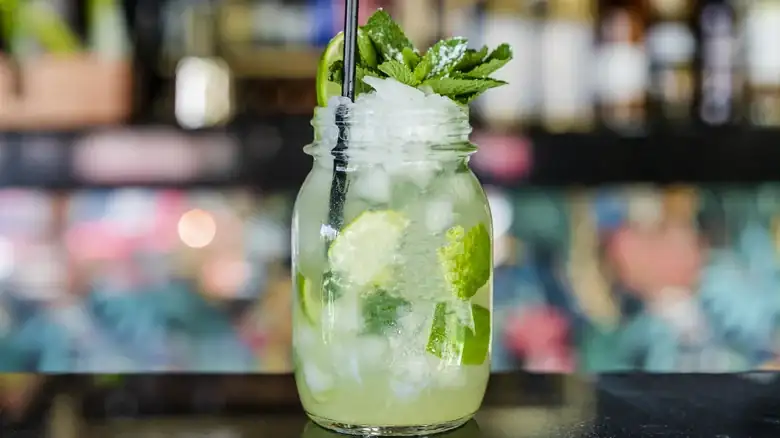
The Specific Mint Variety That's Commonly Found In Mojitos
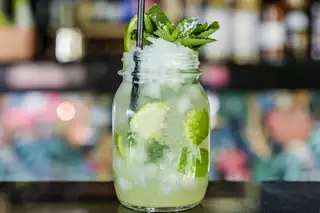
Mojitos are a go-to cocktail if you want a well balanced, bubbly beverage that will transport you to a sunny, tropical, beach-side destination. And there's one ingredient that's mandatory for any magnificent mojito — mint!
While the authentic recipe calls for Mentha x villosa, a mint variety that's native to Cuba and also known as mojito mint, you're more likely to come across spearmint in ingredients lists, as it's more commonly available. Spearmint renders a sweet flavor to a mojito, imparting a refreshing taste that we know and love. On the other hand, mojito mint is more subtle, thereby allowing the other ingredients of the beverage to shine more prominently.
Bartenders and cocktail enthusiasts passionate about traditional Cuban mixology often seek out mojito mint to create the most authentic version of the classic drink. However, for home mixologists, spearmint remains an excellent and readily available alternative that, provided the mint is stored properly, ensures optimum freshness for a quality, at-home cocktail. The ingredients of a mojito can also be adapted to infuse other fresh flavors by muddling fruit with the mint. Lime is standard, but some favorites include mango, passionfruit, strawberry, and raspberry, which can each provide a sweet and tart complement to the minty flavor. If you desire more herbaceous notes and don't mind straying further from the traditional recipe, swap out your mojito's mint for basil instead.
The history of mojitos
The origins of this iconic cocktail can be traced back in Cuban history, emerging from a complex narrative of colonization and indigenous resilience. Initially, the drink was a medicinal concoction created by plantation workers and enslaved Africans as a remedy for the harsh conditions they endured. The name mojito is likely derived from the word mojo, which refers to a Cuban citrus sauce, or potentially mojado, meaning wet in Spanish. Contrary to popular British narratives that credit Francis Drake with the drink's invention, the mojito is believed to be a local creation using indigenous ingredients like aguardiente (a distilled spirit and precursor of rum), mint, lime, and sugar cane.
The cocktail gained international popularity during the Prohibition era, when Americans flocked to Havana in order to drink alcohol outside of the purview of U.S. law. In today's world of craft cocktails, a mojito is more than a delicious drink. It's a representation of indigenous traditions, colonial influences, and the spirited mixology culture that has shaped this cocktail into one that is sipped and savored around the world — regardless of the exact variety of mint muddled in your mojito.