Borda Raubert, my favorite side of Andorran cuisine. 7 Cannibals
The menu at Borda Raubert unapologetically showcases the essence of a cuisine with rural origins.
I sit down in the dining room of Borda Raubert, five kilometers from the center of Andorra la Vella, and as lunch progresses I have a rather strange feeling: I've come so far from home to eat as if I were at home. A slight distinction. At home we never had trinxat, and escudella, the stew, wasn't a barretjada like the one they've just served me, but it might resemble some homemade, half-board version of cocido. It doesn't matter. I enjoy what they serve me as if I were at home and leave with that touch of joy that local cuisine always brings.
I like what I see, and even more what I eat. The selection of cured meats that Cal Jordi makes in Ransol is the first indication. Especially two pieces—one of liver and the other of kidneys—the kind that make your tongue dance and leave you pondering. The art of survival encased in a casing. The longaniza sausages aren't bad either; these folks are definitely worth keeping an eye on.
Dolors Pal and Josep Maria Treguet have transformed the mountain house their family has run for fifty years into a noteworthy landmark. In a way, their mountain lodge feels like the anchor connecting Andorra to the cuisine that links it to its history, a history I find blurred by the principality's rapid growth. There are many foreign cuisines, a few Michelin-starred chefs working in hotels or upscale establishments, and a general lack of personal touch. The menu at Borda Raubert unabashedly showcases the essence of a cuisine with rural roots, more humble than many realize. The nettle cream they serve as an appetizer is a refined, almost bourgeois, example of the subsistence recipes that not so long ago fed the people of these valleys and mountains. The most extreme example, I'm told, would be tobacco leaf soup, a last resort.
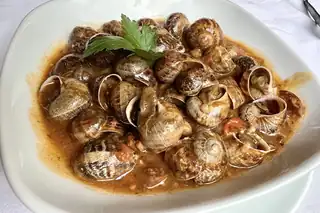
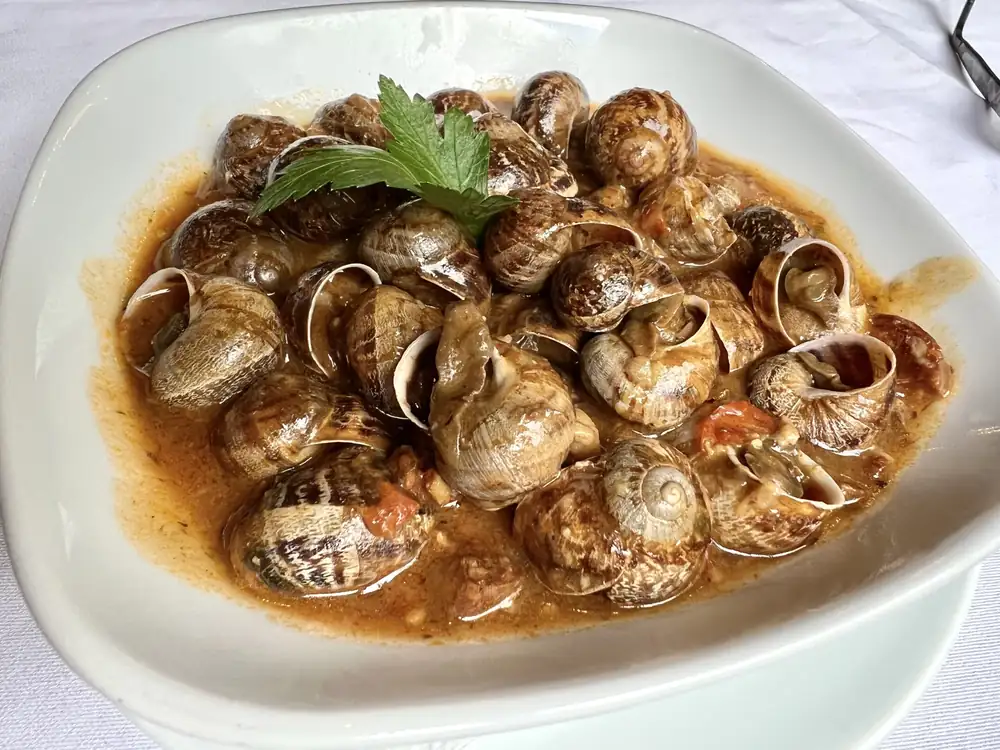
I read the menu and it's one of those I love: it tells a story. I find other dishes that speak of a recently left-behind humble beginning, like the so-called "festival soup," a noodle soup that, in Borda Raubert's kitchen, revolves around a rich but unpretentious broth. A festive soup was sometimes a staple in other kitchens, something that would be an everyday dish. And then there are the snails, a common ingredient in all rural cuisines, which they prepare beautifully with a dense, slightly spicy, and flavorful sauce, enriched with chorizo and bacon. It's an encounter with a cuisine that's etched in my memory: warmth and intimate emotions served by the spoonful. A joyful start to a menu that offers other gems.
On one side of the menu are what they call "typical dishes," about twenty items served at a rate of three per day. On the other, a conventional menu that pays special attention to grilled dishes (mountain quail, rabbit, chicken, pig's trotters, sausages...). The trinxat, hearty and comfortingly familiar, is garnished today with black sausage, fresh chili peppers, and slivers of crispy pork rind. The escudella borretjada—beef brisket, fresh bacon, white and black sausage, potato, carrot, thick noodles, and chickpeas—is served simply, without any fuss, in a modest portion with the feel of an everyday stew. At home, we never had sausage in our stew, but it tastes like home.
It's a simple meal, though that depends on how you look at it. I find it full of emotion. Take the galta, for example, the braised beef cheek in a rich, dark, and flavorful sauce that complements the gelatinous texture of the meat. Then there are the meatballs. Large, flavorful, tender, and easy to handle, with a sauce that takes advantage of autumn to enrich itself with black llanegas (Hygrophorus latitsbundus), those mild and creamy mushrooms that add a distinctive touch.
I spoke with Dolors about her story and that of the Borda. Her in-laws opened it, and she and her husband, who arrived from La Seu countless years ago, continued running it. The premises aren't theirs, and they always depend on the arrangements made with the landlord. I left thinking that the government of the Principality should extend some kind of legal protection to this and other bordas. They hold the history of Andorran cuisine; without them, the cuisine would be lost.