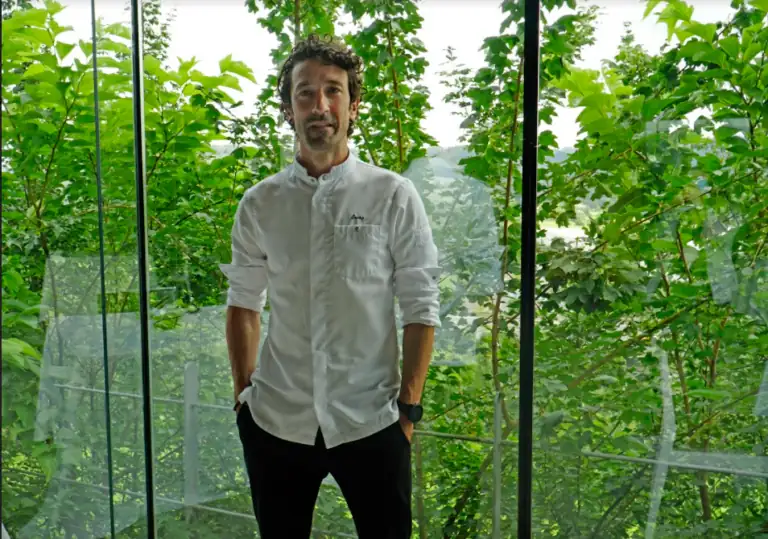
Eneko Atxa will be feeding people on Mars
Eneko Atxa, in collaboration with NASA, will be working on research into new materials for architecture and new food ingredients suitable for life on other planets. The key lies in mycelium, a wood-like structure derived from fungi that is resistant, lightweight, compostable, and sustainable.
Eneko Aspe, a scientist with the American organization who is working alongside the chef on this research, explained: “At NASA, our new projects are aimed at colonizing other satellites and planets. The issue is that we can't transport certain materials, like cement, to build there. So we're studying other types of materials, such as mycelium. Mycelium is present in fungi. It's a network of filaments with a structure very similar to wood, but lighter, stronger, compostable, sustainable, and it reproduces very quickly… NASA's idea is to create these materials using living organisms, but before testing them there, it's necessary to test them here. And this is where Azurmendi and Eneko come in. It's important to remember that space technology, applied to Earth, led to freeze-drying, which is used by all restaurants today,” the scientist stated.
At Azurmendi, they have tried making bowls with mycelium and coffee waste.
New ingredients to eat off our planet
NASA is not only studying building materials for future architecture on other planets but also the ingredients that will form part of the astronauts' diet "when they colonize Mars," Aspe points out. Initially, potato cultivation is expected to be possible. "Potatoes can be planted on that planet, but they have little protein, so we're focusing on mycelium, which has 9 to 45% more." Another advantage is that it's a material that can travel under extreme pressures, temperatures, and speeds. Atxa's help will also be needed in the culinary aspect.
Education for a healthy future
Another aspect the Basque chef highlighted during his presentation at the congress was the importance of nutrition education. This applies not only to creating menus for people with intolerances, allergies, or sensitivities to certain ingredients, but also to building a healthier future. “I have two daughters, aged 9 and 12. I wonder how what I do can be useful to them. I'd like to see what we do in restaurants transferred to the home: planning menus, managing shopping, trying to avoid waste… and now, I'd like to teach them to cook, how to extend the shelf life of products, and what to do with organic waste… If this knowledge were shared, we would be empowering the entire population and could have a society at the forefront of health. Children don't find it as difficult to learn or accept changes as adults do.”
In this regard, Eneko works with specialists from different disciplines, from doctors to nutritionists. His latest project was a collaboration with the University of Galdakao, with whom he developed a series of menus designed for people with specific dietary needs.