The Prince in Pompeii: Gian Marco Carli's Contemporary Cuisine
Il Principe is the restaurant that forces us to utter the most hated phrase in all of food communication: between tradition and innovation.
Discovering the Il Principe restaurant
People don't come to Pompeii just to gaze at the past. They come, increasingly, to dine in the present. And it's a significant distinction, because sitting at Carli's means understanding how a cuisine can be born from memory without remaining a prisoner of it, transforming tradition into a living, dynamic, even light-hearted language.
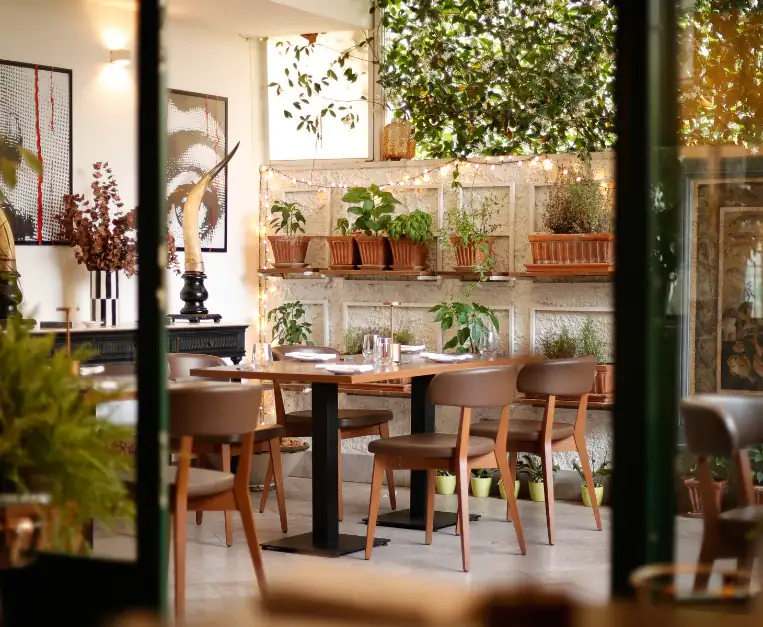
You're just steps from the excavations and the sanctuary, yet you feel like you're somewhere else, in a space that consciously rejects the idea of a restaurant "for tourists." The atmosphere is that of a living room, carefully curated without ostentation, where every detail serves a narrative function: not to impress, but to create an emotional context consistent with what's on your plate. The outdoor seating area, open weather permitting, is also lovely. The dining room, managed with grace and precision by Claudia Langella, is an integral part of the experience, very elegant yet unobtrusive.
How to eat at Gian Marco Carli
The beating heart, of course, is Gian Marco Carli's cuisine. Born into a family that has written important chapters in the history of Campanian cuisine, Carli has chosen a less obvious path than "returning to his roots." He carries his own past with him, of course, but it's filtered through international experiences ranging from London to Latin America, passing through some of Italy's most established restaurants, such as Don Alfonso 1890 and Quattro Passi. The result isn't a cuisine contaminated in the superficial sense of the term, but a personal grammar, in which techniques learned around the world serve to better express Campania.
The dishes are clear, recognizable, yet far from banal. The artichoke truly tastes like a Sunday artichoke, the one we make here on Easter Monday; the pasta and peas is the one you've always dreamed of, but with shrimp and lemon that shift the flavor axis a few degrees, just enough to make it new without betraying it. This is a cuisine that works by emotional subtraction rather than technical addition: the complexity lies in the thought, not the form, which is why it's so successful. Let's focus for a moment on the artichoke, or carcioffola as they call it here: the restaurant's signature dish, which has now become a sort of initiation test. If you mention having been to Il Principe, the first question you'll be asked is whether you've eaten the artichoke. Three cooking methods: grilled, oven-baked, low-temperature, a smoky cream soup, and ash that visually—and symbolically—recalls the history of Pompeii. It's one of those dishes that manages to be both profoundly local and surprisingly universal: you know exactly what you're eating, but you've never eaten it like this.
The signature dish is the spaghetti with tomato sauce, very classic, made with fresh, sweet, fragrant, and slightly acidic tomatoes. A dish that might seem simple, but is actually one of the most difficult to execute, because it leaves no room for error. There's no hiding behind it: it either works or it fails. Here, it works almost disarmingly, and becomes the perfect synthesis of Carli's cuisine, based on balance, moderation, and absolute respect for the raw ingredients.
This constant tension between roots and travel is also evident in the second courses. Cod, a central ingredient in the Campania tradition, is treated with an Iberian-inspired technique, pil pil, and accompanied by green river chili peppers and vanilla-candied cherry tomatoes. The duck, on the other hand, moves along oriental lines, with lacquers, fruit, and sweet and sour notes, but without ever slipping into exotic mannerism: everything remains incredibly clear, coherent, and clean.
Desserts close the circle with the same logic. They're never simple indulgences, but intelligent reinterpretations of archetypes. "Summer of 99," a tribute to the coffee affogato, is a perfect example: ironic, nostalgic, contemporary, capable of evoking a shared imagination without turning it into a fetish.
Il Principe is one of those rare places where the cuisine has its own distinctive, recognizable, adult voice, one that doesn't need much explanation, because it makes itself understood, dish after dish.
And perhaps this is the most interesting paradox: in a city that thrives on the past, Il Principe is one of the few places where you can truly sense the future of Campanian gastronomy as a natural evolution. A cuisine that rejects nothing, but is no longer content to simply replicate. A cuisine that, finally, has the courage to be itself.