Twelve delicious hours by the fire at Mibrasa
Because the relationship between food and fire takes us back to the deepest origins of gastronomy and humanity.
With charcoal, cooking is genuine and authentic, always prioritizing flavor above all else. But mastering fire is no easy task, and achieving it requires adapting traditional techniques to the endless demands of modern gastronomy.
That's why we're focusing specifically on Palamós (Girona), where the 'fire artisans' of the family company Mibrasa have their workshop, from which they manufacture and distribute their renowned charcoal ovens, open grills and Hibachi grills, as well as robatayaki, the traditional Japanese barbecue also known as robata.
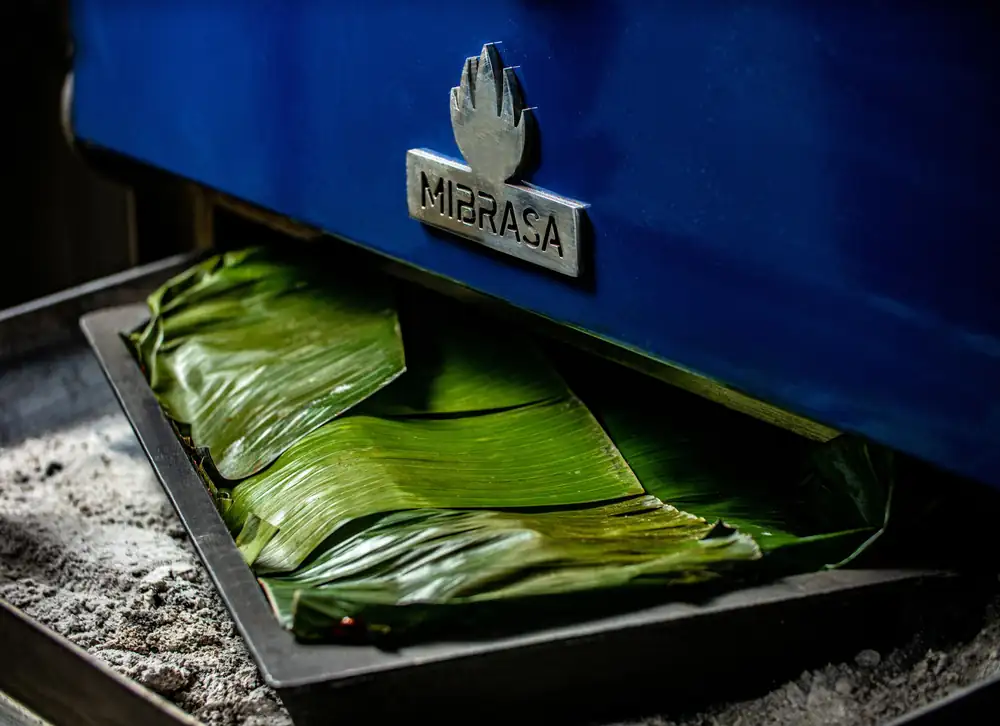
And so we head there, accepting the invitation to experience, over a long day, the performance and versatility of one of the most advanced technologies currently available to restaurants: the Mibrasa Hot Max oven. We'll explore all its possibilities in a practical way, not only during each service but also in the preparation of ingredients. Because, fueled only with charcoal, it intensifies countless flavors. Thus, our day as chefs begins by getting to know this useful oven inside and out. It incorporates a grill within the machine itself, as well as a heated upper cabinet and temperature-retaining drawers that utilize the heat from the previous day.
With hours to spare before the first service, we decided to smoke some sardines. We scattered olive or orange wood chips over the remaining charcoal and added cream, butter, and the sardines, heating them to 80-100°C. We closed the door and allowed the aromas to permeate the sardines for about 60 minutes. An hour before service, we used the flames to roast onions, peppers, and eggplants directly over the charcoal. We then transferred them to a Gastronorm container and left them to rest in one of the warming drawers at 60°C. In another drawer, we prepared cuts of meat for marinating or other mise-en-place, taking advantage of the organic heat generated by the oven itself, between 55-90°C.
During service, we maintain the oven temperature between 250-350°C, using the vents to regulate airflow and flames. This precision allows us to cook and sear meats, fish, and vegetables at their optimal temperatures. Using the upper cabinet and lower warming drawers, we maintain the temperature of finished products while they rest, allowing us to explore new possibilities such as preparing pastrami.
At the end of the day, we returned to the kitchen for the last service. The Mibrasa oven ranges between 100-150°C, and with the charcoal previously stored, we optimized and simplified the time needed for a new load and lighting, with which we tackled the preparation of an enormous, aromatic, matured beef ribeye steak.
And although our day ends here, we are encouraged to prepare a slow-cooked stew that will benefit from the residual heat throughout the night, culminating in a delicious treat to be enjoyed the next day with every spoonful.