Mr. Tomato and his noble variations
It's in its season. Eaten raw in salads, incorporated into broths, or as a base for long stews, this is the right time to pay it due homage. Portugal has a strong responsibility in the consumption of the fruit sold in the vegetable section. It's not the biggest friend of wine, but there are good ways to explore it.
What we know for sure is that it's a recent phenomenon in European history. Just 400 years ago, the tomato was still considered a rare commodity, accessible only to royalty and the Spanish court. Today, we don't even dare to imagine that tomatoes could be missing from our gardens and our tables. It was the Spanish explorers who sensed its usefulness, albeit reluctantly. They came from South America with the name given to them at the time: zitomatl, as the Incas and Aztecs referred to it.
The restless Turkish merchants may have more effectively spread the word about the product, smoothing out the rough edges of the original spelling. Thus was born "tomato" and the tomato, which is how we currently know our friend. It took a different turn in Italy, where it entered as "golden fruit" or pomo d'oro. In Italian, the product became immortalized as pomodoro, and that is how tomato is pronounced in Italy.
Here, we find ourselves in an intermediate position, but it is unequivocally what we call a tomato. Solanum lycopersicum is the scientific name internationally assigned to it. This means it's a vegetable from the large group of nightshades, which also includes potatoes, peppers, and eggplants, among many others. It is possible, however, to consider it the fruit of the tomato plant. In the supermarket, we unequivocally find it among the vegetables, but its connections to cherry tomatoes and the sweetness we love in beefsteak tomatoes make us think it's not so obvious. The subject is as fascinating as it is divisive. However, we must acknowledge this duality if we want to explore the duality it clearly possesses.
Global production and production here
The largest tomato producer is China, where total production exceeds 67 million tons annually. An impressive number, one we might not have anticipated. India comes in second, with an incredible 21 million tons annually. Turkey is the third largest producer of this fruit, with 13 million tons under its responsibility globally. The USA produces ten million tons. Italy is responsible for the production of seven million tons, followed by Egypt (6,200 tons) and Spain (4,700 tons). Portugal occupies an honorable 15th place, with a surprising production of 1,700 tons.
The scenario changes drastically when we look at per capita production. There, we can say that Portugal is a world champion, since the annual production in our country is around 170 kilos per person. Turkey occupies second place, with 160 kilos per person, and Italy third, with 110 kilos per person. The Ribatejo region concentrates most of the Portuguese tomato production, and Unilever knows this well.
In a long conversation I had a few years ago with the president of that global food industry company, he confided in me that the company in question is the largest buyer of tomatoes in our country. He also told me it was for Knorr tomato soup, the absolute sales leader and a favorite around the world. I had the rare privilege of visiting a production unit in Germany that changed the way I look at the global market. In this particular case, with immense admiration, of course. And I became a customer of this tomato soup. Even today I use much of what I learned from the chefs who create delicious dishes from this simple packet soup.
It's good for your health.
We know from experience that tomatoes have a remarkable fixed acidity. And we've learned that they contain good sweetness. In their season, we can eat them in bites, as if they were an apple or an even sweeter fruit. The tomato is, in fact, a remarkable fruit, and it reaches its peak precisely at this time of year. We know it in varying colors and stages of ripeness, and we use it extensively in diverse applications.
In a brief overview, it's worth looking at its nutritional and energy profile. It begins by being beneficial for the heart. Being rich in antioxidants, it keeps veins and arteries cleaner, greatly improving circulation. Furthermore, it's valuable in regulating blood pressure. Lycopene, an important component of tomatoes, along with vitamin C and other antioxidants, greatly contributes to the health and condition of the cardiovascular system. Potassium is a strong partner in this task.
Another aspect we tend to overlook is that regular tomato consumption helps maintain soft, properly hydrated skin. It minimizes enlarged pores and helps regulate excessive fluid loss more effectively. Vision also benefits greatly from tomato consumption. The richness in vitamins A and C is crucial for this effect, and especially the beta-carotene, which, among other things, combats the onset of disorders such as cataracts. It makes us more effective in the anti-inflammatory action we need every day. Bone composition is favored by the strong presence of vitamin K. In its direct form, it combats chronic ailments such as osteoporosis.
It has a throne in Portuguese cuisine.
Almost all Portuguese broths and stocks use tomatoes as a base. The most obvious is gazpacho, the cold soup we love so much. We can make it Andalusian-style, with a base of crushed tomatoes and aromatic herbs, then chilled and consumed like a refreshing drink. We add a firm brunoise of cucumber and other vegetables, and we have a rich and flavorful source that saves our lives in the heat of summer.
Alentejo-style gazpacho is more explicit in its nutritional aspect, as it's strictly based on cutting raw ingredients; the rest is done through the alchemy that good Alentejo cuisine has accustomed us to. I confess my preference for this approach, as I particularly appreciate the interaction with the different cold components during chewing. If you add some pieces of ham, it creates another dimension in the perception of taste. I really enjoy pairing gazpacho with an unoaked Chardonnay from Lisbon. The aromatic richness of the wine will perfectly complement the heritage of aromatic herbs you use.
A good stock base for braising or roasting a piece of meat also benefits from the presence of good tomatoes. The cooking process is prolonged, and the enjoyment is greater in terms of flavor. In fact, this is often where the transition to red wine occurs when pairing. A Portuguese-style stewed partridge needs and enjoys a full-bodied, yet elegant, red wine. On the other hand, a roasted sea bream is highly valued with a bed of vegetables that includes tomatoes. This is the perfect combination for plum tomatoes. With a base of oregano and garlic underneath, the flavor is enhanced, as is the enjoyment.
In Italian-inspired cuisine, tomatoes are fundamental. Take a tomato and lightly blanch it, making it easier to peel later. Finely chop a clove of garlic, add olive oil to a pan, fresh basil leaves, and make a pasta base that, along with the sautéed and chopped tomatoes, will create a stock you can freeze in portions to use as needed. When pairing with wine, remember that a light red or even a rosé might work better than a white, as the latter is more acidic. Ideally, choose a lightly extracted Alentejo red wine, without oak aging.
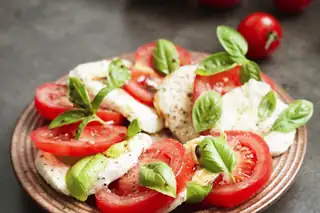
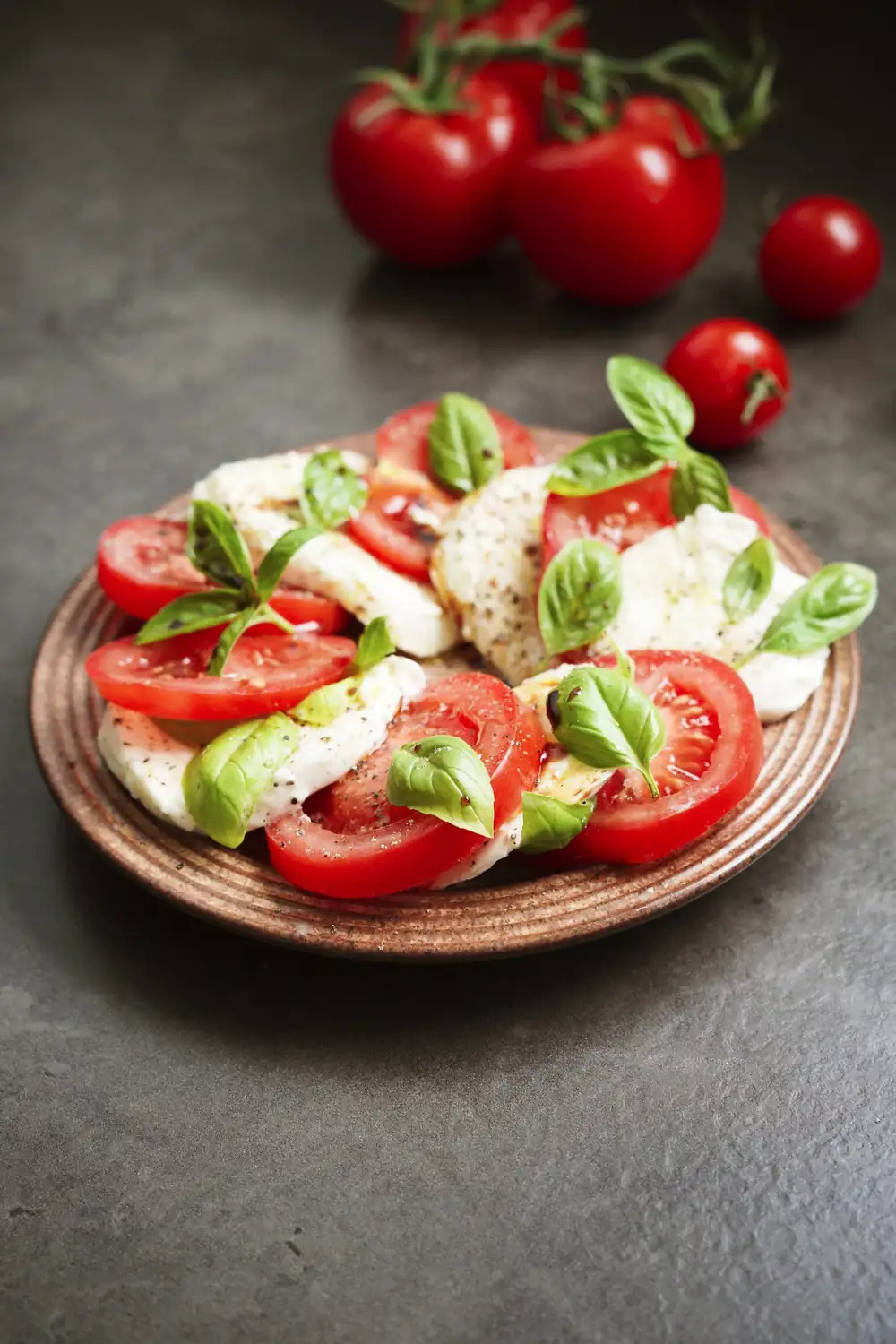
A rooster braised in red wine needs and deserves good tomatoes in its base. It's an internationally acclaimed dish that can't exist without tomatoes in its cooking base. A good starting point is the wonderful Freamunde-style capon, which is now available year-round. A capon leg roasted in the oven is prepared and holds up just like a pork leg. The fat in its structure is released slowly, and we wait patiently, in a process that lasts three hours, the last of which is spent with tomatoes, in a perfect fusion of flavors and textures. From the roasting broth, you can make excellent rice, and from the leftover tomatoes, you can make a beautiful Caprese salad. Slice the tomatoes, add fresh mozzarella cheese, and drizzle with good extra virgin olive oil. It's the glory and triumph of authentic Mediterranean cuisine.
In a compote, a delicacy fit for the gods.
I was in elementary school when, on an unforgettable day for me, my teacher Beatriz showed up early with a jar of tomato jam and water crackers. Only two of my classmates from Ribatejo knew about it, and they loved it. All the other kids from the city were completely clueless about it. At that time, I avoided tomatoes like the plague, and it was with fear that I tasted a little of Beatriz's tomato jam. My reaction was so enthusiastic that, later, I was allowed a whole jar to take home and try for my family. It tasted like tomatoes, but it only explored the fruity side, nothing bitter or acidic that would cause even the slightest rejection. Afterwards, we talked about tomatoes for a few classes and I became addicted. I started to like ripe tomatoes in salads and soups. It's with awakenings like that that we truly awaken to life. And the tomato jam of my dear first teacher, Beatriz, remained etched in my memory as the best in the world. To this day, it hasn't been dethroned, which means I was well initiated.
Over the past few years, I have had the great pleasure of tasting Douro oxheart tomatoes. It was my first experience, as an accompaniment to an exceptional kid goat on a farm in that region, overlooking the Távora River and the blazing sun. I found it excellent and wanted to visit the vegetable garden, which I was allowed to do, but only in the late afternoon, because the temperature was over 50°C.
The oxheart tomato is universal, but in the Douro region it has a particular expression. So much so, that a group of producers currently gathers for an event and competition dedicated to this abundant fruit. Today, we have competitions for everything, and even today I am not convinced that such exploitation should be made of an exceptional product as the Douro oxheart tomato. The festival that takes place and the cultural dynamism that has been consolidated over the years, however, amply justify a deeper exploration of the subject.
Dry, bare, and creamy
When the Danish Jorgensen family decided to settle in the Alentejo region, they dedicated themselves to two very special products: sun-dried tomatoes and melons. I only met Carrie and Hans Jorgensen years later, when both businesses had been defeated by the voraciousness of large distribution and resistance to change; and when the Australian viticulture consultant Richard Smart was assisting them in planting what would become the vineyards of Cortes de Cima.
However, at home they consumed and used sun-dried tomatoes in many applications. Today, their daughter Anna Jorgensen is responsible for the wines, and they have diversified their vineyards to the point of having production by the sea. They make beautiful wines, and the subject of sun-dried tomatoes has been duly archived. Being a contrarian, I continue to use them in salads and in a roast pork loin I make at home. I confess I regret the premature abandonment of production. However, I console myself with what I find at Apolónia in the Algarve and El Corte Inglés in Lisbon.
The aforementioned Andalusian gazpacho can be made with canned peeled tomatoes, provided the producer is carefully chosen. I spoke about it in a long conversation I had with the president of Unilever, and it is undoubtedly a premium product that Portugal has, but may not be fully utilizing. On the other hand, it is ubiquitous in lower-quality culinary solutions. It's important to remember that we don't need to wait for the tomatoes to ripen to have a good gazpacho on the table. The industry has already taken care of that. So much so that we still have ready-to-use tomato cream in squeeze bottles. Apolônia has several brands, all excellent. It works perfectly to enrich an Italian pasta or to make a quick rice dish.
Stories and tales with tomatoes
I can't help but share a few anecdotes about the fruit we've been talking about. And some glories that I will forever cherish in my memory. When we go to the wonderful Manjar do Marquês, in Pombal, we find ourselves in a large house capable of accommodating hundreds of diners. The kitchen has excellent professionals, but it is still Maria de Lurdes Graça, the owner, who makes the tomato rice. The great lady confided in me, many years ago, that the rice is made in batches of no more than two kilos at a time, to keep the grain and the flavor intact. The rice is Carolina, as it should be, but the biggest secret lies in the tomatoes. That's because each season, the restaurant stocks up on tomatoes and keeps them in massive cold storage chambers installed beneath the entire restaurant space.
In Lisbon, at the Galito restaurant, they make the best tomato soup I know. Henrique Galito and his son Leonardo produce what previously only existed in the Serra d'Ossa, near Redondo. I'm talking about the tomato soup with grouper and poached egg, absolutely divine. It was Gertrudes Forte, Henrique Galito's mother and Leonardo's grandmother, who laid the foundations for this marvel, which continues to be made. And making us happier.
Also in the Alentejo region, a restless and restless heart beats strongly in the chest of the great chef António Nobre. At this point in his life, he is retired from professional life, but it is to him that I owe one of the greatest culinary surprises. I'm talking about the frog legs in tomato sauce, a delicacy that should be on the national flag. Not everyone likes it, especially those who have never tried it and are averse to trying it. Those who have tried it, want it and crave it. A remarkable balance of flavors, they are eaten by hand one after the other, and nothing and no one can stop us. We all owe a great deal to António Nobre for delights like this, which he knew how to perfect like no one else. And long live the tomato!