How A Coffee Patina Can Easily Protect Your Knives
When you bought your Keurig, it's unlikely it was to dunk the blade of your favorite carbon steel knife into your steaming cup o' Morning Joe. However, if you're a knife maker or even a knife enthusiast, the hot caffeinated dip makes perfect sense.
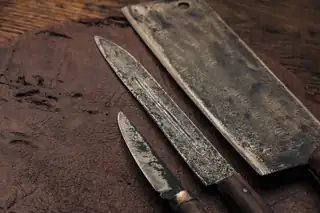
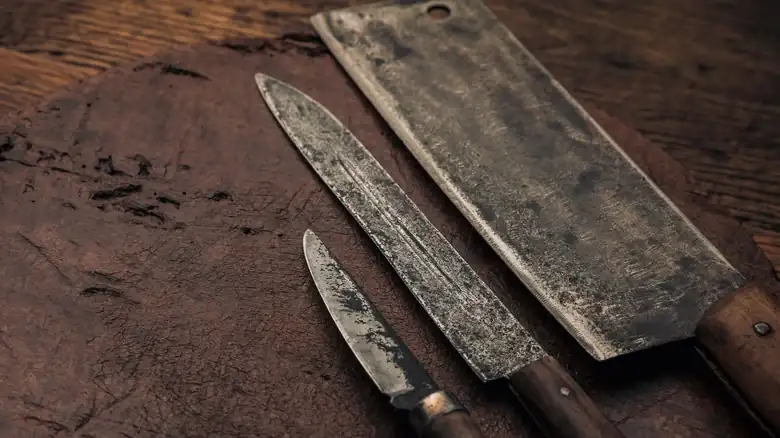
Aside from its aesthetic appeal, this process has another benefit. It renders the blade rustproof and prevents corrosion, an important consideration, given that ingesting rust isn't recommended (and a likelihood if you cut your food with a rusty knife). Giving your blade the coffee treatment is a concept known as a "forced patina." That is, purposely introducing a substance to the carbon steel knife blade so the charcoal color forms quickly — sometimes in a matter of hours — and on purpose, as opposed to slowly and naturally. With enough uses, your blades will form a patina, particularly if you cut a lot of lemons or grapefruits with the knife.
However, it's not only citrus fruits, or more specifically, the acids, that encourage a patina to emerge. Salt and moisture create the effect, too, which is why the likes of mustard, vinegar, and even wine have also been used to encourage a patina finish on a blade. Since coffee is naturally acidic (and a brewed cup boasts a great deal of moisture), it has the potential to hasten the aging process.
How it's done
That first cup of coffee of the day not only wakes you up, but it has the potential to wake up a chemical reaction – aka oxidation – in the carbon steel of your knives, too. The coffee should be strong enough to put hairs on your chin, or in java speak, closer to an espresso than a watery filtered coffee.
Once the coffee's brewed, dip your knife blade into the cup, keeping the handle out of the liquid. It could stain the handle a coffee color, which may not match the aesthetic you were going for. The blade should ideally remain fairly hot for at least an hour. (No iced coffee for you). To achieve this, some DIY-patina makers pop the coffee into the microwave every 20 to 30 minutes, to keep the good burn going. As for how long to keep the blade in the coffee, that decision is individual and has to do with creating the desired visual effect on the blade. To give you a rough idea to shoot for, some patina charmers will call it quits after an hour or so, whereas others will dip the blade for upward of three hours.
Finally, it's worth noting that some companies actually make knives with a patina. If you're not into chemistry experiments and just want to have a beautiful, immediately-usable knife, then just buy one that's already sporting a coat of patina. It'll be ready for action straight out of the box.