The brothers who keep the salt-making trade alive in Gran Canaria
But there is much more. For example, the pink-colored rafts, mills, and salt that have been part of the landscape of the Santa Lucía de Tirajana coast for more than 250 years.
Here at the Tenefé Saltworks, salt has been produced since the late 18th century. It is one of the few remaining saltworks of the twenty or so that once dotted the Canary coast, a true salt-producing powerhouse when salt was the method of preserving many foods and, therefore, an excellent business.
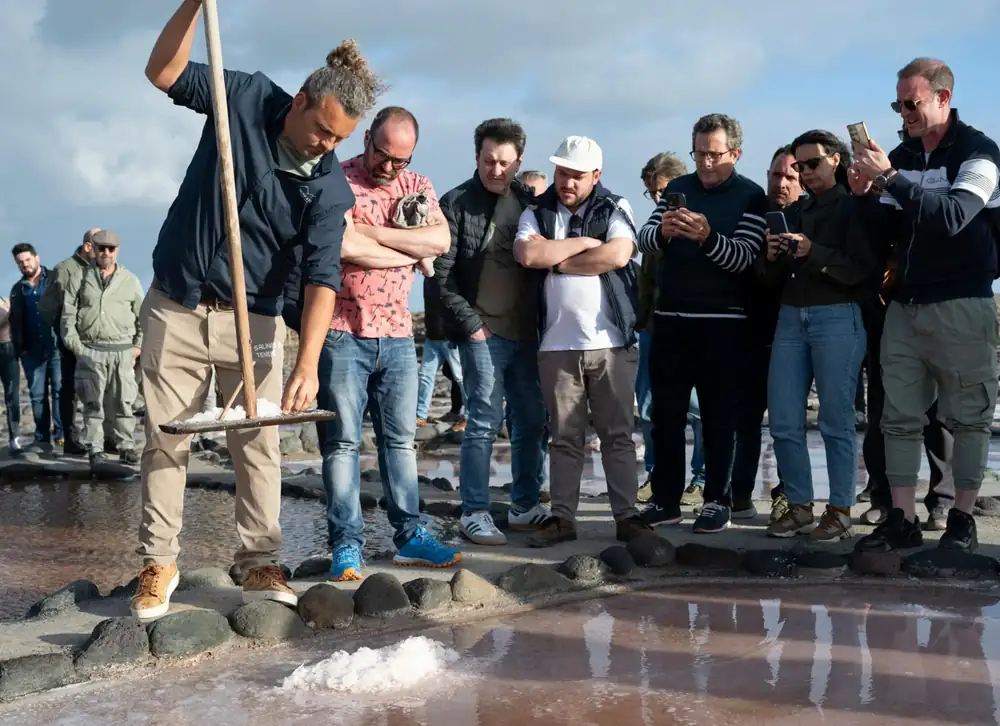
Owned by the municipality of Santa Lucia, which took charge of them decades ago to save this historical and cultural heritage of the island, the Navarro brothers have been in charge of their operation and conservation for years. And of keeping the salt-making trade alive, Manuel Navarro passionately affirms.
Wind and having faith
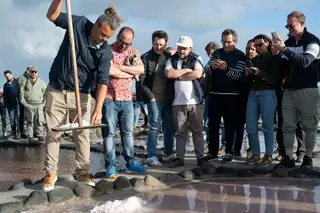
Accustomed to guiding tours through the salt flats, he has an unparalleled command of the terrain and the discourse surrounding natural salt. He insists on this designation to distinguish the sea salt produced here from that which undergoes industrial processing. "Be wary of salt that is too white," he asserts with conviction, while displaying a handful of his salt, which has a grayish hue. He then proclaims, with a biblical air, that even this book already discusses the importance of salt for life and health.
But leaving the health aspects aside for nutritionists, the history of salt is deeply rooted in the island and its gastronomy. But does anyone really worry about the salt they use for cooking or to finish a dish? The setting is perfect for asking this question aloud, as more than fifty chefs from across the country are listening for the third edition of Terrae, the congress dedicated to rural cuisine.
Actually, the question was rhetorical, but José Gordón, from the El Capricho restaurant, was the most qualified to raise his hand. Both hands, because at his restaurant—he tells us—salt is a key element when grilling his famous meat. Always coarse salt, which he chops himself into finer or coarser pieces depending on the cut of meat going on the grill.
While the water rests and evaporates in the salt pans and evaporation ponds, the wind whips against the coast, a popular spot for windsurfers. In fact, the name of the place—or so the story or legend goes—comes from the expression used by sailors who crossed this part of the island, for whom having faith was the only possible solace against the currents that tossed their ships.
Flower and salt flakes
Centuries later, the wind remains a fundamental element in this artisanal process, which, except for the motors that move the water between tanks—previously done with windmills—is identical to how it was in the past. The tides and a canal ensure that the water enters the boiling vats with each phase of the moon, just enough time for the sun, heat, and wind to do their work.
The size and depth of each of the crystallizing tanks are designed to fit the timeframes dictated by the moon. A rake and, above all, years of experience in combing the salt without disturbing the clay too much, or arranging it optimally for drying, are all the necessary tools.
It is not clear whether a salt worker is born or made, but the Navarro brothers - who are dedicated to water treatment and desalination - are clear on this: they learned it from Pedro Pérez, a master salt worker who taught them everything necessary.
“The wind is key to the process, because it carries away the evaporating gases and determines the thickness of the salt,” explains Manuel Navarro, rake in hand, standing in front of one of the trays where the salt is formed. More wind means coarser salt, although the star product of the house is fleur de sel.
This flower is obtained by skimming off the "cream"—as it's called—that forms on the surface of the water. It's something like the first salt, lower in sodium and the most prized. So much so that in the past it wasn't even sold, but rather given as a sign of respect to the most powerful people in the area. The flakes, meanwhile, are the next in this scale of salt qualities, and they form when the flower isn't skimmed off the water's surface in time and crystallizes, which explains their crunchier texture.
And what about the iconic pink color of the water in these salt flats? Is there also pink salt in Gran Canaria, like the kind that claims to be from the Himalayas? Absolutely not, these salt-making brothers clarify, while reminding everyone that all colored salts are always minerals, never marine salts like in this case.
Here, only the water is pink due to the presence of a microalga (Dunaliella salina), one of the few living organisms capable of inhabiting this ecosystem. Its high beta-carotene content gives the evaporating water this color. Although the salt initially takes on this hue, the oxidation of this beta-carotene gives it its final grayish color.
The result of this artisanal work and craftsmanship is an award-winning and highly regarded salt that, admittedly, is difficult to find outside the Canary Islands. Those visiting the islands would do well to visit these salt flats and, of course, take home some fleur de sel as the best possible souvenir.