The Bear, a great series about catering (with some flaws)
It's been said that The Bear (Disney+) is the series that best and most realistically portrays the restaurant industry. It's free of the unrealistic fiction of reality TV, without the glossy and annoying need to promote a restaurant or praise a celebrity chef.
In The Bear, work and life overlap, just as they unfortunately do for many cooks, waiters, and dishwashers. It's backbreaking work, requiring physical effort, concentration, and many, many, hours of dedication. It's a sector, it should be noted for the uninitiated, with very low profit margins, despite the emphasis on insane receipts and the "greed" (or rather, stupidity) of certain restaurateurs.
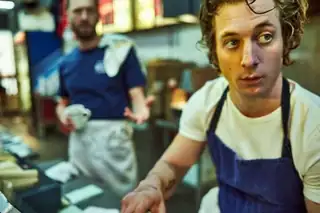
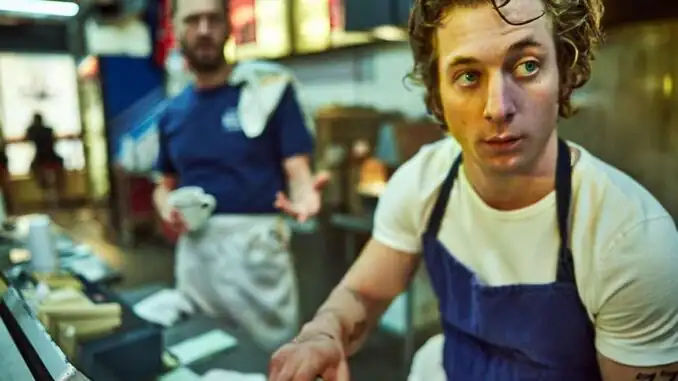
Here, Carmy, The Bear, tries to get a restaurant back on its feet after a previous failure that led to the suicide of her brother Mikey. Their family is beyond disastrous, with a mother, Donna, played by the fantastic Jamie Lee Curtis (how time flies! Two minutes ago, we remembered her as a very attractive young woman, and now she's become an old lady, terrible and wrinkled, but brilliant). The series' arc is easily summarized. Everyone has complicated lives, full of failures and problems, insecurities, and the inability to love. Little by little, through commitment, teamwork, and the will to succeed, they manage to transform their lives. Carmy (Jeremy Allen White), who can no longer love, absorbed by workaholism. Sous chef Sydney (Ayo Edebiri), with a father who instills insecurity. Cousin Richie (Ebon Moss-Bachrach), a semi-demented man overwhelmed by life, quarrelsome and unreliable. Tina, a depressed and bitter cook. And so on.
Little by little, their lives settle back into place. The dream of opening a restaurant becomes a reality. Life maxims abound: the "Every second counts" sign, Siddharta's "listen better" quote, the motivational book.
But the beauty of the series lies in the fragility of the characters. All half-failures and half-heroes. Just like us. We can be everything or nothing. It depends on our willpower, on chance, on those around us. And in an instant, we can relapse. Episode number six, an hour, is a blast. Episode seven, splendid.
As for the credibility of the staging, it must be said that the aim here is to create a restaurant aspiring to a star. The focus is entirely on the kitchen, the team, as well as the chef. Every second counts, and each member of the team is crucial to making everything work. The dining room, which, as anyone familiar with the restaurant world knows, is a crucial part of a restaurant's success, is rather overlooked. Carmy's sister is supposed to be in charge, but everything plays a secondary role. It's a shame; this is a significant flaw in credibility.
There's actually the seventh episode mentioned above, dedicated to Noma in Copenhagen, where Carmy's cousin (who previously worked there) is an intern. Here, the series explores the sterile and brutal world of haute cuisine, the exploitation of employees and interns forced to clean forks for days, and the obsession with perfection. There's also this slightly sci-fi twist: there's even a staff member studying the clientele, customer by customer, using social media research to gauge their attitudes and preferences, and meticulous attention to detail to meet expectations. At one point, because a customer posted on social media that she didn't want to leave Chicago without trying the famous local pizza (?!), the intern cousin is sent to the pizzeria and returns with a tray that, with appropriate fine dining expertise, is transformed into a series of gourmet pizza bites.
Then there's the issue of restaurant communication. This remains completely outside the narrative, although it's unclear how a new restaurant aiming for a Michelin star and selling out in its first few weeks, in order to recoup its debt and avoid closure, can make itself known without marketing efforts, entrusted to press offices and social media managers.
That said, the series is truly splendid, with incredibly tight editing (sometimes too tight). And the type of cuisine featured in the episodes is particularly interesting. It's a true melting pot, with many Italian influences, but contaminated with far-flung worlds, making it interesting and stimulating, with a few cringe-worthy touches. Like when the sous chef prepares an omelet, garnished with chives, sour cream, and onion chip crumbs (here's the recipe, if you're feeling daring, and the Washington Post was thrilled).
The Bear's dream is to create a restaurant model that's high-quality and gourmet, yet non-toxic, far from the ferocious alienation of Michelin-starred haute cuisine. A utopia, or perhaps not.