The stuffed pasta that connects Central and Eastern Europe
What are pierogi?
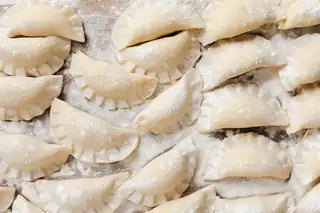
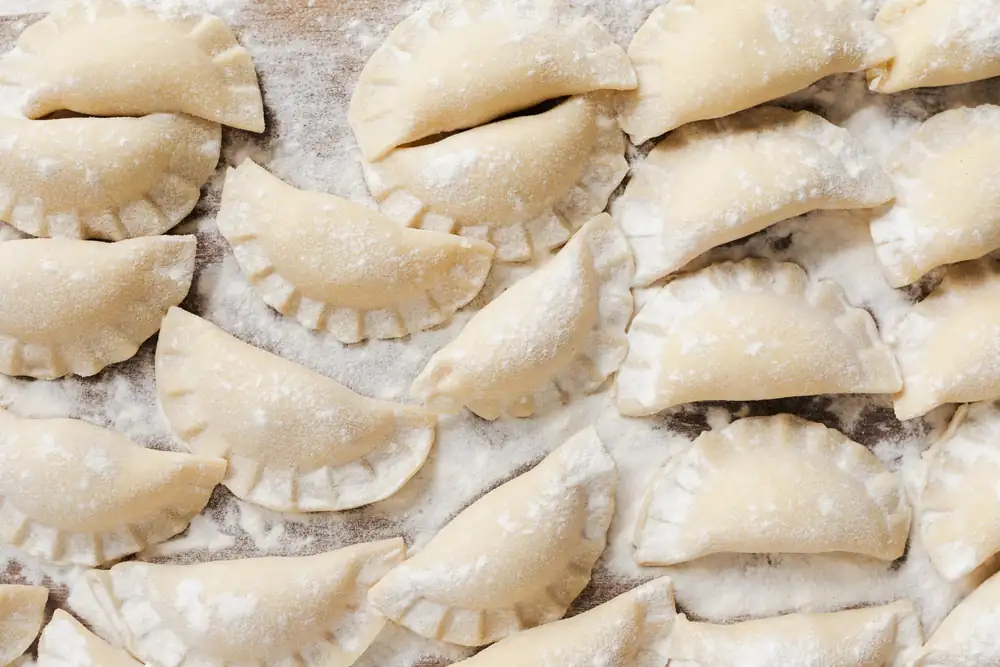
Pierogi are crescent-shaped, filled dumplings that are traditionally boiled and then, in many places, lightly fried in butter or fat. The thin dough shell can accommodate almost any filling: it can be made with cottage cheese, potatoes, cabbage, wild mushrooms, meat, lentils, or even fruit. This versatility has made them one of the most important dishes in peasant kitchens over the centuries, as they always contained whatever the season or the pantry had to offer.
According to Polish tradition, the dish was introduced to the country by Hyacinth of Poland, or Saint Hyacinth, in the 13th century. Legends tell that he returned from a trip to Kiev, bringing with him the recipe for stuffed dough, which quickly became popular in monasteries and villages. The story has become even more rich over time. One of the best-known versions is that after a Tatar attack, the crops in the area were destroyed, and Saint Hyacinth helped the fields to grow again with his prayers, and after the harvest, the abundance was celebrated with pierogi made from flour. However, researchers are more cautious about this origin story. Although Saint Hyacinth is indeed closely intertwined with pierogi in Polish culture, there is no evidence that he introduced the dish. It is much more likely that the legend was connected to an already widely known dish, which in this way further strengthened its popularity.
The potatoes arrived surprisingly late
When you think of pierogi today, chances are the first thing that comes to mind is the potato and cottage cheese filling, even though this combination is surprisingly young in historical terms. Potatoes only arrived in Europe in the 16th century, and even then it took a long time for them to become an everyday staple in Central and Eastern European cuisines. Early pierogi were therefore made with very different fillings: millet, buckwheat, cottage cheese, cabbage, wild mushrooms or legumes. The recipe was always adapted to local conditions, which contributed to pierogi surviving in almost endless variations. This clearly shows that even the recipes that are considered classic today were constantly evolving, and the appearance of potatoes opened a new era and made possible fillings that now seem inseparable from the dish.
What does “pierogi ruskie” actually mean?
The name of the most famous version is a source of much confusion, as when people hear pierogi ruskie, they automatically think of Russia, but the origin of the name is quite different. In this case, “ruskie” does not refer to the Russians, but to the historical Ruthenia Rubra (Ruthenia Rubra), which included the southeastern part of present-day Poland and parts of western Ukraine. Pierogi, filled with potatoes and cottage cheese, spread from this region and inherited its name from there. The name is therefore a geographical and historical reference that has little to do with Russia in the political sense of the word today.
Recent geopolitical events have brought this issue back into the spotlight: several Polish restaurants have temporarily renamed pierogi ruskie to avoid misunderstandings. However, gastronomic historians have repeatedly pointed out that the name refers to a centuries-old historical region that should be interpreted in the context of its own time.
From a festive dish to a national symbol
For centuries, pierogi have been much more than a simple everyday dish. Although they were a staple in the peasant kitchens of Central and Eastern Europe, the truly special versions were associated with holidays. Making the filled dough was a time-consuming task: the dough was kneaded by hand, stretched, cut, and then individually filled and shaped. That is why making pierogi often became a shared family activity, in which several generations worked together.
In Poland, it still plays a prominent role at Christmas dinner, and the traditionally meatless festive table eaten on Christmas Eve is almost indispensable with the cabbage and wild mushroom stuffed version, served with butter or fried onions. In other regions, sweet fillings are also found, such as poppy seeds or dried fruits, but the sour cabbage and mushroom pierogi is considered the most famous holiday recipe.
During the rest of the year, certain fillings were associated with different occasions, such as weddings, harvest festivals, religious holidays, and in some regions, they were even served at funeral receptions. The composition of the filling often reflected the season and the locally available ingredients, so the same dish could take on quite different forms in different regions.
Every family has its own recipe
Few foods are as closely tied to family traditions as pierogi. The recipe has often been passed down from generation to generation, made by grandmothers, mothers and granddaughters together, while the exact proportions have often never been written down. As a result, it would be difficult to single out a single “original” recipe even today. Some families swear by thinner dough, others by thicker, some only boil it, others fry it until golden brown after boiling, and the world of fillings is almost endless.
The world-conquering journey of pierogi
From the end of the 19th century, and especially in the first half of the 20th century, millions of Poles emigrated to North America, bringing with them their language, traditions and, of course, their recipes. Pierogi quickly appeared in Polish communities in the United States and Canada, where it gradually became known to the wider public. Chicago, which still has one of the largest Polish diaspora communities, played a particularly important role in this. In the city's restaurants, bakeries and family businesses, pierogi has now become as much a staple dish as in Warsaw or Krakow. Several festivals and gastronomic events also focus on this dish, and the different fillings reflect how it has adapted to American ingredients and tastes.
Pierogi, as Martha Stewart makes them
Few American culinary figures have done as much to popularize Central European cuisine as Martha Stewart, whose family roots stretch back to Poland. Pierogi are a childhood memory for her: she learned how to make them from her mother, who made them regularly as one of the family's most important holiday dishes. Stewart later dedicated a special day to learning every little detail of making the dough from her mother, step by step, from the right consistency to the filling and shaping to the cooking. These family recipes have now been featured in her own cookbooks and television shows, making pierogi one of the most well-known Central European dishes in American home kitchens.
The heart of Káposztás's pierogi recipe is slow-simmered cabbage, which he enriches with cream cheese and butter, while the sour cream dough remains soft yet elastic. He emphasizes that the key to success is the right amount of moisture in the filling and the carefully sealed dough edge, as these ensure that the pierogi maintain their shape during cooking. After preparation, he serves them with melted butter or lightly browns them in a pan, making the classic Polish dish both faithful to tradition and an easy-to-make family recipe.