What is bouquet garni?
Why use bouquet garni?
The French term roughly translates to 'flavoring bouquet'. A bouquet of herbs is used to flavor soups, sauces, and stews. The herbs are tied together and cooked with the food, which takes on the herbal flavors during the cooking process. The advantage of a bouquet garni is that you can easily remove the tied herbs from the food instead of having to search for their stems in the pot.
Fresh herbs break down and lose their color when cooked. Some of their bitter flavor can disappear in the dish, ruining a meal, and their presence is unsightly.
If you use the spices in a bouquet garni, you don't have to worry about this. Although you can leave the bouquet in the dish, it's worth removing it before serving: if your guests can't see the bouquet, the secret factor of the dish's flavor remains.
Herb and spice combinations
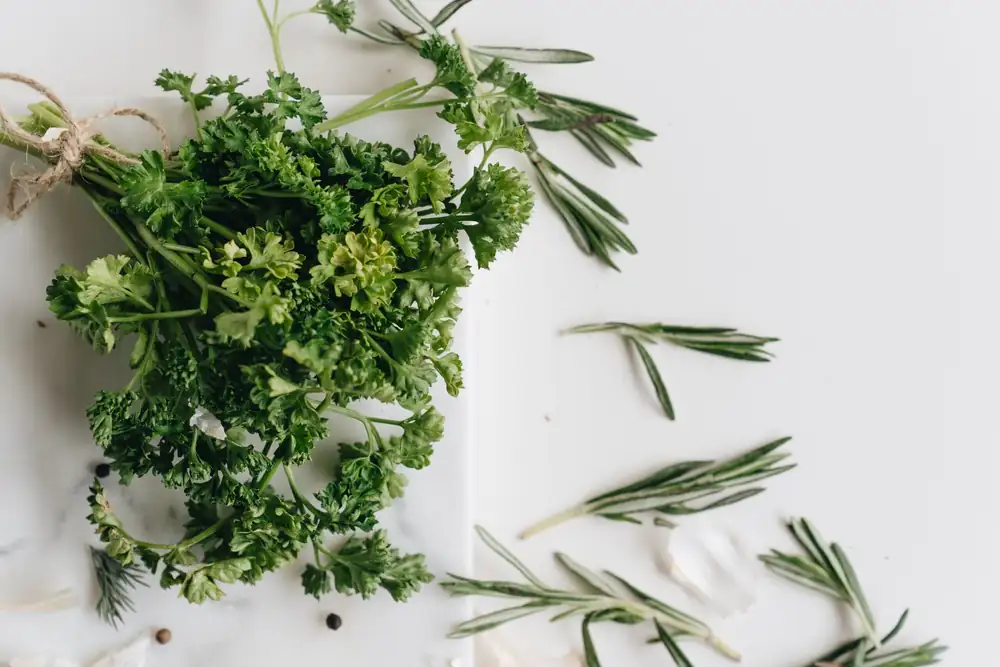
Bouquet garni, used in French Provençal cuisine, traditionally consists of a mixture of fresh parsley, thyme, and bay leaves, tied together with a small piece of kitchen twine. However, the herbs can be freely combined to suit the flavor of the dish, whether Mediterranean or Asian.
The classic fresh herb combination, a favorite of French chefs, is a bouquet put together in a 3-1-1 ratio: three sprigs of parsley, one sprig of thyme, and one bay leaf are enough to flavor about a liter of liquid.
A celery stalk or a leek will sweeten the dish, while a little lemon zest or fennel leaf will really spice up the contents of the pot. In Provençal cuisine, a slice or two of orange peel is also sometimes added to the dish.
Lemongrass or a slice of ginger can also add unexpected and surprising flavors.
Pepper, juniper berries, star anise, or cloves are good for stewed dishes that require a richer flavor.
Spices used in traditional Chinese medicine, such as licorice, dates, or ginseng root, can also be part of a less conventional, unconventional bouquet garni, which can be used in an Asian beef bourguignon, for example.
Two or three spices are usually enough to balance the flavor of lighter stocks and soups, but for stews made over low heat, it is worth using more, up to five spices.
Tying and packaging methods
Long-stemmed fresh herbs can be easily tied together with kitchen twine – but it’s important to tie them very tightly together, as fresh herbs shrink during cooking. Tying one end of the twine to the lip of the pot makes it even easier to remove the bouquet garni at the end of cooking.
Dried herbs and leaves require a little more care. It’s a good idea to wrap them in something flexible, like the outer leaves of a leek or even a slice of bacon. Another solution is to use cheesecloth or muslin, which is easy to wrap the herbs in. A small tea infuser or tea strainer is also a good choice.