Basic products from the Greek and Mediterranean pantry: what I always have on hand
If you've ever opened the pantry at 5 pm and wondered what on earth you can make for dinner, this guide is for you.
You don't need a fully stocked pantry or dozens of special ingredients to cook delicious Greek and Mediterranean food. Most of my recipes start with the same basic ingredients: good olive oil, lemons, garlic, oregano, tomatoes, beans, rice, pasta, and a few flavorful ingredients that add a special touch.
That's one of the things I love most about this way of cooking. The ingredients are simple, inexpensive, and designed to be used in many different ways.
A can of tomatoes can be turned into soup, sauce, or youvetsi. A bag of lentils can feed a family for very little money. Lemons, olive oil, garlic, and oregano can transform potatoes, chicken, fish, vegetables, or legumes.
This isn't a list of everything you could buy. These are the Greek and Mediterranean pantry staples that I actually use in my kitchen: the ingredients that help me prepare delicious meals without making cooking complicated or expensive.
Short on time? Start with these 12 essentials.
If you're filling your pantry from scratch, don't feel obligated to buy everything on this page at once.
Extra virgin olive oil
Greek oregano
Sal kosher o sal marina
black peppercorns
fresh garlic
yellow onions
fresh lemons
Canned tomatoes
Tomato paste
Chickpeas or white beans
Rice or orzo
Chicken or vegetable broth
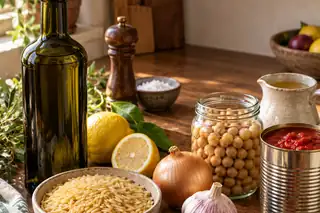
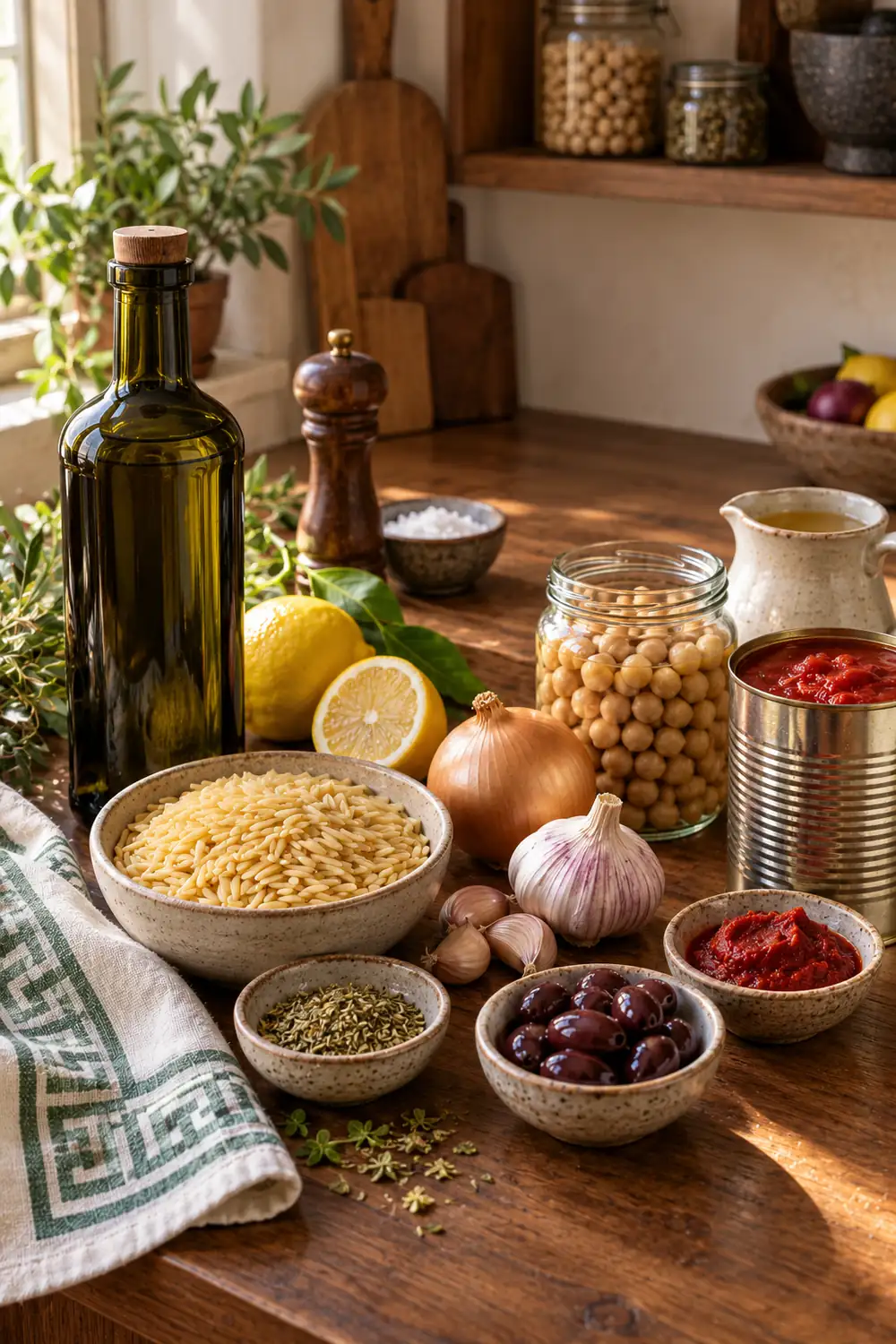
With these twelve ingredients —and a protein or vegetable— you can prepare dozens of simple meals.
Start here. Then, gradually add the remaining basic ingredients as you try out my recipes and discover what your family likes best.
Do you want the summarized shopping list?
The Mediterranean Flavor Foundation
These are the ingredients I use most often in my cooking. They are the basis of many Greek and Mediterranean recipes.
Extra virgin olive oil
In Greek cuisine, olive oil is more than just a cooking fat. It's one of the main flavors.
I use extra virgin olive oil for sautéing, roasting, dressing, marinating, making soups, sauces, dips, and for adding the finishing touch to dishes at the table. Sometimes, all a good warm loaf of bread needs is olive oil, herbs, and a little salt.
Choose an extra virgin olive oil that you like. For everyday cooking, I prefer one with a fresh and balanced flavor that isn't overly bitter.
Keep olive oil away from heat and direct sunlight. A dark bottle or can helps protect it, but I still wouldn't store it directly next to the stove.
Fresh lemons and red wine vinegar
Mediterranean cuisine needs acidity. It enhances the other flavors and prevents rich dishes from becoming heavy.
I use fresh lemon juice in marinades, soups, roasted potatoes, tahini sauce, beans, chicken, fish, and salad dressings. Red wine vinegar gives salads, stews, beans, and marinades a more intense flavor.
Before squeezing a lemon, grate its zest. Freeze the zest and juice separately in small portions so that none of that flavor goes to waste.
Fresh garlic and yellow onions
Garlic and onions are the tasty start to countless meals.
I use fresh garlic when it's a key ingredient in sauces, dressings, marinades, or vinaigrettes. Yellow onions are my go-to because they pair well with soups, stews, meatballs, sauces, rice dishes, and roasted vegetables.
I also keep granulated garlic and onion powder in the pantry. They don't replace fresh garlic and onion in every recipe, but they're very useful in dry seasoning blends, meat rubs, roasted vegetables, and quick weeknight meals.
The herbs and spices I use most
You don't need a huge collection of spices to make my recipes. These are the seasonings I use time and time again.
Greek oregano
If you're only going to buy one Greek herb, make it oregano.
I use it in marinades, lemon potatoes, salads, meatballs, chicken, vegetables, legumes, sauces, and oils for dipping bread. Greek oregano usually has a strong, earthy flavor, so a little goes a long way.
Dried dill
Dried dill is especially useful in soups, legumes, spinach dishes, potatoes, sauces, and savory pies. I also love fresh dill, but dried dill lets me add that familiar flavor when I don't have fresh dill in the fridge.
Dried thyme
Thyme adds a warm and earthy touch to chicken, vegetables, legumes, soups, and tomato-based dishes.
Bay leaves
Add a bay leaf to bean stews, lentil dishes, soups, broths, or tomato sauce. It adds a subtle touch of flavor that enhances the final taste of the dish.
Always remove the leaf before serving.
Ground cumin and coriander
These warming and flavorful spices are ideal for meatballs, legumes, marinades, soups, and roasted vegetables. Ground coriander has a light citrus note that pairs perfectly with cumin, garlic, lemon, and paprika.
Sweet paprika
Sweet paprika adds a beautiful color and a gentle sweetness without making the dish spicy. I use it in meat mixtures, chicken dishes, soups, roasted vegetables, and marinades.
Cinnamon, nutmeg, and cloves
These spices are not just for baking.
A touch of cinnamon can add warmth to a Greek meat sauce. Nutmeg is ideal for béchamel sauce, creamy sauces, savory tarts, and holiday pastries. Cloves bring a rich, warm flavor to syrups, stews, and desserts.
The key is to use them in moderation. They should complement the other flavors without overpowering them.
Crushed red pepper and sumac
Crushed red pepper adds a quick spicy kick to pasta, soups, roasted vegetables, and sauces.
Sumac is bright, tangy, and has a hint of citrus. Sprinkle it on salads, onions, chicken, roasted vegetables, sauces, or yogurt.
Granulated garlic and onion powder
I always keep both on hand. They're very handy when fresh garlic and onions aren't available, and they go well with meatballs, seasoning mixes, breading, and roasted vegetables.
Buy spices in small containers, unless you use them constantly. The best investment is the spice you finish while it still has its aroma, not the giant container that sits in the cupboard for five years.
Tomatoes and tomato paste
Canned tomatoes are one of the ingredients I use most in my pantry.
I save whole peeled tomatoes, crushed tomatoes, or both. I use them to make pasta sauce, soup, braised vegetables, stews, and comforting baked dishes.
Tomato paste adds a concentrated flavor and helps a quick sauce taste like it's been cooked for much longer.
If a recipe calls for only one or two tablespoons of tomato paste, freeze the rest in tablespoon-sized portions. Once frozen, transfer the portions to a freezer bag. That way, the next time a recipe needs a little tomato paste, it will already be measured out.
Split beans, lentils, and yellow peas
Legumes are some of the most economical and versatile foods you can have in your kitchen.
I have stock:
chickpeas
white beans
Brown or green lentils
split yellow peas
Canned beans are perfect for quick meals. Dried beans are great when you have time and are usually the more economical option. I use both.
Unless the recipe specifically states to use the liquid, rinse canned beans before adding them to a dish.
Chickpeas can be turned into sauces, soups, salads, cereal bowls, or a quick meal with tomatoes, cucumbers, feta cheese, and olives.
White beans are delicious in soups, tomato-based dishes, salads, and simple stir-fries with garlic, vegetables, and lemon.
Lentils cook relatively quickly and don't need soaking. They're perfect for making inexpensive and comforting soups.
Rice, Barley, Bucatini, Couscous and Pasta
You don't need to find every type of cereal and pasta available at the supermarket. A small, practical selection will give you plenty of variety.
Long grain rice
I use long grain rice in pilafs, soups, stuffed vegetables, chicken dishes, and simple side dishes.
Rice can also make a small amount of meat or vegetables stretch into a complete family meal.
Orzo
Orzo is an ingredient in any Greek pantry.
Use it in soups, salads, side dishes, and baked dishes like youvetsi. Because it cooks like pasta but has a texture similar to rice, it's one of those very versatile ingredients.
Prepare my Keftedes Youvetsi whenever you want a comforting one-pan dinner.
Bucatini
Bucatini is one of my favorite pastas for rich sauces. They look similar to thick spaghetti, but their hollow center holds even more sauce.
Use it with a rich tomato sauce, a meat sauce, or a simple sauce made with tomatoes, garlic, olives, and capers.
Couscous
Couscous cooks very quickly, making it an ideal base for roasted vegetables, chicken, chickpeas, feta cheese, and aromatic herbs.
Short pasta for everyday use
Always keep a type of short pasta on hand that you know your family likes. It can be used to prepare soup, pasta salad, a baked casserole, or a quick dinner with ingredients you already have in your pantry.
For more family-friendly ideas, check out my collection of 15 easy Mediterranean chicken recipes for busy weeknights.
Breadcrumbs and broth
Unseasoned breadcrumbs or panko can be used to bind meatballs, add a crunchy touch to baked dishes, and create a quick topping for pasta or roasted vegetables.
I prefer unseasoned breadcrumbs because it allows me to control the herbs, salt, and spices.
Use them in my Greek keftedes and then serve the meatballs with creamy tahini sauce.
Broth transforms basic pantry ingredients into soup, pilaf, sauce, or stew with very little effort. I always keep chicken and vegetable broth on hand so I can prepare different recipes.
Whenever possible, choose a low-sodium broth. You can add salt, but it's not easy to remove.
My shelf of intense flavors
You don't need to buy all the ingredients right away. Choose two or three that you already like and add the rest when you have the recipe ready.
Kalamata olives
Kalamata olives add a salty and rich touch to salads, chicken, pasta, bread, cereal bowls and mezze dishes.
Red Riding Hoods
A tablespoon of capers can enhance the flavor of fish, tomato sauce, pasta, roasted vegetables, and salads.
Preserved grape leaves
Preserved vine leaves keep well and allow you to prepare dolmades without having to look for fresh vine leaves.
Once opened, follow the storage instructions on the jar and keep the remaining leaves covered with their brine.
Jarred Harissa
Harissa adds an intense chili flavor to marinades, soups, roasted vegetables, eggs, and sauces.
The spiciness level varies considerably between different brands, so start with a small amount. You can always add more.
Roasted red peppers
Roasted pickled peppers can be mixed with sauces or added to eggs, sandwiches, pasta, cereal bowls, salads, and chicken dishes.
Sun-dried tomatoes
Sun-dried tomatoes add a concentrated tomato flavor to pasta, chicken, eggs, sauces, savory stews, and salads.
Canned artichoke hearts
Canned or packaged artichoke hearts are a simple way to prepare pasta, sauces, stews, eggs, and savory pies.
Tahini
Tahini is a sesame paste, and it is the basis of many sauces, dressings, spreads and creamy desserts from the Mediterranean and Middle East.
The oil may separate while the bottle is standing. Stir it very well before measuring.
If the tahini at the bottom has become difficult to mix, transfer the contents to a food processor or blender and blend until smooth.
Prepare my creamy tahini sauce and serve it with meatballs, roasted vegetables, chicken, pita bread, or cereal bowls.
Honey
Honey is useful for breakfast, marinades, salad dressings, cheese boards, tea, and Greek desserts.
Red wine vinegar
Red wine vinegar is the perfect complement to olive oil in dressings and marinades for Greek salads. It also balances the flavor of legumes, meats, and stews.
What I keep in the refrigerator
The basic products in my refrigerator allow me to finish preparing many of the dishes that start in the pantry.
Feta cheese in brine
I prefer feta cheese that is sold in brine because it usually has a better flavor and texture, and it stays fresh for longer.
Crumble it over salads, legumes, eggs, vegetables, pasta, potatoes, and soups. Store the remaining feta cheese submerged in its brine in the refrigerator.
Natural Greek yogurt
Greek yogurt can be used as a breakfast food, a marinade, a creamy dressing, a quick dipping sauce, or a refreshing sauce for spicy foods.
Eggs
Eggs are one of the easiest ways to turn leftover vegetables, grains, or potatoes into a meal.
Butter
Olive oil is the fat I use daily for cooking, but I reserve butter for baking and for dishes that require its richness.
Parmesan or Kefalotiri
A hard and tasty cheese is the perfect complement to pasta, gratins, savory pies, soups, roasted vegetables and oven-baked dishes.
Fresh parsley and dill
Both fresh and dried herbs are useful, but they serve different purposes.
Dried herbs can be simmered with a dish to enhance its flavor. Fresh parsley and dill add color and freshness at the end.
Carrots and celery
Carrots, celery, and onions are the silent starting point for countless soups, sauces, and stews.
Cucumbers and tomatoes
Add feta cheese, Kalamata olives, olive oil, oregano and bread, and you'll have the first ingredients for a delicious lunch.
What I keep in the freezer
Filo time
Puff pastry
frozen spinach
Peas
French beans
artichoke hearts
pearl onions
frozen chopped garlic
pita bread
Balls
Portion-sized tomato paste
Lemon juice and zest
Cooked beans
Homemade broth
Freeze the nuts in airtight bags to keep them fresh for longer.
Thaw the phyllo dough in the refrigerator, keep it well wrapped, and follow the package instructions. Once you start using it, cover the remaining sheets to prevent them from drying out.
Frozen minced garlic is very handy when you need to prepare dinner quickly. Even so, I still use fresh garlic when it's one of the main ingredients in a recipe.
Mix, match, and prepare dinner.
Dinner doesn't always have to start with a new recipe or another trip to the supermarket.
Use this simple formula:
Choose a base + a flavor direction + a refreshing finishing touch.
You can also use these simple combinations without following a formal recipe:
Before serving, taste the food.
Many simple Mediterranean dishes need one of these four ingredients at the end: a pinch of salt, a squeeze of lemon, a drizzle of olive oil, or a handful of fresh herbs.
That final adjustment can bring the whole dish to life.
First, buy what you need for your kitchen.
Before making your shopping list, check your pantry, refrigerator, and freezer. You may already have more of these ingredients than you think.
Start with the twelve basic elements.
You don't need all the spices, types of pasta, or special jars right away. Buy the base first.
Choose ingredients that can be used for several meals.
Feta cheese, for example, can be the finishing touch to salads, eggs, soups, pasta, roasted vegetables, legumes, and savory pies.
Maintain a reliable option in each category.
Rice, short pasta, orzo, a can of beans and a good broth are enough to get started.
You can add variety when you know you're going to use it.
Label and date frozen foods.
This is especially useful for broths, cooked legumes, lemon juice, zest, tomato paste, and nuts.
Plan with open ingredients in mind.
If you open roasted red peppers for pasta, use the rest in eggs, sandwiches, a sauce, or a bowl of cereal during the week.
If you open the feta cheese for a salad, use it the next day with eggs or crumble it over soup.
Planning meals using loose ingredients allows you to save money without feeling like you're eating the exact same thing over and over again.
Do I need to buy everything on this list?
No. Start with the twelve basic ingredients and add others as you choose recipes.
A pantry should adapt to your cooking style. It shouldn't become a collection of expensive jars you never open.
Are canned beans and tomatoes good enough?
Of course. They are quick, reliable, and economical solutions, and I use them frequently.
Whenever possible, choose unseasoned beans and tomatoes so you can control the amount of salt and other ingredients yourself.
Which olive oil should I use for Greek cooking?
Choose an extra virgin olive oil that you like.
Store it in a cool, dark place, and only buy the amount you can consume while it is still fresh.
Can I substitute dried herbs for fresh herbs?
Often, yes, but they work differently.
Add the dried herbs during cooking so they soften and release their flavor. Add the fresh herbs near the end, when you want freshness and color.
As a general starting point, use approximately one-third the amount of dried herb as fresh herb, and then adjust to taste.
What should I prepare first?
To start, try my Greek lentil soup in a simple and inexpensive way.
For a comforting side dish that goes with almost anything, make my Greek roasted potatoes with lemon.
If you're looking for a main course for the whole family, start with my Greek keftedes.
Each recipe uses ingredients that you can reuse in many other meals.
Keep the complete pantry checklist.
A well-stocked pantry isn't about having more, but about having the right ingredients on hand so that preparing a comforting meal seems possible, even on a busy day.
Start small. Cook a few recipes. See what your family likes and then gradually expand your pantry.
Before long, you'll look at a bag of lentils, a can of tomatoes, or a box of orzo and see dinner instead of a bunch of separate ingredients.
Download my free Greek and Mediterranean pantry guide for a concise shopping list, storage tips, and easy meal-combination ideas.
¡Kali Orexi!