The Tell-Tale Sign The Seafood You're Buying Isn't Up To Standard
Especially for shoppers who live inland, shopping for seafood can be stressful. Prices are steep, differentiating species is tricky, and there's always that tinge of fear regarding freshness. Nevertheless, buying seafood is worthwhile — it's delicious, healthy, and easy to cook.
For starters, it's always helpful to venture to a reputable seller. One of the biggest mistakes while buying seafood is opting for batches of frozen seafood from large grocers. It's likely such products aren't up to standard — you just don't know the quality of what's in the package. So instead, head to a well-rated fishmonger with ample turnover; freshness and expertise are key.
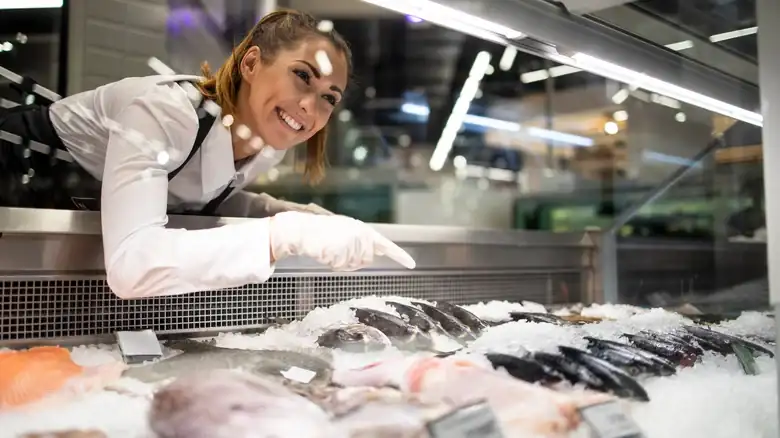
Once you arrive at the seafood vendor, use your senses to get a general impression of the place. Take in the smell: It shouldn't be fishy or pungent, but rather give off a pleasant marine aroma. Look for ample ice and a well-regulated refrigerator. After all, if you buy any seafood that's been sitting out for a while in melted water, it's not going to be up to par — no matter the initial quality. An especially convenient and tell-tale indicator of freshness is the eye. Avoid buying whole fish with murky eyes and opt for vibrant and clear ones instead.
Look at visual and textural clues for seafood freshness
When purchasing a fish filet, inspect for even coloration without tinges of darkness at the edges. And if it's possible to touch the flesh, ensure that it's firm rather than mushy. Don't feel intimidated to ask your fishmonger for the freshest option.
With shellfish, freshness is a key factor, so look out for signals to avoid a disappointing batch. It's best to purchase clams, mussels, crab, and lobster in living form. Make sure there are signs of movement, whether it's the twitch of a leg, or the movement of a clam after a tap. And when it comes to scallops and shelled lobster, the flesh should be luminous white.
Some types of seafood are worth buying exclusively frozen. For instance, it's a mistake to buy "fresh" shrimp from the grocery store. Since the crustaceans come to vendors pre-frozen, defrosted shrimp have likely lingered in the counter for longer. Additionally, sushi grade fish is also typically deep frozen, so with such products, you might as well just thaw them yourself. Just make sure the package is rock solid and doesn't have much ice buildup, which is a sign it has dropped temperature. Once you keep such details in mind, you'll feel more at ease with what's in your grocery cart.