Why King Salmon Is So Expensive
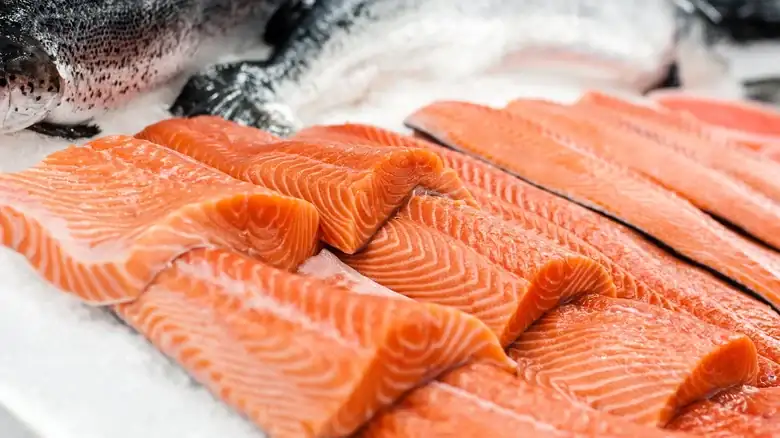
From its luxurious flavor to perfectly flaky texture, there's no wonder king (Chinook) salmon is often regarded as the best type of salmon you can get. It's practically perfect... except for perhaps its price tag. Per pound, prices can range from $20 up to $80 for prized Alaskan Copper River king salmon.
When it comes to meat of any kind, fat is the pinnacle of rich flavor, aromas, and moisture (think perfectly marbled Japanese Wagyu steak and melt-in-your-mouth pork belly). For fish, the king of delicious fatty flavor is the accurately named king salmon, which when caught in the wild has the highest fat content of any salmon type. This translates into a buttery, rich, mildly sweet flavor and delicate texture, which unsurprisingly make this salmon so popular (and expensive).
The size of king salmon is also a key reason why they can be pricier than others. In fact, they are the largest type of salmon, getting up to 58 inches long and 126 pounds. Not only this, but king salmon are also the rarest type of salmon, to the point that some populations are considered endangered. By being a high demand and low supply fish, it's inevitable that the price of king salmon is so high. Luckily, you do get considerable bang for your buck.
Why wild-caught king salmon costs more than farmed
You may be thinking to yourself: "Well, I bought king salmon before, and it wasn't that expensive at all!" In that case, there's a good chance you purchased farmed king salmon, which differs in both price and taste. About half of the seafood consumed globally comes from fish farming, otherwise known as aquaculture. This practice involves the breeding, raising, and harvesting of salmon in controlled pens. As a result of farmed king salmon being more plentiful than wild salmon due to year-round production and controlled harvests, they tend to be priced more affordably. Specifically, wild salmon is typically three to four times more expensive than farmed salmon.
Not only is farmed salmon more readily available, but it is often considered to have a milder flavor than wild salmon. Whereas wild salmon have an active lifestyle and complex diet (making them more vibrant in both color and flavor), farmed salmon are fed processed fish feed, which can make them ultra-fatty and soft textured. Regardless of price point, both wild-caught and farmed king salmon are great options for your seafood dinner, whether you're whipping up a Dijon-crusted salmon recipe or poached salmon in dill sauce. And if you're hoping to stock up on wild king salmon when it's on sale, there's no harm in freezing a few fillets and cooking them later.