They are demanding a recovery in grape prices in the face of a smaller-than-expected harvest, which would allow winegrowers to cover their costs
APAG Extremadura Asaja believes that the evolution of the current wine campaign should translate into a recovery of grape prices, given that the harvest is proving to be shorter than initially expected both in Spain and in other important producing areas.
In France, one of the main producing countries, forecasts point to a significantly lower harvest, while in Spain, although production may be slightly above that recorded last year, "we are not facing a high harvest and it continues to be among the lowest in recent years."
In addition, in different producing areas the initial forecasts have been moderated as the harvest has progressed, creating a scenario of less grape availability than initially expected.
APAG Extremadura ASAJA believes that wine consumption is slowing down, a circumstance that must be taken into account when analyzing the market. "However," they assert, "the smaller harvests recorded in important producing areas and a national production that is not reaching high levels must also be considered."
Given these circumstances, "we believe that the market must react upwards and recover the levels recorded at the beginning of the last campaign, an evolution that must necessarily have an impact on the first link of the chain and allow winegrowers to receive remuneration in line with their production and the costs they bear."
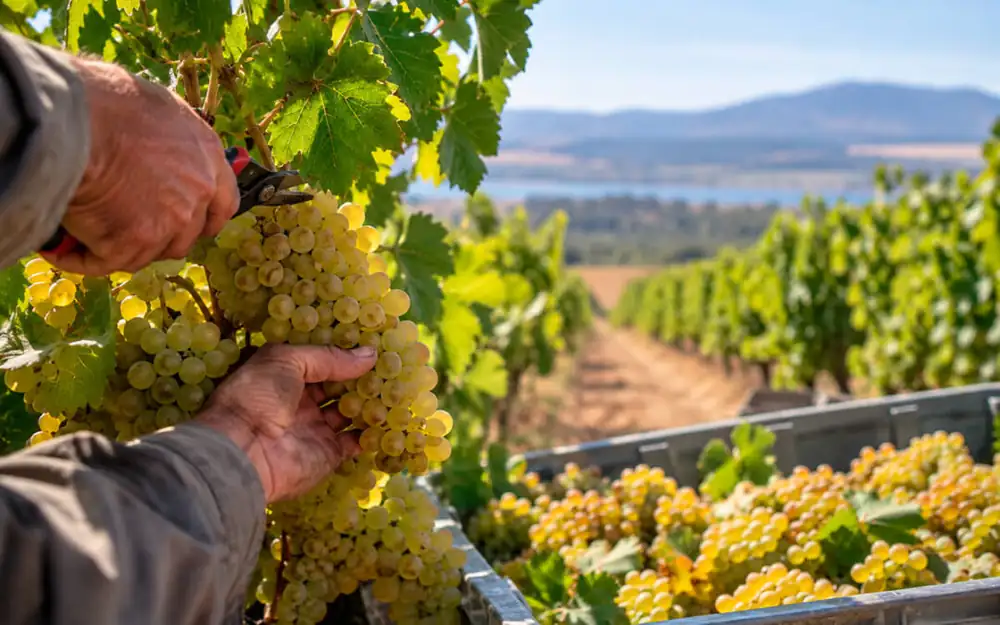
In Extremadura, the harvest is yielding acceptable production and excellent quality. Precisely for this reason, we believe that farmers cannot again bear the brunt of the existing imbalances in the supply chain.
COMPLIANCE WITH THE FOOD CHAIN LAW
APAG Extremadura ASAJA also insists on the need to guarantee compliance with the Food Chain Law, avoiding the formalization of contracts with prices that do not allow the effective costs of production to be covered.
In this regard, the recent study on grape production costs for winemaking in the Rueda PDO, conducted in Castile and León, is particularly significant. It establishes an effective cost of €0.49 per kilogram for trellised grapes and €0.68 per kilogram for bush vines for the 2026 harvest. While this figure is specific to that production area, it highlights the significant costs currently borne by winegrowers.
Therefore, APAG Extremadura ASAJA demands the intervention of the inspection services of both the Regional Ministry and the Ministry of Agriculture to control the contracts being formalized during this campaign and guarantee compliance with current legislation.
"We believe that contracts should not be formalized below the effective production costs of each farm and we demand that the administrations act to prevent winegrowers from being forced to sell their production below their profitability threshold."
From APAG Extremadura ASAJA, "we maintain that the circumstances of this season must be reflected in the market and, above all, reach the farmer. A smaller harvest than expected, combined with the excellent quality of Extremadura grapes, should allow for a recovery of price levels that guarantee the profitability and continuity of vineyards."