Mole enchiladas: the traditional Mexican recipe, step by step
Few combinations represent Mexican cuisine as well as mole enchiladas.
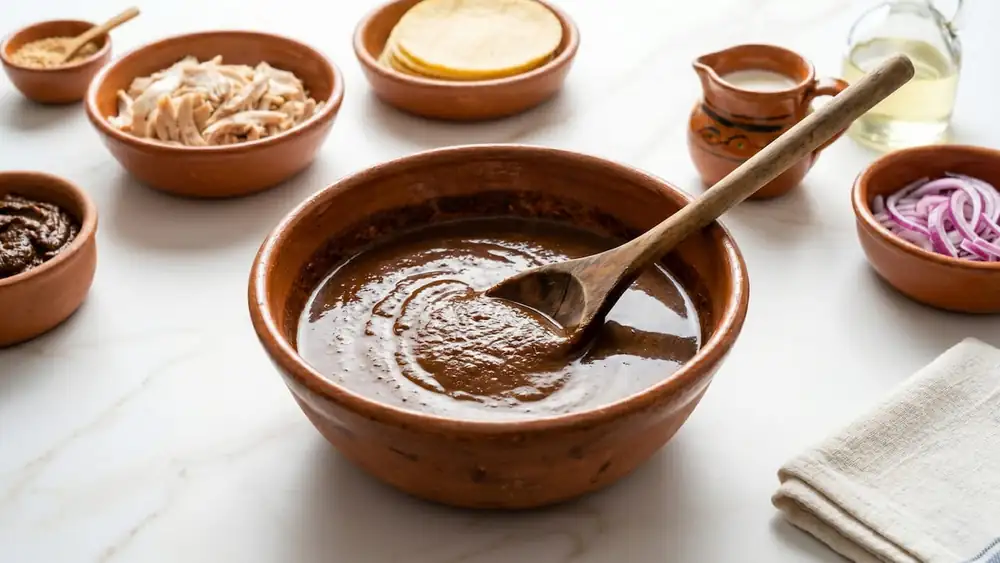
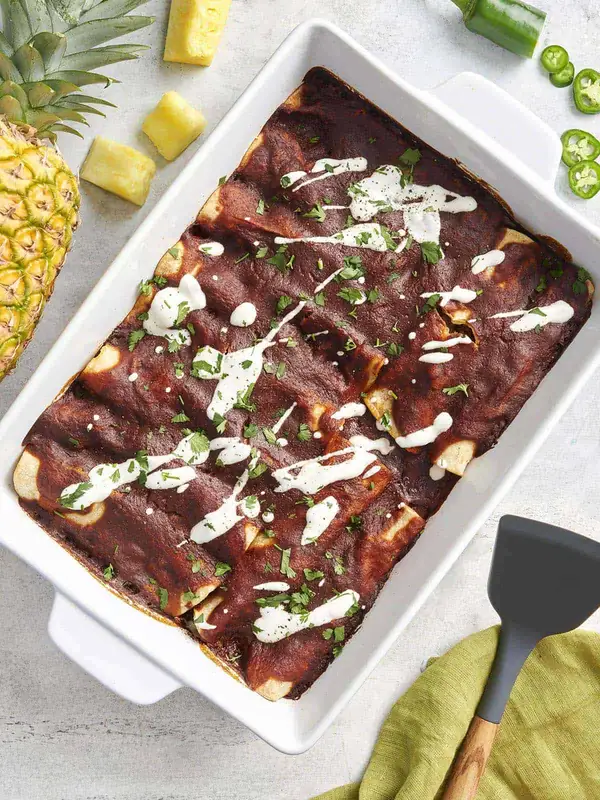
It's a dish that combines corn tortillas, a rich and aromatic sauce, and a filling—usually chicken—that's then bathed in hot mole. Although there are regional variations, the base is always the same: soft tortillas, a flavorful sauce, and a handful of ingredients that give the dish its unique character.
This recipe explains step by step how to prepare them at home, with exact times and tips to ensure the sauce is just right, without spending hours at the stove or searching for hard-to-find ingredients. For those who enjoy exploring other versions of this classic, it's also worth checking out Mexican red enchiladas, another traditional dish equally beloved in Mexican kitchens.
Summary of tips
Frequently Asked Questions: Can you make sweet mole enchiladas?
On the saucer
Enchiladas de mole are part of a very large family of Mexican dishes made with tortillas bathed in sauce, a tradition that dates back to pre-Hispanic times and that, over the centuries, incorporated ingredients such as chocolate, spices, and dried chilies that characterize mole today. Back then, tortillas were simply dipped in chili sauces without many accompaniments; it was with the arrival of products from Europe and Asia, such as almonds, sesame seeds, and cinnamon, that the recipe transformed into something closer to the complex mole known today.
In some regions of central Mexico, this same dish is known as enmoladas, a name that often causes confusion among those looking for the recipe. In practice, both terms describe the same preparation, although "enchiladas" is more commonly used, while "enmoladas" appears more frequently in areas like Puebla and Oaxaca. This difference in names, rather than a real difference in technique, reflects the enormous regional diversity that Mexico has when it comes to naming its own dishes.
The mole used can be poblano, red, or even black, depending on the region and family tradition. Each variety offers a distinct flavor profile: poblano mole stands out for its subtle sweetness and hint of chocolate, red mole is usually spicier and more direct, while black mole, typical of Oaxaca, offers a deeper flavor thanks to the chiles roasted almost to the point of burntness.
This flexibility is precisely what has allowed this dish to remain a staple on the Mexican table, adapting to whatever is available in the pantry without losing its essence. Traditionally, they are prepared with shredded chicken, although it's also common to find mole enchiladas with cheese for those looking for a meat-free version, or with ground beef as a more economical and quick alternative.
This versatility explains why it remains one of the most sought-after dishes in Mexican home cooking, both for weekday family meals and more special celebrations. Unlike other festive dishes that require a whole day of preparation, this version can be put together in just over an hour using pre-made mole, making it a common choice even for a weeknight dinner.
One detail that makes all the difference: the consistency of the mole
One detail that makes the difference between a good and an excellent batch of enchiladas is the consistency of the sauce. If the mole is too thick, the tortilla dries out upon contact; if it's too thin, the tortilla gets soggy and tears when you try to fill it.
Ideally, the mole should be thinned with a little chicken broth, adding it gradually until it reaches a consistency similar to a light cream, thick enough to coat the back of a spoon without running immediately. Those using store-bought mole paste or powder can follow the same principle: broth is always the best way to adjust the consistency without sacrificing flavor. Mole paste usually yields more and thins more easily, while mole powder needs to be dissolved in a little cold liquid before being added to the hot broth to prevent the formation of stubborn lumps.
Main features
What distinguishes mole enchiladas from other similar preparations is the contrast of textures and flavors: the fried tortilla, soft inside, the thick and aromatic mole, and the fresh contrast provided by the raw onion, cheese, and cream when served.
Toasted sesame seeds, often used as a finishing touch, add a subtle crunch that balances the richness of the sauce, and a handful of chopped cilantro can add a touch of freshness to each bite. The balance between sweet, spicy, and savory is precisely what makes each bite feel distinct from the last, something uncommon in other, more uniform dishes. Among the most sought-after variations are enchiladas with mole poblano, recognizable by their dark brown color and sweeter flavor, and enchiladas with mole rojo, which are more vibrant in color and spicier.
There are also versions with melted cheese in the filling, ideal for those who prefer a vegetarian option without giving up the traditional flavor of mole, and variations with ground meat that take advantage of leftovers from other preparations to put together a complete meal in a short time.
Variations of mole enchiladas
As with many traditional dishes, enchiladas have as many versions as there are family kitchens in Mexico.
Some of the most common variations include: With chicken: the most classic version, with shredded chicken breast or leg after cooking it in broth with onion and garlic.
It's a favorite when you're looking for a complete and hearty meal. With cheese: designed for those seeking a meat-free alternative, usually with fresh cheese or panela that melts slightly with the heat of the mole. With ground beef: a more economical and quicker option to prepare, common at weekday family meals, especially when there's already cooked ground beef from another dish.
In some regions of northern and central Mexico, this same dish is also known as mole wraps or mole rolls, names that refer to the way the tortilla is rolled before being coated in the mole sauce. Beyond the name, the essence remains the same: tortilla, mole, and filling, with slight variations depending on the family preparing them.
Some kitchens add a side of red rice as a standard accompaniment, while others prefer to serve them plain, simply garnished with onion and cheese, letting the flavor of the mole sauce take center stage. For those looking to explore the Mexican enchilada family further, there are other equally traditional variations, such as enchiladas suizas, bathed in a green sauce with cream, or enchiladas potosinas, made with a corn masa colored with chili peppers.
Mole, for its part, is also a protagonist in other dishes of the Mexican recipe book, such as mole de olla, a different broth but equally representative of this culinary tradition that is worth discovering.
1/2 white onion
- 2 cloves of garlic
- 500g of mole paste
- 4 cups of broth
12 corn tortillas
- 1/4 cup vegetable oil
- 1/2 cup crumbled fresh cheese
- 1/4 cup of cream
Preparation
Place the cups of broth in a pot and bring to a boil over medium heat. Add the half onion, garlic, salt, and chicken breasts.
Let it cook, uncovered, for 20 minutes or until the chicken breasts are cooked through. Remove the chicken breasts and reserve the broth.
Shred the chicken into thin strips once it has cooled enough to handle. Set aside. Dissolve the mole paste in some of the reserved chicken broth, mixing until fully incorporated and ensuring there are no lumps.
Heat the mixture over medium heat for about 10 minutes, stirring constantly and adjusting the amount of broth until you achieve a creamy consistency. Heat the oil in a skillet and briefly dip each tortilla in the hot oil, just a few seconds per side to soften them without browning or crisping them. Dip each tortilla into the hot mole until coated on both sides, using tongs to handle them without breaking them.
Fill each tortilla with some shredded chicken and roll them up to form enchiladas, arranging them side by side on a platter. Pour over the remaining hot mole sauce and garnish with red onion, queso fresco, crema, and toasted sesame seeds.
Preparation time: 20 min | Cooking time: 35 min | Total time: 55 min Servings: 3-4
Summary of tips
Dilute the mole with chicken broth until you achieve a creamy consistency, neither too thick nor too thin.
Briefly fry the tortillas before filling them to prevent them from tearing when rolled. Cook the chicken with onion, garlic, and salt to use the broth in both the filling and the mole sauce.
Serve freshly assembled so the tortilla doesn't get too soggy or lose its firmness. Reserve the cheese, onion, and cream until serving time, never before.
Taste the mole sauce before adding it to the tortillas and adjust the salt or broth to your liking. Sharing such a traditional recipe with the community is always a positive experience.
Those who prepare this recipe at home can tag their photos on social media and join the conversation about traditional Mexican cuisine, the kind passed down from generation to generation that continues to find a place on today's tables, no matter how busy the week is. Seeing how each family adjusts small details of the recipe is part of what makes sharing these kinds of dishes with others who also enjoy cooking so enjoyable.
Frequently Asked Questions
How are mole enchiladas made? They are prepared by lightly frying corn tortillas, dipping them in hot mole sauce, and filling them with shredded chicken, cheese, or ground beef, depending on the version chosen.
They are then rolled up and covered with more mole sauce before serving, garnished with onion, queso fresco, and crema. The entire process takes no more than an hour, including the cooking time for the chicken.
What's the difference between enchiladas de mole and enmoladas? In practice, they describe the same dish. "Enmoladas" is the name most frequently used in regions like Puebla and Oaxaca, while the other name is more widespread in the rest of Mexico and online.
There's no real difference in the technique or the ingredients used. What goes into mole enchiladas?
They contain corn tortillas, mole (poblano, red, or black depending on the region), a filling of shredded chicken, cheese or ground beef, and are finished with onion, queso fresco, crema, and toasted sesame seeds when served. What is mole made of?
Traditional mole combines dried chiles, spices, nuts like almonds or peanuts, sesame seeds, and in many versions, a touch of chocolate or bread, all ground and blended into a thick, aromatic sauce that can contain more than twenty different ingredients. How do you prepare chicken mole enchiladas? The chicken is cooked in broth with onion and garlic, shredded, and used to fill tortillas that have been previously fried and coated in mole sauce.
This is the most traditional and also the most sought-after version of this recipe. What are enchiladas de mole served with?
They are usually served with red or white rice, refried beans, and a simple lettuce and radish salad, although they can also be served on their own as a main course without losing their appeal. Where did mole enchiladas originate?
They have their roots in the pre-Hispanic cuisine of central Mexico, where tortillas bathed in chili sauces were already being prepared. With the arrival of ingredients like chocolate during the colonial era, that base evolved into the mole we know today. Who invented mole enchiladas?
There is no single person responsible: mole is the result of centuries of blending pre-Hispanic ingredients with techniques incorporated after the conquest, making this dish more the product of collective evolution than a specific invention attributable to one individual. How are mole enchiladas prepared in Oaxaca?
In Oaxaca, it's common to use mole negro, made with native chilies from the region and chocolate, which gives it a darker color and a deeper flavor than the classic mole poblano used in other parts of the country. Can you make sweet mole enchiladas? Yes, some variations incorporate more chocolate or a touch of sugar into the mole to soften the spiciness of the chilies, achieving a sweeter profile that pairs well with both chicken and cheese fillings.