Rachel Roddy’s summer minestrone with pesto – recipe
Now that I am an accomplished sourdough maker, soon to start my own micro-bakery and YouTube channel … Only joking!
- 5tbsp olive oil
- 1 onion peeled and diced small
- 1stick celery trimmed and diced
- 1small bunch flat-leaf parsley stems separated from the leaves (save the leaves for the pesto), and minced
- Salt
- 6 cherry tomatoes quartered
- 2 large courgettes trimmed, cut into quarters lengthwise, then into quarter-moons
- 1 large potato peeled and cut into cubes
- 1 parmesan rind
- 1 garlic clove peeled
- 20g pine nuts or almonds
- 50g parsley leaves and basil
- 100g olive oil
- 50g cheese (pecorino, grana padano, parmesan, or a mixture), grated
- Heat the olive oil in a heavy-based pan or casserole dish and gently fry the onion, celery, minced parsley stems and a pinch of salt, stirring often, until soft – about eight minutes.
- Add the tomatoes, stir for a minute or two, then add the courgettes, green beans and potatoes, and a pinch of salt, stirring to prevent sticking and so each chunk glistens with oil.
- Add one and a half litres of water and a parmesan rind, if you have one, then raise the heat so the soup nearly boils.
- Reduce to a simmer for 30 minutes, or until the vegetables are tender.
- Meanwhile, make the pesto, Pulse or pound the garlic, nuts and a pinch of salt, until they form a rough paste.
- Add the parsley and basil leaves, and pulse again until creamy.
- Gradually stir in the cheese and oil.
- About 10 minutes before the end of the cooking time, add the drained white beans, then leave the minestrone to sit for at least 10 minutes before serving, passing around the pesto so everyone can add the amount they like.
Now that I can make half-decent, variable loaves of sourdough, I have become more aware of how the temperature in the kitchen affects food. Not that I was completely unaware, of course – I have curdled enough milk and neglected enough eggs – but feeding, then watching the sourdough starter in a jar, and then the dough itself, seeing how the process takes hours in winter, speeds up in spring, then takes on a foaming, bubbling and at times terrifying life of its own in summer, are lessons in living microorganisms and fermentation.
It is a shame, then, that I didn’t give the same attention to the pan of summer minestrone I had felt so pleased with myself for cooking, cutting the courgettes carefully so they looked like Trivial Pursuit scoring wedges, while drinking tea and listening for the bottle bank lorry to drop the glass into its box, and before the sun (or anyone else) was up. Even though the combined taste of minestrone and milky Yorkshire tea is interesting, I knew it had turned out particularly well. I put on the lid, left the pan at the back of the stove and went out.
It must have been 11am by the time I got back home with a plant of basil quietly suffocating behind its plastic cone. The kitchen was already hot and the minestrone was only slightly, but unequivocally, fizzy.
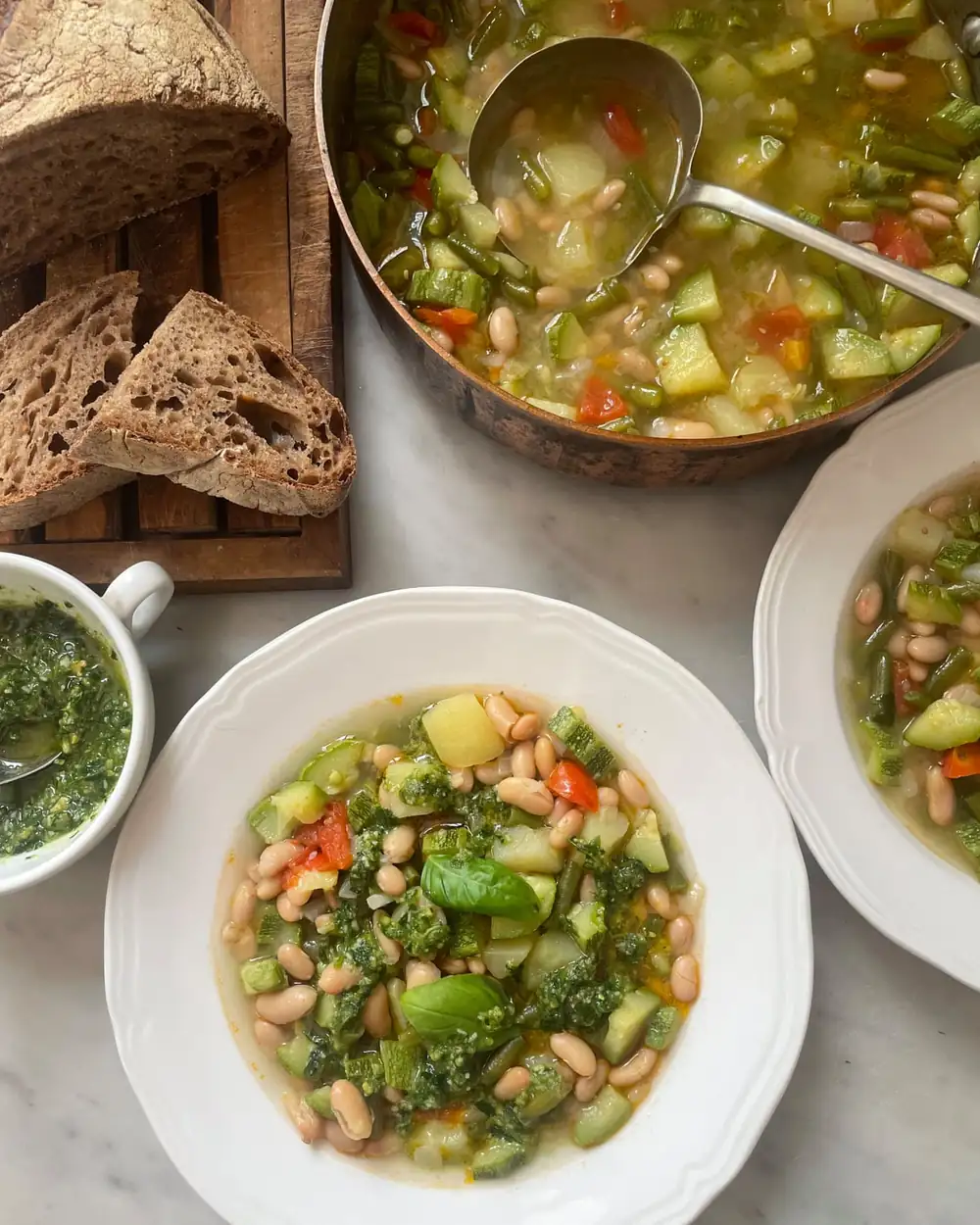
A spoonful of pesto did not balance it out – but please don’t let my neglect put you off making this abundantly fresh-green and creamy-white courgette, green and white bean minestrone, inspired by three recipes in Laura Ragoni’s Profumi e Sapori di Liguria. If you are eating the minestrone straight away, leave it to sit for 10 minutes before serving. If you have prepared the minestrone in advance, not only will it sit for hours, but resting improves the flavour and texture.
That said, learn from my mistake: if you are experiencing hot weather and the rest is longer than an hour, that rest needs to take place in a cool spot, or in the fridge to avoid a spoiled, fizzy soup. The minestrone can then be reheated gently until warm rather than hot.
Serves 6
- 5 tbsp olive oil
1 onion, peeled and diced small
- 1 stick celery, trimmed and diced
1 small bunch flat-leaf parsley, stems separated from the leaves (save the leaves for the pesto), and minced
6 cherry tomatoes, quartered
2 large courgettes, trimmed, cut into quarters lengthwise, then into quarter-moons
- 200g green beans, cut into 2½cm lengths
1 garlic clove, peeled
Heat the olive oil in a heavy-based pan or casserole dish and gently fry the onion, celery, minced parsley stems and a pinch of salt, stirring often, until soft – about eight minutes.
Add the tomatoes, stir for a minute or two, then add the courgettes, green beans and potatoes, and a pinch of salt, stirring to prevent sticking and so each chunk glistens with oil. Add one and a half litres of water and a parmesan rind, if you have one, then raise the heat so the soup nearly boils. Reduce to a simmer for 30 minutes, or until the vegetables are tender.
Meanwhile, make the pesto. Pulse or pound the garlic, nuts and a pinch of salt, until they form a rough paste.
Add the parsley and basil leaves, and pulse again until creamy. Gradually stir in the cheese and oil.
About 10 minutes before the end of the cooking time, add the drained white beans, then leave the minestrone to sit for at least 10 minutes before serving, passing around the pesto so everyone can add the amount they like.