Homemade Basterma
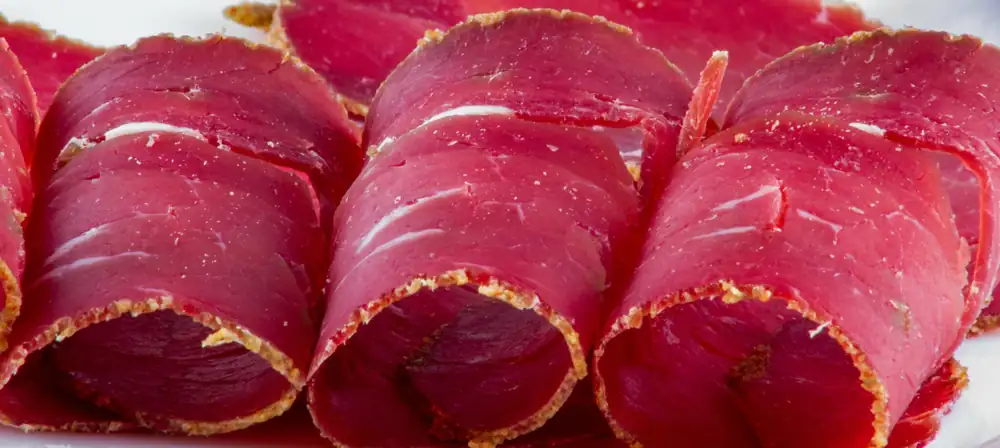
Spiced, air-dried cured beef best served with pita bread and Armenian string cheese.
- ¼ cup paprika
- ¼ cup ground fenugreek seeds (Found in specialty shops or well-stocked grocery or Middle Eastern stores)
- 1 tbsp allspice
- 1 tsp salt
- 1½ tsp black pepper
- 1 tsp cumin
- ½ tsp cayenne pepper
- 3 cloves garlic (pressed or finely minced)
- 1 cup cold water (more may be needed)
- 2½ lb boneless beef from rib section (1 to 1 1/2 inches thick)
- ½ cup Kosher salt
- Using a fork, pierce the meat all over. This will allow the salt to penetrate. Cut the meat in two equal pieces, then with a large needle, thread a heavy twine or string through one end of each piece of the meat and tie it into a loop. This will be used to hang the meat when curing.
- Generously sprinkle each section of meat with Kosher salt on all sides. Lay meat on a pan and refrigerate for 3 days. Turn meat once a day to keep coated with salt.
- On the fourth day, remove salt from the meat. Wash meat thoroughly, then soak in cold water for about an hour. Drain and pat meat dry using paper towels, making sure excess moisture is removed.
- Create 2 bags out of cheesecloth to hold each section of meat. Place meat in bags, and hang from the loops in a cool dry place** - or the refrigerator - for about 2 weeks.
- Note: If you hang the meat in a cool dry place rather than the refrigerator, be sure to bring the meat inside if the weather becomes rainy or damp.
- After the 2 weeks are up, combine all of the ingredients for making the paste, stirring in water a little at a time. Stir until a smooth, thin paste is formed.
- Note: The paste can be made in advance and kept in the refrigerator until ready to use.
- Remove the meat from the cloth bags, saving them for later use.
- Cover the dried meat completely with the paste; let stand for about 2 weeks in a pan. Turn the meat every couple of days to keep covered with the paste. At the end of the second week, remove meat from the paste and return each piece to the cloth bags. Hang outdoors for one more week of drying. Remember, if it’s damp outside, hang the basterma in a cool dry place inside.
- After the second drying period, the basterma will be ready to serve.
- To store, keep in a cool, dry place or in the refrigerator.
Elements ¼ cup paprika ¼ cup ground fenugreek seeds (Found in specialty shops or well-stocked grocery or Middle Eastern stores) 1 tbsp allspice 1 tsp salt 1½ tsp black pepper 1 tsp cumin ½ tsp cayenne pepper 3 cloves garlic (pressed or finely minced) 1 cup cold water (more may be needed) 2½ lb boneless beef from rib section (1 to 1 1/2 inches thick) ½ cup Kosher salt Method Using a fork, pierce the meat all over. Cut the meat in two equal pieces, then with a large needle, thread a heavy twine or string through one end of each piece of the meat and tie it into a loop.
This will be used to hang the meat when curing. Generously sprinkle each section of meat with Kosher salt on all sides.
Lay meat on a pan and refrigerate for 3 days. Turn meat once a day to keep coated with salt.
On the fourth day, remove salt from the meat. Wash meat thoroughly, then soak in cold water for about an hour.
Drain and pat meat dry using paper towels, making sure excess moisture is removed. Create 2 bags out of cheesecloth to hold each section of meat.
Place meat in bags, and hang from the loops in a cool dry place** - or the refrigerator - for about 2 weeks. Note: If you hang the meat in a cool dry place rather than the refrigerator, be sure to bring the meat inside if the climate becomes rainy or damp.
After the 2 weeks are up, combine all of the components for making the paste, stirring in water a little at a time. Note: The paste can be made in advance and kept in the refrigerator until ready to use.
Remove the meat from the cloth bags, saving them for later use. Cover the dried meat completely with the paste; let stand for about 2 weeks in a pan.
Turn the meat every couple of days to keep covered with the paste. At the end of the second week, remove meat from the paste and return each piece to the cloth bags.
Remember, if it’s damp outside, hang the basterma in a cool dry place inside. After the second drying period, the basterma will be ready to serve. To store, keep in a cool, dry place or in the refrigerator.