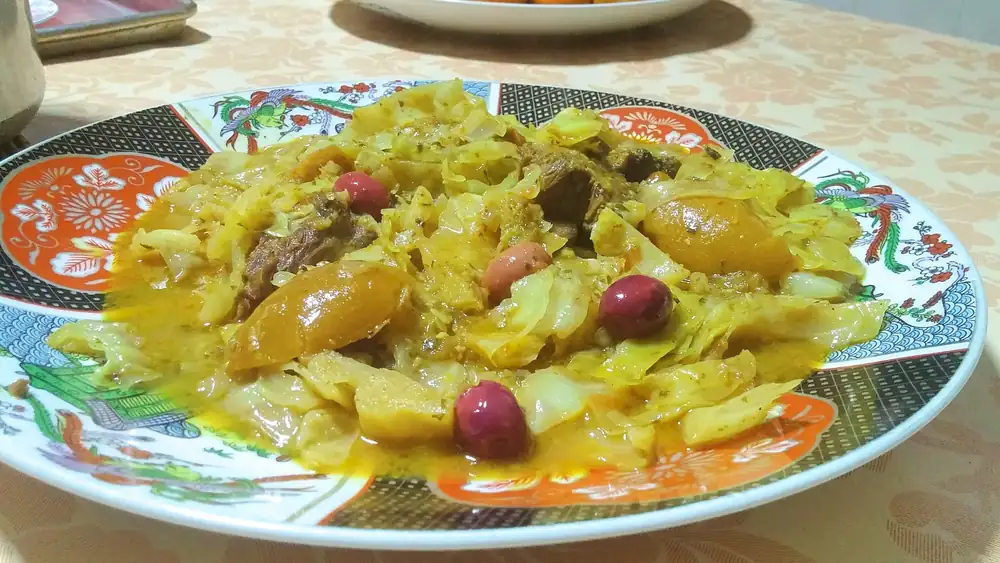
Moroccan Lamb or Beef Tagine with Cabbage, Preserved Lemon and Olives
Cabbage is stewed alongside meat in a zesty broth seasoned with ginger, paprika and cumin.
- 1 1/2 lb lamb or beef, (cut into 2" to 3" pieces)
- 1/3 cup olive oil
- 1 tomato, (grated)
- 1 medium onion, (chopped)
- 3 or 4 cloves garlic, (pressed or finely chopped)
- 1 handful fresh parsley, (chopped)
- 1 handful fresh cilantro, (chopped)
- 1 1/2 teaspoons ginger
- 1/2 to 3/4 teaspoon salt
- 1/2 teaspoon pepper
- 1/2 teaspoon paprika
- 1/4 teaspoon cumin
- 1/4 teaspoon saffron threads ((optional))
- 1/8 teaspoon cayenne pepper ((optional))
- 1 medium cabbage, (coarsely chopped into strips)
- 1 preserved lemon, (quartered and seeds removed)
- 1/2 cup red olives
- 1 to 2 tablespoons lemon juice ((optional))
- harissa ((optional; to serve on the side))
- Put the lamb or beef, olive oil, grated tomato, onion, garlic, parsley, cilantro, and spices into a pressure cooker or large, heavy-bottomed pot such as a Dutch oven. Stir to mix well.
- Place over medium to medium-high heat and cook, uncovered, for 5 to 10 minutes. Stir several times to brown the meat on all sides.
- Add about three cups of water, cover the pressure cooker or pot, and increase the heat to high. If using a pressure cooker: When pressure has been achieved, reduce the heat to medium and cook for 35 to 40 minutes, or until the meat is very tender. If using a regular pot or Dutch oven: When the liquids are boiling, reduce the heat to medium and simmer for about 1 1/2 hours, or until the meat is very tender. Check occasionally to be sure there are still liquids and add a little more water if necessary.
- When the meat has cooked to your liking, add the chopped cabbage, preserved lemon, and olives. If necessary, add enough water to almost cover the vegetable. Rapidly simmer the cabbage, partially covered, about 15 to 20 minutes, until the cabbage is tender and the sauce is reduced to a thick broth-like consistency.
- Taste the sauce for seasoning. If you'd like stronger lemon flavor, add 1 or 2 tablespoons of fresh lemon juice.
- Serve from a communal platter with Moroccan bread for scooping up the meat and vegetables.
- In the base of tagine, combine the onion, garlic, grated tomato, and meat with the olive oil, spices and herbs. Arrange the meat in the middle of the tagine, bone-side down.
- Add the chopped cabbage, arranging the strips all around the meat. Garnish with the preserved lemon quarters and olives.
- Add 2 cups of water, then cover the tagine and place it over medium heat (use a diffuser if your stove is not gas). When it reaches a simmer (this can take 15 minutes or longer), reduce the heat to medium-low and continue simmering for about 3 hours. Toward the end of cooking, taste the sauce for seasoning, and add a little lemon juice if you'd like extra tangy flavor.
- Several times during the cooking, spoon sauce over the cabbage and press it down into the simmering sauce. Resist the temptation to add a little water unless you feel the liquids have evaporated long before the meat has cooked.
- The tagine is done when the the meat can be pinched off the bone, the cabbage is tender and the sauce has reduced to a rich broth. Remove from the heat and serve. Tradition is to eat directly from the tagine, using bread instead of utensils.
Preserved lemons and olives add tangy, traditional savor. Place over medium to medium-high heat and cook, uncovered, for 5 to 10 minutes.
Add about three cups of water, cover the pressure cooker or pot, and gain the heat to high. If using a pressure cooker: When pressure has been achieved, reduce the heat to medium and cook for 35 to 40 minutes, or until the meat is very tender.
If using a regular pot or Dutch oven: When the liquids are boiling, reduce the heat to medium and simmer for about 1 1/2 hours, or until the meat is very tender. Check occasionally to be sure there are still liquids and add a little more water if necessary.
When the meat has cooked to your liking, add the chopped cabbage, preserved lemon, and olives. If necessary, add enough water to almost cover the vegetable. Rapidly simmer the cabbage, partially covered, about 15 to 20 minutes, until the cabbage is tender and the sauce is reduced to a thick broth-like consistency.
If you'd like stronger lemon taste, add 1 or 2 tablespoons of fresh lemon juice. In the base of tagine, combine the onion, garlic, grated tomato, and meat with the olive oil, spices and herbs. Arrange the meat in the middle of the tagine, bone-side down.
Add the chopped cabbage, arranging the strips all around the meat. Garnish with the preserved lemon quarters and olives.
Add 2 cups of water, then cover the tagine and place it over medium heat (use a diffuser if your stove is not gas). When it reaches a simmer (this can take 15 minutes or longer), reduce the heat to medium-low and continue simmering for about 3 hours.
Toward the end of cooking, taste the sauce for seasoning, and add a little lemon juice if you'd like extra tangy savor. Several times during the cookery, spoon sauce over the cabbage and press it down into the simmering sauce. Resist the temptation to add a little water unless you feel the liquids have evaporated long before the meat has cooked.
The tagine is done when the the meat can be pinched off the bone, the cabbage is tender and the sauce has reduced to a rich broth. Tradition is to eat directly from the tagine, using bread instead of utensils.