Moroccan Preserved Lemons Recipe
Two simple elements and a few minutes of your time are all that's needed to make homemade preserved lemons. In Morocco, we use salt and lemons only and do not traditionally add embellishments such as cinnamon, bay leaves or other spices and herbs. Leave the lemons to cure for a month or longer before using.
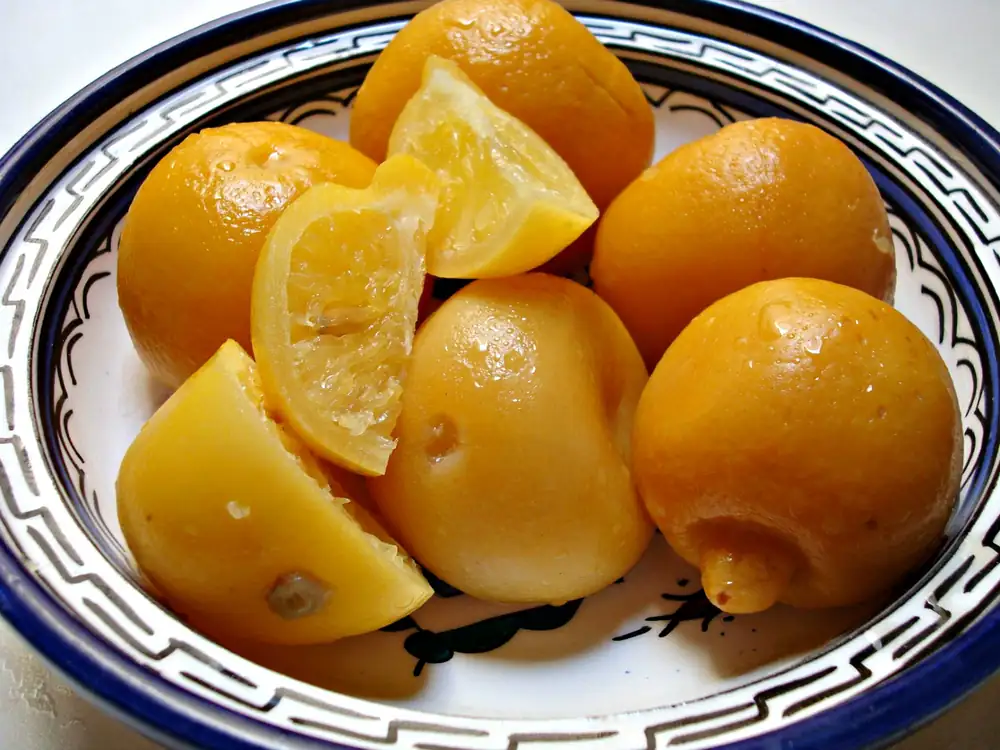
- 10 fresh lemons, (for preserving)
- 2 additional lemons, (for juicing (if needed))
- 1 cup coarse salt, (preferably kosher)
- 1 clean jar, (barely large enough to accommodate 9 or 10 compressed lemons)
- Wash and dry 7 or 8 of the lemons. Partially cut through them from top to bottom to make four attached wedges.
- Generously fill the crevices of the cut lemons with salt. No need to measure the salt, just use a rough tablespoon or so.
- Squeeze the salted lemons shut and pack them into the jar. Wedge them in as tightly as possible so they can't move around. Some juice will be released in the process.Close the jar and set aside for a few days. The lemons will slightly soften and more juice will be released.
- After that time, add as many more salted lemons as will fit into the jar. (This can be repeated in a few days if room allows.) Be sure the lemons are so tight that they won't dislodge as they soften.When the jar is as full as it can be with tightly packed lemons, add some salt to the top of the jar. If all lemons aren't submerged in liquid, top them off with fresh lemon juice.
- Close the jar and place in a cupboard to cure for at least one month or as long as a year. The longer they sit, the darker and softer they'll become.Once opened, you can store the lemons in the fridge. Rinse off excess brine before adding the preserved lemons to dishes.
The longer they sit undisturbed, the more mellow and intense in taste they become. See the notes for advice on which lemon varieties to use.
Elements 10 fresh lemons, (for preserving) 2 additional lemons, (for juicing (if needed)) 1 cup coarse salt, (preferably kosher) 1 clean jar, (barely large enough to accommodate 9 or 10 compressed lemons) Method Wash and dry 7 or 8 of the lemons. Partially cut through them from top to bottom to make four attached wedges.
Generously fill the crevices of the cut lemons with salt. No need to measure the salt, just use a rough tablespoon or so.
Squeeze the salted lemons shut and pack them into the jar. Wedge them in as tightly as possible so they can't move around.
Some juice will be released in the process.Close the jar and set aside for a few days. The lemons will slightly soften and more juice will be released.
After that time, add as many more salted lemons as will fit into the jar. (This can be repeated in a few days if room allows.) Be sure the lemons are so tight that they won't dislodge as they soften.When the jar is as full as it can be with tightly packed lemons, add some salt to the top of the jar. If all lemons aren't submerged in liquid, top them off with fresh lemon juice.
Close the jar and place in a cupboard to cure for at least one month or as long as a year. The longer they sit, the darker and softer they'll become.Once began trading, you can store the lemons in the fridge.
Rinse off excess brine before adding the preserved lemons to dishes.